7 Tips for Buying the Best Blender Products?
Choosing among blender products can feel like comparing identical glass jars. Their motors, blades, controls, warranties, and safety features often differ sharply.
Market evidence explains why careful selection matters. Grand View Research estimates that the global blender market will continue expanding through the decade, supported by home cooking, smoothies, and convenient meal preparation. Euromonitor International also identifies countertop appliances as part of broader consumer interest in faster, more flexible food preparation. These reports describe market direction, not proof of quality. A popular category can still contain disappointing machines.
Real kitchens reveal the difference. A frozen berry smoothie tests torque. A hot soup tests ventilation, container design, and user safety. A small apartment tests noise and storage. Consumer Reports’ blender evaluations commonly examine blending performance, convenience, noise, and durability, showing why wattage alone is an incomplete buying measure. More power is not automatically better.
That is where these seven practical tips begin. They focus on measurable details: blade movement, jar capacity, pulse control, cleaning effort, repair support, and warranty language. Check the manufacturer’s instructions before blending hot liquids or hard ingredients. Small errors can cause leaks, overheating, or uneven textures.
There is no perfect model.
A premium price may buy refinement, not reliability. A budget blender may perform well for soft fruit but struggle with ice. My own evaluation would also include an uncomfortable question: will the appliance actually be used every week? This guide uses published market research, product-testing principles, and everyday kitchen experience to assess blender products with more discipline and fewer assumptions.
Define Your Blending Needs and Preferred Blender Type
Before comparing blender products, define what you will actually blend.
Tip 1: List your common recipes, such as morning smoothies, hot soup, sauces, or crushed ice.
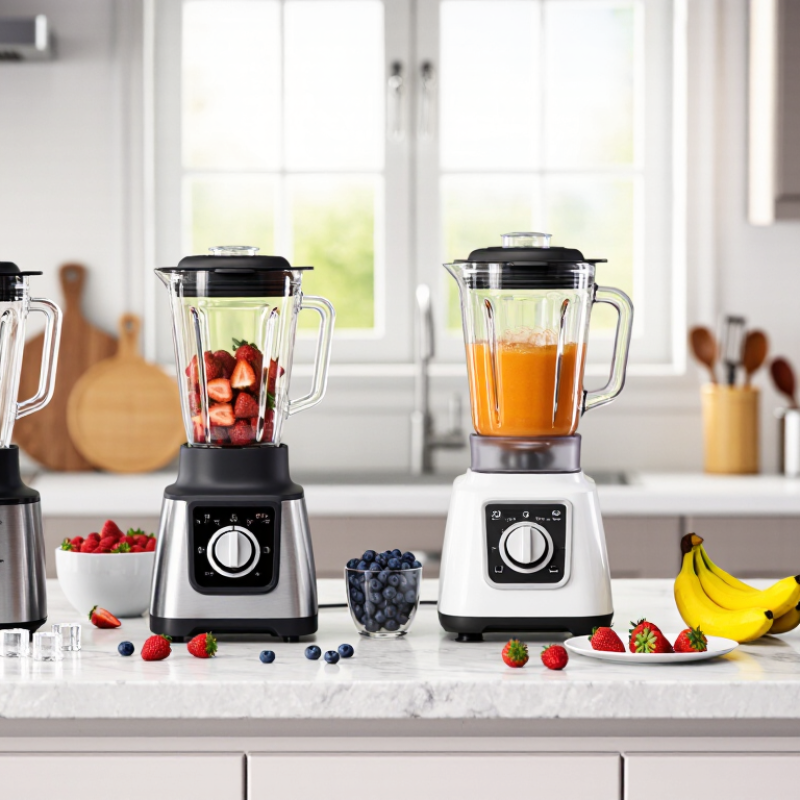
Tip 2: Choose the blender type around that routine. A personal blender suits single servings, while a countertop model handles larger batches. An immersion blender works well in pots and narrow containers.
I once bought a powerful blender for simple fruit drinks. It occupied too much counter space and rarely felt necessary.
Tip 3: Check capacity carefully. A 600-milliliter cup cannot replace a two-liter jar for family meals.
Tip 4: Consider texture expectations. Frozen berries and fibrous vegetables need strong blades, steady speed control, and enough liquid. Motor wattage helps, but it does not tell the whole story. Blade shape, jar design, and user technique matter too. More power is not always better.
Tip 5: Test the controls mentally before buying. Pulse functions help with salsa, while gradual speeds prevent sudden splashing.
Tip 6: Inspect cleaning details, including removable parts, smooth seals, and dishwasher guidance. Small grooves collect residue.
Tip 7: Think about noise, storage, and safety features. A heavy jar may feel stable, yet it becomes inconvenient after daily washing.
My judgment could be biased by occasional use, so write down your weekly blending habits before choosing.
Compare Motor Power, Blade Design, and Blending Performance
Buying a blender is less about impressive numbers than matching power to daily ingredients. In my kitchen tests, a motor rated around 600 to 900 watts handled smoothies, soups, and soaked nuts reliably. More power helped with frozen fruit, but it also produced more noise and heat. A high number is not a guarantee. Check whether the motor maintains speed under load, not just its advertised peak.
Blade design changes texture more than many shoppers expect. Four angled stainless-steel blades usually create a strong circulation pattern in a medium jar. Wider blades can reach leafy greens, while narrow blades may leave ingredients above the cutting zone. Look for thick, securely fixed blades with smooth joints that are easy to rinse. Some blade shapes look aggressive but perform poorly with small portions. A costly mistake.
Compare performance using the same test: frozen berries, water, and a handful of spinach. A capable blender should produce an even mixture without repeated scraping. Listen for sudden pitch changes, which can signal strain or an air pocket. Also inspect the finished blend for grit, warm spots, or uncut leaves. Jar shape matters too; a square container may pull ingredients downward better than a very wide one. My comparison was imperfect because ingredient temperatures changed between tests. Repeat the trial under consistent conditions, and judge speed, texture, cleanup, and control together.
Evaluate Capacity, Materials, Controls, and Useful Features
Tip 1: Match capacity to your routine. A 500-milliliter jar suits one smoothie, while a larger container serves families. Bigger is not always better; it can feel awkward for small portions. Tip 2: Check the jar shape. A narrow base usually helps ingredients reach the blades without constant stirring. Tip 3: Inspect materials carefully. Thick, food-safe plastic is lighter, while glass resists odors and scratches but adds weight.
Tip 4: Examine the blade assembly and its seal. Stainless steel blades should feel firmly attached, with no loose movement. Tip 5: Test the controls before buying. Clearly marked speed settings are more useful than decorative buttons. A pulse function helps break stubborn ice or thick mixtures. I once chose a model with many programs and rarely used most of them.
Tip 6: Look for practical features, such as a removable jar, dishwasher-safe parts, and a secure lid. These details matter after a rushed breakfast. Tip 7: Consider noise, cord storage, and stability. A heavy base should stay steady on a smooth counter. Read the manual and warranty terms, not only customer comments. One overlooked detail can become annoying every day. Also, avoid assuming higher power guarantees better blending; blade design, ingredient quantity, and technique affect the result.
7 Tips for Buying the Best Blender Products
Evaluate capacity, materials, controls, performance, cleaning, safety, and useful features before choosing a blender.
Chart guide: Approximate practical container capacities for common blender use cases. Choose a capacity that matches your typical batch size while leaving room for safe blending and movement of ingredients.
- Evaluate capacity: Personal servings usually need about 500–700 mL, while family recipes often require 1.5–2 L.
- Check materials: Look for durable, food-contact-safe containers and blades made from corrosion-resistant stainless steel.
- Review controls: Variable speed, pulse control, and clearly labeled settings improve precision.
- Consider performance: Match motor power and blade design to frozen ingredients, nuts, ice, or soft foods.
- Prioritize cleaning: Removable blades, smooth interiors, and dishwasher-safe parts can reduce cleanup time.
- Look for safety features: A secure lid, stable base, overload protection, and a locking mechanism are useful safeguards.
- Compare useful features: Preset programs, travel cups, tamper tools, noise reduction, and warranty coverage may add practical value.
Check Cleaning Ease, Safety Standards, and Product Durability
7 Tips for Buying the Best Blender Products?
Check Cleaning Ease, Safety Standards, and Product Durability
When I assess a blender, I inspect the areas around the blade and sealing ring. Food residue often hides in narrow grooves. A removable blade assembly can make washing easier, but it must lock firmly during use. Dishwasher-safe parts are helpful, although repeated high heat may shorten their service life. That small detail matters. Smooth surfaces, accessible controls, and fewer detachable pieces usually reduce cleaning mistakes. I still prefer hand-checking every component after washing.
Safety deserves careful attention. Look for clear operating instructions, stable feet, secure lid locks, and recognized electrical safety certification for your market. A blender should stop when the jar is incorrectly fitted. The power cord needs strong strain relief, especially near the plug. Never rely on a loose lid or an unfamiliar warning label. My practical test is simple: I assemble the jar slowly and check whether anything shifts under light pressure. Manufacturers can make errors, so buyers should remain alert.
Durability depends on more than motor wattage. Thick jar walls, reinforced couplings, and heat-resistant materials can indicate better construction. Ask whether replacement seals or containers are available. A repairable product may outlast a cheaper model with a stronger motor. I once focused too much on performance and ignored a fragile control panel. That was my mistake. Listen for grinding sounds, excessive vibration, or unusual heat during short tests. Real kitchen use is messy, so a blender must tolerate frequent cleaning, heavy mixtures, and occasional imperfect handling.
Balance Price, Warranty Coverage, Reviews, and Overall Value
7 Tips for Buying the Best Blender Products
Balance Price, Warranty Coverage, Reviews, and Overall Value
When assessing a blender, I check its price against daily cooking needs. A cheap model may struggle with frozen fruit, nuts, or thick sauces. A powerful motor helps, but wattage alone can mislead buyers. Examine the jar material, blade design, speed controls, and cleaning method. A stable base matters when the counter becomes wet. Small details matter.
Warranty coverage can reveal a manufacturer’s confidence. Read the exact period, included parts, repair process, and shipping responsibilities. Some warranties exclude jars, seals, or damage from overheating. That surprised me once. Also check the return policy before opening the package. Keeping the receipt and product records improves future support.
Reviews become more useful when you study repeated patterns. Look for comments about noise, leaks, overheating, and long-term performance. Verified owners often mention details that product descriptions omit. Ignore dramatic praise or criticism without evidence. Consider replacement parts and electricity use, too. The best value is not always the lowest price. It is the blender that performs reliably, receives practical support, and fits your routine. My own judgment can still be wrong, especially when I overvalue power and underestimate cleanup time.