
What Are the Top New HVAC Units to Buy in 2026?
Choosing among the top new HVAC units to buy in 2026 takes more than comparing brand names. A quiet outdoor unit may look appealing, but the right choice also depends on your home’s size, insulation, ductwork, and local climate. Heat pumps, variable-speed air conditioners, and high-efficiency furnaces each suit different needs. The best model on paper may still perform poorly if it is oversized or installed badly.
Building-science and HVAC expert Allison Bailes has long stressed the importance of system design. His practical message, paraphrased: “Start with the house and its heating and cooling needs, not the equipment brochure.” That perspective shapes this guide. We’ll compare efficiency ratings, operating costs, comfort features, refrigerant considerations, and practical installation questions. Look for details such as a variable-speed compressor that adjusts output, a sound rating suitable for a bedroom window, and controls that support your household’s schedule. Sizing matters.
A strong efficiency rating can lower energy use, but actual savings depend on utility rates, weather, and installation quality. That part is easy to overlook. Product lineups and incentives may also change during 2026, so verify current specifications with manufacturers and qualified local contractors. This guide highlights promising new HVAC units while making room for a less exciting truth: the “top” system is the one correctly matched to your home, budget, and comfort priorities. Even careful comparisons cannot replace a proper load calculation. That is worth remembering.
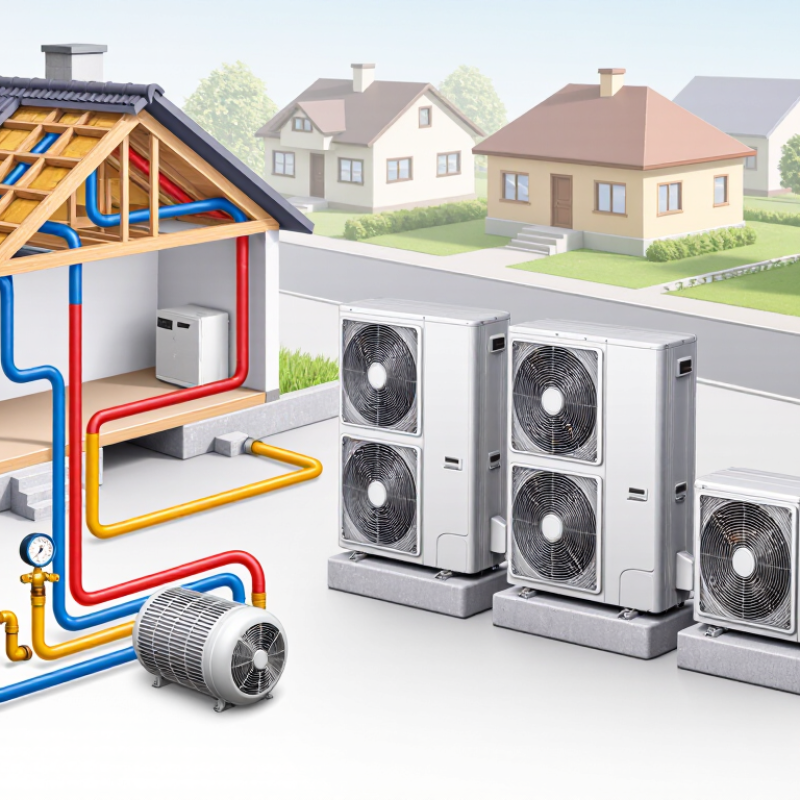
How the Best New HVAC Units for 2026 Are Evaluated
Choosing a new HVAC unit in 2026 starts with the house, not a product ranking. A qualified technician should calculate heating and cooling loads using room sizes, insulation, window exposure, air leakage, and local weather. A unit that is too large may cycle on and off, leaving rooms clammy; one that is too small may run for hours on a hot afternoon. These details matter more than a headline efficiency number.
Efficiency should be compared using the rating appropriate to the equipment and climate, alongside expected operating costs. Ask for the assumptions behind any estimate, including energy prices, thermostat settings, and annual use. Look at sound ratings, variable-speed operation, filtration compatibility, and whether existing ducts can deliver the required airflow. A quiet outdoor unit is welcome. But placement and installation still shape what you hear indoors.
A useful evaluation also checks service access, parts availability, control simplicity, and written labor and equipment coverage. Request a proposed scope that names duct repairs, electrical changes, condensate drainage, commissioning, and removal of old equipment. After installation, airflow and refrigerant charge should be measured, not guessed. No checklist is flawless. Even careful comparisons can miss how a family actually uses each room, so ask what findings could change the recommendation.
What Are the Top New HVAC Units to Buy in 2026? - How the Best New HVAC Units for 2026 Are Evaluated
This brand-neutral guide compares residential HVAC system types available in the U.S. market. The efficiency figures below are indicative ranges, not guarantees for every model; actual performance depends on the equipment combination, climate, installation, and operating conditions.
| System Type | Typical Efficiency Range | Best Suited For | Key Advantages | Important Checks Before Buying |
|---|---|---|---|---|
| Variable-Speed Air-Source Heat Pump | Approximately 15–22 SEER2 and 8–10 HSPF2, depending on the model and matched system | Homes needing both heating and cooling, particularly where winters are moderate or the selected unit is rated for low-temperature operation | Provides heating and cooling in one system; variable-speed operation can improve temperature consistency and reduce cycling | Check the unit’s heating capacity at local winter design temperatures, backup-heat requirements, matched-system ratings, and local electricity and fuel costs |
| Ductless Mini-Split Heat Pump | Many models fall around 18–30 SEER2 and 9–12 HSPF2; ratings vary by capacity and configuration | Homes without ducts, additions, converted spaces, or rooms needing independent temperature control | Avoids duct losses; offers room-by-room zoning; can be installed without adding a full duct network | Compare the number and placement of indoor units, low-temperature performance, sound ratings, and availability of local service |
| High-Efficiency Gas Furnace with Central Air Conditioning | Furnaces commonly range from 95% to 98% AFUE; cooling efficiency depends on the separately rated matched air conditioner | Homes with existing ducts and access to natural gas, especially in colder regions | High-AFUE models convert a large share of fuel energy into heat; can use existing ductwork when it is properly sized and sealed | Review furnace AFUE, cooling-system SEER2, duct condition, venting requirements, and the cost of both heating fuel and electricity |
| Dual-Fuel Heat Pump and Gas Furnace | Heat-pump efficiency varies by model; paired furnaces commonly range from 95% to 98% AFUE | Homes in climates with both mild periods and very cold winter conditions, where fuel prices and controls support a dual-fuel setup | Can use the heat pump in suitable conditions and switch to the furnace when configured changeover settings call for it | Confirm that the controls, equipment pairing, and changeover settings are designed for the local climate and utility rates |
| Packaged Heat Pump | Efficiency is model-specific; compare the published SEER2 and HSPF2 ratings for the complete unit | Homes where a single outdoor package is practical, often because indoor equipment space is limited | Combines major heating and cooling components in one cabinet; may simplify equipment layout | Check local code requirements, outdoor exposure, service access, noise, and the exact certified efficiency rating |
| Evaluation Dimension | Suggested Weight | What to Check |
|---|---|---|
| Climate suitability and heating or cooling capacity | 25% | Ask for a load calculation and equipment capacity at local design conditions. Avoid choosing a system based only on the size of the old unit. |
| Seasonal efficiency | 20% | Compare SEER2 and HSPF2 for heat pumps and air conditioners, or AFUE for furnaces. Use certified ratings for the exact matched equipment combination. |
| Installation quality and system compatibility | 20% | Review duct sizing and leakage, airflow, refrigerant-line requirements, controls, commissioning, and compatibility with existing equipment. |
| Operating cost and available incentives | 15% | Estimate annual costs using local utility rates and expected usage. Confirm current federal, state, local, and utility incentives before purchase. |
| Comfort, controls, and sound | 10% | Consider modulation or staging, zoning needs, thermostat compatibility, indoor sound, and outdoor sound ratings. |
| Serviceability and refrigerant transition | 10% | Check local technician experience, parts availability, warranty terms, and the refrigerant specified for the exact model. New U.S. equipment may use lower-GWP refrigerants such as R-32 or R-454B; confirm model-specific requirements. |
Buying note: Efficiency ranges are broad market references, not a ranking of specific products. U.S. minimum efficiency rules can vary by equipment type and region. Before buying, verify the proposed system’s current certified ratings, local code compliance, warranty details, and installation scope.
Related Posts
-
10 Best New HVAC Units for 2026 Buyers?
-
What is Industrial HVAC Units and How Do They Work?
-
Top 10 Industrial HVAC Units in China for Global Buyers?
-
2025 Top Industrial HVAC Units: Enhance Efficiency with 15% Energy Savings
-

Top 10 Benefits of HVAC Systems for Your Home?
-
Top 10 New HVAC Units for Efficient Home Heating and Cooling