Skip to content

Top 10 HVAC Equipment Brands for Global Buyers

Choosing the right HVAC equipment is not simply a matter of selecting the most famous global brand. Climate, building size, local voltage, installation standards, and service availability can change the decision completely. A system that performs quietly in a European office may require different controls in a humid coastal warehouse. That difference matters.

This guide reviews ten leading HVAC equipment brands through practical buying criteria. These include cooling efficiency, heating performance, product durability, controls, spare-part access, warranty support, and installer expertise. Quiet operation matters. So does the compressor’s performance during long summer afternoons. Reliable comparisons should use manufacturer specifications, independent certifications, service records, and feedback from qualified contractors. Energy labels and lifecycle costs also deserve attention, because a low purchase price may hide expensive maintenance later.

No ranking is perfect. Regional availability changes, and product lines differ between markets. A respected brand may still disappoint when replacement parts take weeks to arrive. Another manufacturer may offer stronger local support but fewer advanced features. This article aims to present balanced, evidence-based guidance rather than promote one universal winner. Buyers should confirm current certifications, refrigerant requirements, warranty conditions, and service coverage before placing an order. Some details may vary by country, and that limitation is worth admitting. Careful verification remains essential for a safe, efficient, and dependable investment.
Top 10 HVAC Equipment Brands for Global Buyers

How HVAC Equipment Brands Are Evaluated for Global Buyers

Global buyers should evaluate HVAC equipment brands beyond catalog capacity and attractive pricing.

A dependable assessment begins with real operating conditions. Engineers compare cooling loads, humidity, altitude, voltage, and seasonal temperature changes. A unit designed for a mild warehouse may struggle in a coastal plant. That detail matters.

Technical evidence should support every major claim.

Buyers can request laboratory reports, efficiency data, safety certifications, and documented noise levels. They should also examine installation records from similar climates and building types. Field experience often reveals problems that brochures omit.

Ask about commissioning procedures, control-system compatibility, and technician training. These answers show practical expertise.

Lifecycle performance deserves equal attention.

Review energy use, filter access, refrigerant requirements, spare-part availability, and warranty response times. A low purchase price can become expensive when a compressor waits weeks for replacement. Local service coverage is not a minor feature. It affects uptime.

Buyers should compare published data with references from operating facilities. Some information may remain incomplete, and that is normal. Uncertainty should be recorded, not hidden behind confident marketing language. A perfect ranking is impossible, but a transparent scoring method can expose weak evidence and reward reliable long-term performance.

Key Product Categories and Technologies in the HVAC Market

Top 10 HVAC Equipment Brands for Global Buyers

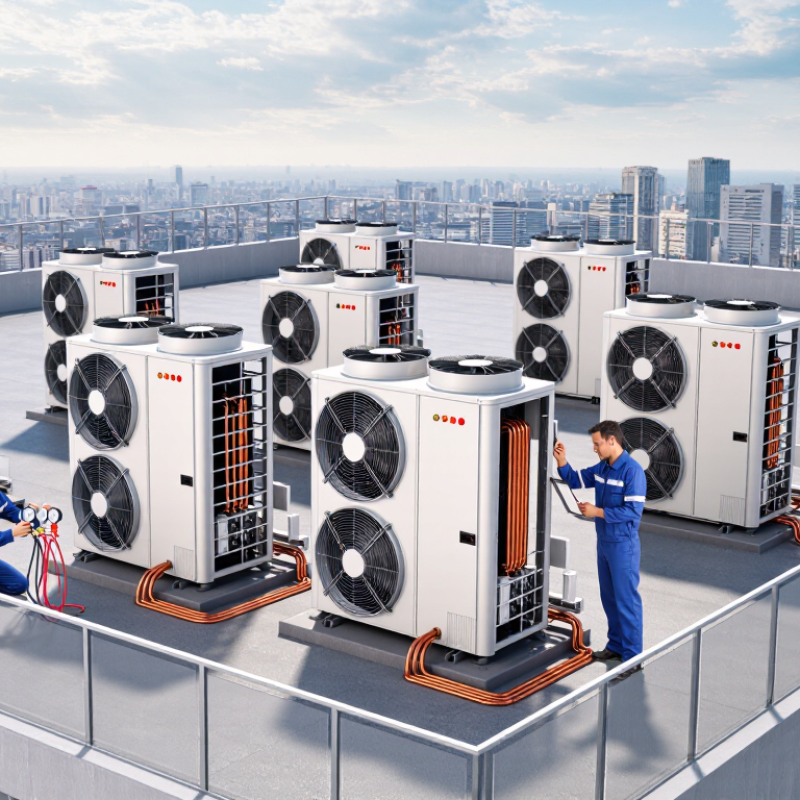
The HVAC market covers several distinct equipment categories. Air-cooled and water-cooled chillers serve hospitals, factories, and large offices. Variable refrigerant flow systems suit buildings with changing room loads. Rooftop units simplify installation for retail and light industrial spaces. Heat pumps now support both heating and cooling, especially in regions reducing fossil-fuel use.

Technology selection requires more than checking rated capacity. Inverter-driven compressors adjust output instead of cycling constantly. This can reduce energy waste during mild weather. Heat recovery systems transfer energy between zones with opposite demands. Modern controllers monitor temperature, humidity, airflow, and equipment faults. Buyers should compare seasonal efficiency, not only laboratory peak performance.

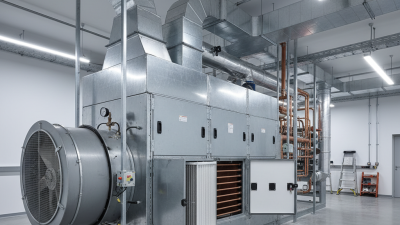
Air handling units need careful attention. Filter grade, fan efficiency, coil spacing, and access for cleaning affect long-term results. In coastal areas, protective coil coatings may prevent early corrosion. Refrigerant choice also matters because regulations and service skills differ by country. I have seen projects focus heavily on purchase price and overlook commissioning. That decision often creates noise, uneven comfort, and higher maintenance costs. No selection is perfect. A smaller system may perform better when controls, ductwork, and local technicians are properly matched. Specification sheets help, but site conditions remain the harder truth.

Top HVAC Equipment Brands by Global Strengths and Applications

Top 10 HVAC Equipment Brands for Global Buyers

Top HVAC Equipment Brands by Global Strengths and Applications

Global HVAC leadership is not defined by one product. It depends on climate coverage, service networks, controls, and lifecycle efficiency. The International Energy Agency reports that cooling already uses more than 10% of global electricity. It also projects cooling demand could more than triple by 2050. These figures make equipment selection a technical and financial decision.

For dense offices, VRF systems offer zoning and flexible installation. Large hospitals and factories often need high-efficiency chillers, precise controls, and reliable redundancy. Rooftop units suit warehouses and retail buildings with limited plant-room space. Heat pumps are gaining attention in mild and cold climates, although performance can drop during extreme weather. Data centers require close-control cooling and rapid maintenance support. Cold-chain facilities need stable temperatures, not merely low energy bills. UNEP’s 2022 Cooling Emissions and Policy Synthesis Report links efficient cooling with refrigerant management and climate goals. However, global rankings remain imperfect. A strong product in one region may be poorly supported in another.

Tips: Check local technicians, spare-parts stock, refrigerant compliance, and warranty terms. Compare seasonal efficiency, not only rated capacity. Ask for commissioning records and independent test data. ISO 5151 and AHRI-certified results can improve comparison quality. A cheaper unit may become expensive after three summers. Procurement teams should also model noise, water use, controls compatibility, and replacement access.

Top 10 HVAC Equipment Brands for Global Buyers - Top HVAC Equipment Brands by Global Strengths and Applications

Global comparison of major HVAC equipment strengths, typical applications, efficiency indicators, and purchasing considerations

Rank Equipment Segment Global Strength Typical Capacity or Size Primary Applications Key Efficiency Metric Best-Fit Climate or Market Important Buying Consideration
1 Variable Refrigerant Flow Systems Strong zoning flexibility, compact outdoor units, heat-pump and heat-recovery configurations Approximately 10–100 kW per modular outdoor system; larger multi-module installations available Hotels, offices, retail buildings, schools, mixed-use developments Seasonal efficiency commonly assessed by SEER, EER, SCOP, or COP Urban projects, mild-to-hot climates, buildings requiring independent room control Installer expertise, refrigerant piping limits, controls compatibility, and local code compliance
2 Air-Cooled Chillers Simplified installation without cooling towers or condenser-water pumps Approximately 50–1,500 kW of cooling per chiller, depending on configuration Commercial buildings, light industry, healthcare, process cooling Full-load and part-load COP or kW/ton; IPLV or integrated part-load values are often used Water-constrained regions and projects seeking lower plant complexity Outdoor ambient design temperature, sound levels, coil maintenance, and refrigerant regulations
3 Water-Cooled Chillers High operating efficiency and strong performance for large central plants Approximately 350–7,000+ kW of cooling per chiller Airports, hospitals, data centers, district cooling, high-rise commercial buildings Plant efficiency commonly evaluated in kW/ton, including pumps and cooling towers Large facilities with reliable water supply and specialist maintenance capability Cooling-tower water treatment, first cost, plant-room space, and water consumption
4 Rooftop Packaged Units Factory-integrated heating, cooling, ventilation, and controls in one cabinet Approximately 20–500 kW of cooling capacity Retail stores, warehouses, restaurants, schools, and low-rise commercial buildings Cooling efficiency commonly rated by EER or IEER; heating may use thermal efficiency Low-rise buildings with accessible roofs and relatively open floor plans Roof loading, curb dimensions, crane access, economizer requirements, and service access
5 Commercial Heat Pumps Electrified heating and cooling with reversible operation and reduced onsite emissions Approximately 10–500 kW of heating or cooling capacity Offices, schools, hotels, apartment buildings, and light commercial facilities COP for heating and SCOP or seasonal heating performance for annual operation Mild, mixed, and cold climates when low-ambient operation is properly selected Defrost behavior, backup heat, electrical capacity, noise, and low-temperature performance
6 Air Handling Units Flexible air-side customization for filtration, humidity control, heat recovery, and ventilation Approximately 1,000–200,000 m³/h airflow, depending on unit size Hospitals, laboratories, factories, airports, offices, and data centers Fan efficiency, pressure drop, heat-recovery effectiveness, and SFP Projects where indoor air quality and ventilation control are major priorities Casing leakage, filter class, access panels, hygiene design, controls, and available plant-room space
7 Fan Coil Units Space-efficient terminal units with practical zone-level temperature control Approximately 0.5–15 kW of cooling capacity per unit Hotels, apartments, offices, hospitals, and small commercial rooms Fan power, water-side temperature difference, and room-level cooling output Multi-room buildings with chilled-water or hot-water distribution systems Acoustic rating, condensate drainage, filter access, valve packages, and maintenance clearance
8 Dedicated Outdoor Air Systems High ventilation control with optional energy recovery and humidity management Approximately 1,000–50,000 m³/h outdoor-airflow capacity Schools, offices, healthcare, hospitality, and high-occupancy buildings Heat-recovery effectiveness, fan energy, and ventilation airflow accuracy Humid climates, high outdoor-air-load buildings, and indoor-air-quality-focused projects Outdoor-air filtration, latent capacity, frost protection, sensors, and commissioning quality
9 Evaporative Cooling Equipment Low-compressor-energy cooling where dry-bulb and wet-bulb conditions provide sufficient potential From localized air coolers to systems exceeding 100,000 m³/h airflow Warehouses, factories, agricultural buildings, workshops, and semi-open facilities Cooling effectiveness, water consumption, and fan specific power Hot, dry climates with adequate water quality and ventilation opportunities Humidity increase, water treatment, bleed-off, hygiene, and suitability for enclosed spaces
10 Industrial Refrigeration Systems High-capacity process cooling, cold-chain reliability, and refrigerant-system customization From small cold rooms to multi-megawatt refrigeration plants Food processing, cold storage, supermarkets, pharmaceuticals, and manufacturing COP, annual energy use, pull-down time, and temperature stability Facilities requiring continuous operation and strict temperature control Refrigerant safety, redundancy, leak detection, emergency procedures, service coverage, and lifecycle cost

Data note: Capacity ranges are representative international market ranges and vary by product configuration, design conditions, refrigerant, efficiency standard, and regional regulations. Efficiency metrics should be compared only under equivalent rating conditions.

Regional Standards, Service Networks, and Buyer Considerations

Global HVAC buyers should judge the top ten equipment brands by regional suitability, not reputation alone.

A unit approved in one market may need different controls elsewhere. Local fit matters. Check efficiency labels, electrical frequency, refrigerant rules, noise limits, and safety requirements before comparing prices. Standards may follow regional codes, such as European, North American, or Asian certification systems. Documentation should include test conditions, installation limits, and spare-part references.

Service networks often decide whether equipment performs well after installation. Ask where trained technicians are located and how quickly critical components can arrive. A warehouse nearby is useful, but technical competence matters more. Request service coverage for compressors, inverters, sensors, and control boards.

Verify commissioning procedures, warranty exclusions, and remote monitoring support. A low purchase price can become expensive after one failed cooling season.

Buyer reviews should include climate, building use, water quality, and maintenance skill. Coastal projects need corrosion protection. High-altitude sites may require adjusted airflow and capacity calculations. Hospitals, hotels, and factories also need different redundancy plans.

Do not trust impressive efficiency figures without checking the test environment. That gap matters. I have seen specifications look excellent until unstable voltage, dust, or poor commissioning reduced performance. This is where careful buyers should challenge both suppliers and their own assumptions.

A strong choice combines compliant equipment, responsive service, clear training, and realistic lifecycle costs.

How to Select the Right HVAC Brand for a Project or Facility

Top 10 HVAC Equipment Brands for Global Buyers

Selecting the right HVAC brand starts with the project, not the catalog. Climate, occupancy, operating hours, and local electricity prices shape real performance. The International Energy Agency estimates that global space-cooling demand could more than triple by 2050. Efficiency is no longer a minor specification.

Review seasonal efficiency, part-load performance, noise, controls, and refrigerant availability. A high-rated unit may perform poorly if technicians cannot service it locally. Check independent test data, certification records, warranty terms, and spare-parts coverage. Total cost matters more than the purchase price. Include installation, energy use, maintenance, replacement, and disposal. I have seen projects choose efficient equipment, then lose savings through incorrect commissioning. That mistake deserves more attention.

Tips: Ask suppliers for measured data under your climate conditions. Compare at least three lifecycle-cost scenarios. Verify performance at 25%, 50%, and 75% load. Request references from facilities with similar operating schedules. The UNEP Cooling Emissions and Policy Synthesis Report indicates that better equipment, refrigerants, and practices could significantly reduce cooling emissions by 2050. Still, projections are not guarantees. Local workmanship, controls, and maintenance can change the result. Select a supplier that documents these risks clearly, rather than promising perfect performance.