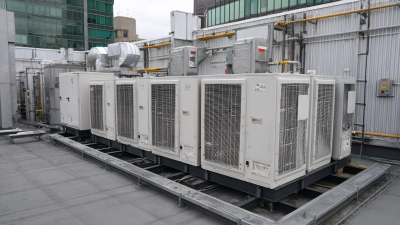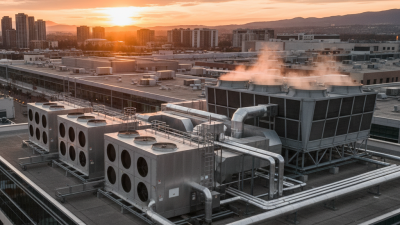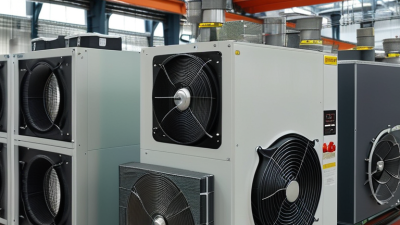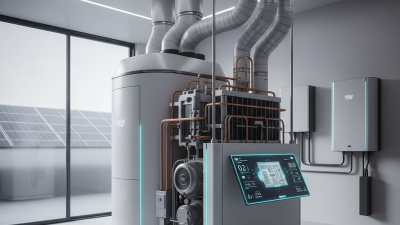
Choosing the best industrial HVAC units in 2026 requires more than comparing cooling capacity and purchase prices. Global buyers face different climates, energy costs, building layouts, and service conditions. A unit designed for a cool factory may struggle in a hot, humid warehouse. A coastal facility may also need stronger corrosion protection.
This guide examines practical choices for manufacturers, logistics centers, workshops, and large commercial facilities. It considers efficiency ratings, refrigerant requirements, airflow control, noise levels, controls, installation demands, and long-term maintenance. Small details matter. A dusty production floor can quickly overload filters. Poor drainage can damage equipment during heavy rain. Limited local service can turn a minor fault into costly downtime.
Reliable decisions should begin with verified manufacturer specifications, technical manuals, warranty terms, and applicable regional standards. Buyers should also request performance data under realistic operating conditions, not only ideal laboratory results. Experienced HVAC engineers and authorized installers can help confirm whether a selected unit matches the building’s heat load and electrical capacity.
No ranking is perfect. A low-energy model may cost more initially. A cheaper system may require frequent repairs. Product availability can also change between regions. This article therefore treats each recommendation as a starting point, not a final answer. Readers should compare supplier records, spare-parts access, installation quality, and service response times before signing a contract. Practical evidence matters most. A dependable HVAC system should cool consistently, operate safely, and remain supportable for years.
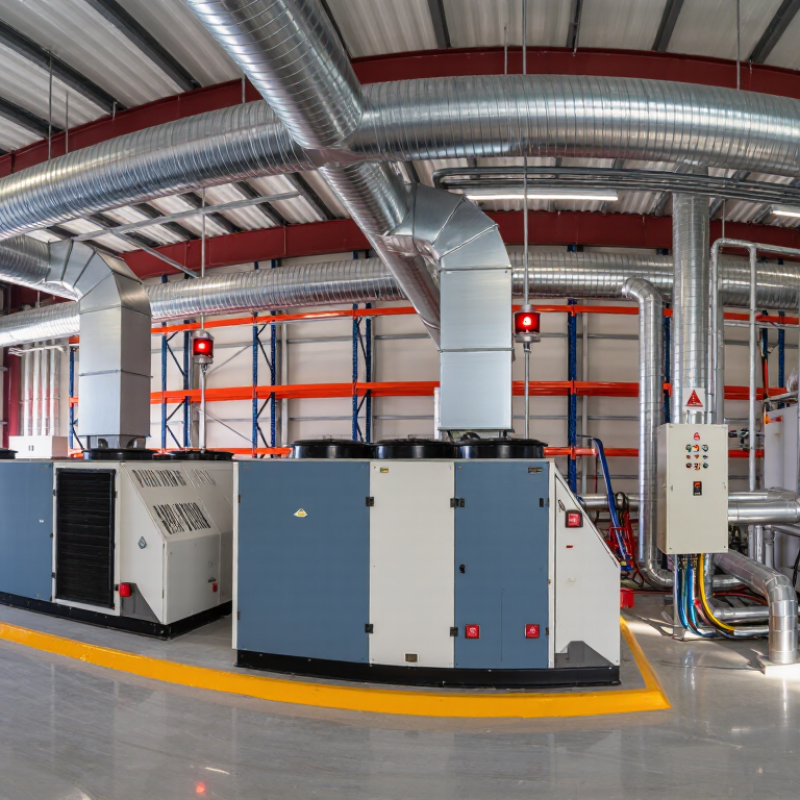
The best industrial HVAC units in 2026 are defined by measured performance, not impressive brochures. Buyers should examine cooling capacity, seasonal efficiency, airflow stability, and operating data under real factory conditions. A unit rated for a laboratory may struggle beside hot machinery or dusty loading doors.
Reliable systems maintain consistent temperatures across large spaces. Variable-speed fans, intelligent controls, and properly sized heat exchangers can reduce wasted energy. However, smart controls cannot repair poor installation. I have seen efficient equipment underperform because ducts leaked and sensors were placed near warm lighting. Details matter.
Maintenance access is another serious measure of quality. Technicians need clear panels, washable filters, safe electrical isolation, and readable fault records. Remote monitoring can reveal rising pressure, unusual vibration, or declining airflow before production suffers. Yet digital alerts need human review. Not every warning requires an immediate replacement.
Strong industrial HVAC units should also support local safety rules, refrigerant requirements, and documented commissioning. Buyers should request verified test results, spare-parts availability, warranty conditions, and service response times. A lower purchase price may become expensive after repeated shutdowns. The best choice is not always the largest unit. It is the system that fits the building, process, climate, maintenance skills, and future expansion plan. Imperfect assumptions remain possible, so performance should be checked after installation and reviewed during each operating season.
Capacity matching starts with the building’s real heat load, not its floor area. During site surveys, engineers should record outdoor temperature, humidity, production schedules, insulation, and door openings. A warehouse with frequent forklift traffic may gain more heat through open doors than through its walls. Heat loads change quickly.
Calculate sensible and latent loads separately. Include motors, lighting, workers, process equipment, solar gain, and fresh-air requirements. For example, a facility with a 150 kW cooling load may need staged units rather than one oversized system. A simple 20% safety margin can feel safe, but it may reflect lazy engineering.
Oversized equipment often short-cycles, controls humidity poorly, and consumes more power during partial loads. More capacity is not always safer.
Global buyers should also check performance at local design conditions. A unit rated at 35°C may deliver less cooling at 45°C. High altitude can reduce airflow, while tropical humidity increases latent demand. Confirm voltage, frequency, refrigerant requirements, filtration, corrosion protection, and service access before purchasing.
Leave enough clearance around condenser coils. A narrow service gap can turn routine cleaning into expensive downtime. I would also question every calculated assumption, especially occupancy and process heat, because production plans rarely remain unchanged.
Industrial HVAC buyers should prioritize technologies that deliver efficiency under changing loads, not only impressive peak ratings. The International Energy Agency reports that global cooling demand could more than triple by 2050. That pressure makes variable-speed compressors, electronically commutated fans, and demand-controlled ventilation increasingly important. These systems adjust output instead of running continuously at full capacity.
Heat recovery ventilation can reuse energy from exhaust air, especially in factories with high outdoor-air requirements. Smart sensors also track temperature, humidity, pressure, vibration, and filter resistance. Early warnings reduce unplanned shutdowns. Redundant pumps and modular cooling circuits improve resilience during maintenance. Low-global-warming-potential refrigerants also support longer-term compliance. The UNEP 2020 Cooling Emissions and Policy Synthesis Report estimates that efficient cooling and refrigerant improvements could avoid up to 460 billion tonnes of CO2-equivalent emissions by 2050. The number is powerful, but implementation remains uneven.
Tips: Request measured seasonal data, not laboratory claims. Test controls after installation. Review alarm histories monthly. Keep critical sensors and drives available. A sophisticated system can still fail through poor commissioning, dirty coils, or incorrect setpoints. That uncomfortable detail deserves more attention. ASHRAE guidance supports documented sequences, functional testing, and regular maintenance, yet many projects still treat commissioning as paperwork. Reliability is built in the plant room, then protected by disciplined operating habits.
| HVAC Technology or Unit Type | Typical Industrial Capacity | Typical Efficiency Indicator | Primary Efficiency Benefit | Reliability and Service Features | Best-Fit Applications | Global Buyer Considerations |
|---|---|---|---|---|---|---|
| Variable-Speed Air-Cooled Chiller | Approximately 100–1,500 kW cooling capacity per unit | Full-load COP commonly about 2.8–3.5; part-load efficiency improves substantially with modulation | Adjusts compressor speed to match changing cooling demand, reducing cycling and unnecessary energy use | Fewer starts and stops; staged compressors and independent refrigerant circuits can provide partial redundancy | Factories, warehouses, process cooling systems, and facilities with fluctuating daytime loads | Check performance at the local design temperature, altitude, fouling conditions, and required water-flow range |
| Variable-Speed Water-Cooled Chiller | Approximately 350–7,000 kW cooling capacity per unit | Full-load COP commonly about 5.0–7.0; high seasonal efficiency when cooling-tower conditions are favorable | Lower condensing temperature and variable-speed drives can reduce compressor and pump power | Stable operating conditions can support long service life; requires water-treatment and condenser-tube maintenance | Large industrial plants, district-scale facilities, process cooling, and high-load manufacturing sites | Evaluate water availability, cooling-tower regulations, corrosion risk, water quality, and local maintenance skills |
| Variable Refrigerant Flow or Variable Refrigerant Volume System | Approximately 10–200 kW per outdoor module; systems can be combined for larger zones | Seasonal efficiency commonly exceeds fixed-speed systems because capacity is continuously modulated | Transfers refrigerant only to zones requiring heating or cooling, reducing simultaneous over-conditioning | Multiple indoor units provide zoning; electronic expansion valves and fault monitoring support diagnostics | Office areas within industrial sites, laboratories, control rooms, and mixed-use production buildings | Verify refrigerant charge limits, pipe-length restrictions, heating performance, and local safety requirements |
| High-Efficiency Rooftop or Packaged Unit | Approximately 35–350 kW cooling capacity per unit | Typical EER about 10–14 Btu/W·h; actual results depend on climate, airflow, and load profile | Factory-integrated components reduce installation losses; economizer operation can provide low-energy cooling in suitable climates | Compact package simplifies replacement; accessible filters, belts, coils, and controls reduce service time | Large workshops, logistics centers, retail-industrial buildings, and single-zone production areas | Confirm roof loading, crane access, corrosion protection, outdoor temperature limits, and local electrical standards |
| Heat-Recovery Ventilation Unit | Approximately 2,000–100,000 m³/h airflow | Sensible heat-recovery effectiveness commonly about 60–85%, depending on exchanger type and airflow balance | Recovers energy from exhaust air to pre-condition incoming outdoor air, reducing heating and cooling loads | Continuous filtration and differential-pressure monitoring protect coils and fans; bypass mode supports free cooling | Factories with high ventilation demand, clean production areas, warehouses, and occupied industrial offices | Assess humidity transfer, frost protection, cross-contamination control, filter availability, and air-quality requirements |
| EC-Motor Supply and Exhaust Fan System | Approximately 500–100,000 m³/h airflow per fan or fan array | Motor efficiency commonly above 80%; system savings increase when airflow is reduced during low-load periods | Electronically commutated motors maintain efficient operation across a wide speed range and eliminate many belt losses | Direct-drive construction reduces belt replacement; integrated speed control and fault alarms simplify maintenance | Air-handling units, process exhaust, cleanrooms, warehouses, and variable-occupancy facilities | Verify motor protection rating, ambient temperature limits, dust classification, acoustic requirements, and spare-part access |
| Demand-Controlled Ventilation with Variable-Speed Drives | Suitable for systems from approximately 5,000–200,000 m³/h airflow | Fan energy can decrease significantly at reduced airflow because fan power is approximately proportional to the cube of speed | Uses carbon-dioxide, occupancy, pressure, or air-quality sensors to match ventilation and fan speed to actual demand | Automated alarms identify sensor drift, filter blockage, and abnormal pressure; fewer unnecessary operating hours | Assembly plants, warehouses, parking structures, laboratories, and facilities with variable occupancy or emissions | Plan sensor calibration, fail-safe settings, cybersecurity, control-system compatibility, and minimum ventilation rates |
| Low-GWP Refrigerant Platform | Available across small packaged units, chillers, heat pumps, and industrial refrigeration systems | Efficiency varies by system design; lower refrigerant climate impact reduces lifecycle environmental risk | Refrigerants with lower global-warming potential support regulatory compliance and can reduce future replacement risk | Selection must account for flammability, toxicity, pressure, leak detection, and technician training | New industrial projects and major equipment replacement programs requiring long service horizons | Confirm local phase-down schedules, refrigerant availability, installation codes, safety classification, and recovery procedures |
| Advanced Building and Energy Management Controls | Applicable from single-unit installations to multi-building industrial campuses | Well-commissioned control optimization can reduce HVAC energy use by approximately 10–25%, depending on baseline conditions | Coordinates schedules, setpoints, equipment staging, demand response, fault detection, and thermal storage | Trend logs and predictive alarms identify performance degradation before it causes a major failure | Multi-zone factories, campuses, data-intensive facilities, and plants with strict production temperature limits | Require open communication protocols, role-based access, offline fallback, cybersecurity controls, and staff training |
| Heat-Pump Heating and Heat-Recovery Chiller | Approximately 50–2,000 kW heating or cooling capacity per unit | Heating COP commonly about 3.0–5.0 under moderate outdoor conditions; performance decreases at low ambient temperatures | Moves heat instead of generating it directly; heat-recovery models reuse condenser heat for hot-water or space-heating loads | Redundant modules and staged operation can maintain service during partial equipment outages | Industrial buildings requiring simultaneous heating and cooling, process preheating, and low-carbon facility heating | Check low-temperature capacity, defrost strategy, water-temperature requirements, electrical capacity, and backup heating |
| Thermal Energy Storage Integrated with Chilled-Water Systems | Storage size commonly ranges from several hundred kWh to multiple MWh of thermal capacity | Can reduce peak electrical demand and allow chillers to operate during periods of higher efficiency or lower tariffs | Shifts cooling production away from peak-demand periods and improves plant-load management | Provides limited cooling continuity during short equipment interruptions; requires tank, pump, and control maintenance | Facilities with high peak demand, time-of-use electricity pricing, or limited electrical-grid capacity | Evaluate available space, structural loading, tariff structure, insulation quality, water treatment, and control integration |
| Data notes: Values are representative engineering ranges for preliminary comparison, not guaranteed product ratings. Final selection should use certified performance data at the project’s design temperature, humidity, altitude, airflow, water temperature, operating schedule, and local electrical conditions. Efficiency comparisons should use the same test standard and operating point. | ||||||
2026 Best Industrial HVAC Units for Global Buyers?
How to Compare Global Standards, Costs, and Installation Needs
Global HVAC purchasing starts with standards, not catalog capacity. Compare cooling performance under recognized test conditions, such as ISO or regional certification methods. Check efficiency ratings, noise limits, electrical protection, and refrigerant requirements. A unit approved in one market may still need local testing or documentation elsewhere. Ask for verified test reports, wiring diagrams, pressure ratings, and factory inspection records.
Look beyond the quoted equipment price. Calculate freight, import duties, insurance, commissioning, filters, controls, and replacement parts. Currency changes can disturb a carefully planned budget. So can unavailable technicians. In project reviews, installation delays often cost more than small efficiency differences. Request a five-year operating estimate using local electricity prices and expected annual run hours. It will not be perfect, but it exposes weak assumptions.
Installation conditions require equal attention. Measure door widths, lifting access, roof loading, service clearance, duct pressure, and ambient temperature. Confirm voltage, frequency, phase, and water quality before placing an order. Coastal sites may need stronger corrosion protection. Dusty factories may need deeper filtration and easier maintenance access. Keep it practical. A powerful unit is useless if the crane cannot reach it. I would also challenge optimistic supplier data; real performance can change with fouled coils, poor airflow, or rushed commissioning. Small details matter.
How to Select a Suitable Industrial HVAC Supplier Worldwide
Selecting an industrial HVAC supplier requires more than comparing prices. Start with your facility’s heat load, operating hours, humidity, dust, and production risks. A reliable supplier should request drawings, climate data, and maintenance conditions before recommending equipment. If they quote immediately, be cautious. That shortcut often creates expensive problems later.
Check the supplier’s engineering experience in facilities similar to yours. Ask for verified project references, test reports, efficiency data, and clear warranty terms. Confirm that components, controls, and spare parts are available in your region. Independent performance testing can reveal weaknesses hidden in attractive brochures. Local service capability matters too, especially when a failed fan can stop production within hours. I once underestimated response time. It became a costly lesson.
Tips: Compare total ownership cost, not only purchase price. Review energy use, filter replacement, cleaning access, training, and emergency support. Ask who handles commissioning and which documents you will receive. Confirm compliance with applicable local safety, electrical, environmental, and building requirements. Avoid vague promises. Written details protect both sides. Supplier evaluation is never perfect, and technical data may still require independent review. That extra review is usually worth the delay.
Refrigerant selection is an important factor when evaluating industrial HVAC suppliers worldwide. Lower-GWP refrigerants can support future regulatory compliance, while the final choice should also consider safety classification, operating temperature, local availability, service expertise, and system compatibility.