Skip to content

Top 10 Air Handling Unit Features Buyers Should Consider?

In the HVAC industry, selecting the right air handling unit (AHU) is crucial for energy efficiency and indoor air quality. Experts suggest that as much as 30% of energy consumption in commercial buildings is linked to ventilation systems. According to a report by the American Society of Heating, Refrigerating and Air-Conditioning Engineers (ASHRAE), proper selection and maintenance of AHUs can significantly reduce operational costs.

Dr. John Smith, an HVAC industry expert, emphasizes, "Choosing the right features in an air handling unit can make or break your building's performance." This highlights the importance of understanding the essential attributes of AHUs. Buyers must consider various factors, such as energy efficiency, noise levels, and filtration effectiveness.

Despite the data and expert insights, many buyers overlook critical features. For example, some might prioritize initial costs over long-term savings. This approach can lead to poor indoor air quality and excessive energy use. Therefore, it is essential to engage with reliable data and expert recommendations when investing in an air handling unit.
Top 10 Air Handling Unit Features Buyers Should Consider?

Key Performance Metrics for Air Handling Units
Top 10 Air Handling Unit Features Buyers Should Consider?

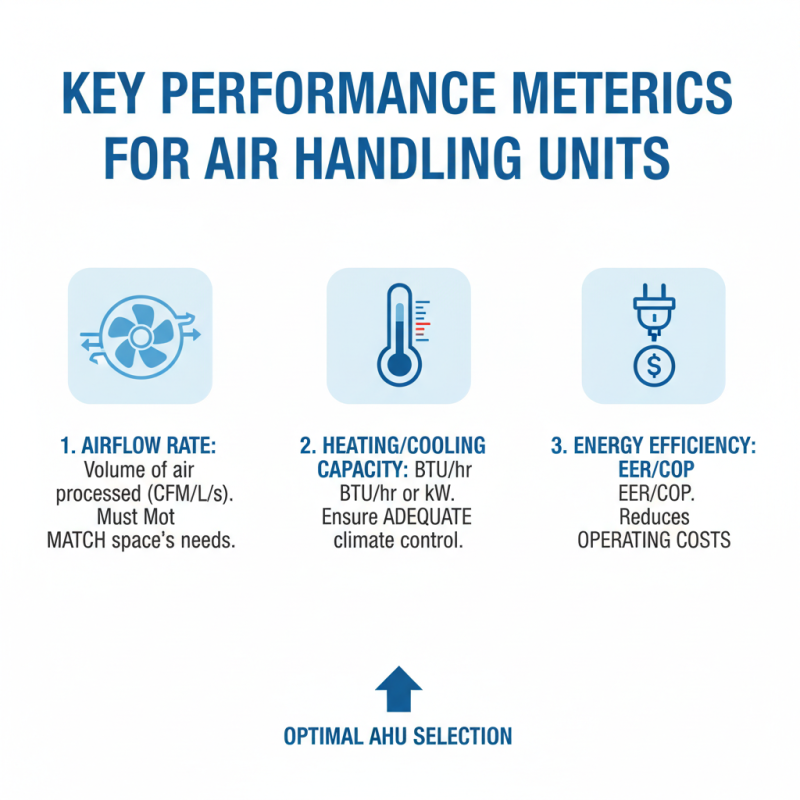
When selecting air handling units (AHUs), understanding key performance metrics is crucial. Airflow rate is a primary metric. It measures the volume of air an AHU can process. Ideally, units should match the space's heating and cooling needs without overworking.

Efficiency ratings, such as the Energy Efficiency Ratio (EER), determine energy consumption. Units with higher EERs use less electricity for the same output. This leads to lower operational costs over time. Keep an eye on maintenance needs. Some designs are easier to clean and service than others. This impacts long-term reliability.

**Tip:** Choose units with integrated controls for better monitoring. This feature allows adjustments based on real-time data.

Another metric to consider is noise levels. AHUs can create significant sound, impacting occupant comfort. Look for models designed for quieter operation, especially in sensitive areas. Lastly, the material quality matters. Corrosion-resistant materials extend an AHU’s lifespan, reducing costly replacements.

**Tip:** Always check warranty details. A solid warranty reflects manufacturer confidence in the product. If the terms seem too good to be true, they probably are.

Energy Efficiency Ratings and Certifications to Consider

When considering air handling units, energy efficiency ratings are critical. A high rating indicates that the unit consumes less energy while providing adequate airflow. This can lead to lower utility bills and a reduced environmental footprint. Various certifications, such as ENERGY STAR and ASHRAE standards, can also provide insights into a unit's energy efficiency. Look for these certifications to ensure you're selecting a reliable and efficient product.

It's important to evaluate the specific energy efficiency metrics like EER (Energy Efficiency Ratio) and SEER (Seasonal Energy Efficiency Ratio). These figures help buyers compare different models. However, not all units come with clear labeling. Sometimes, this information is buried in the technical specifications. Searching through manuals or product datasheets might reveal the efficiency you need, but it can be a tedious process.

Buyers should also think about long-term energy savings versus initial costs. An efficient unit might cost more upfront but could lead to significant savings over time. Nonetheless, some may overlook this, focusing only on the sticker price. Ensuring that an air handling unit meets established energy efficiency standards can prevent future regrets. Always aim for a balance of cost, efficiency, and performance.

Noise Levels and Acoustic Performance Features

When choosing an air handling unit (AHU), noise levels should be a top priority. Many buyers overlook this feature, focusing solely on efficiency or capacity. However, the acoustic performance of an AHU can significantly impact comfort in spaces like offices and hospitals. Unwanted noise can disrupt work, reduce productivity, and negatively affect health.

Acoustic performance involves several factors, including fan design, motor type, and casing materials. A well-designed fan reduces turbulence, which minimizes noise. Similarly, selecting materials that absorb sound rather than reflect it can enhance the unit’s performance. It is not just about choosing the quietest machine; buyers should consider how these factors interact.

Many manufacturers provide sound data, but understanding specifications can be tricky. Buyers must scrutinize test conditions and application scenarios. What works in one setting may not work in another. Real-world conditions can differ vastly from manufacturer claims. Being knowledgeable about these aspects can help ensure that the selected AHU aligns with your actual noise level needs.

Space Requirements and Design Flexibility

When considering air handling units (AHUs), space requirements and design flexibility are crucial factors. Many facilities overlook the importance of spatial constraints. According to the American Society of Heating, Refrigerating and Air-Conditioning Engineers (ASHRAE), nearly 30% of HVAC issues arise from inadequate installation space. This can lead to inadequate airflow and maintenance challenges.

Flexibility in design is not just a luxury; it is a necessity. A report from the International Energy Agency states that energy efficiency improves significantly when AHUs can adapt to varying demands. An efficient layout allows for easy integration of multi-zone systems, which can enhance climate control. However, a rigid design can bottleneck airflow and increase operational costs.

Consideration of vertical space is often underestimated. High ceilings can accommodate larger units, reducing noise and optimizing efficiency. However, not all installations have this advantage. A need for greater adaptability may require custom designs, which can incur higher upfront costs. The added expense must be balanced against long-term benefits. Many facilities now explore modular designs, allowing for future upgrades without extensive redesign.

Top 10 Air Handling Unit Features Buyers Should Consider

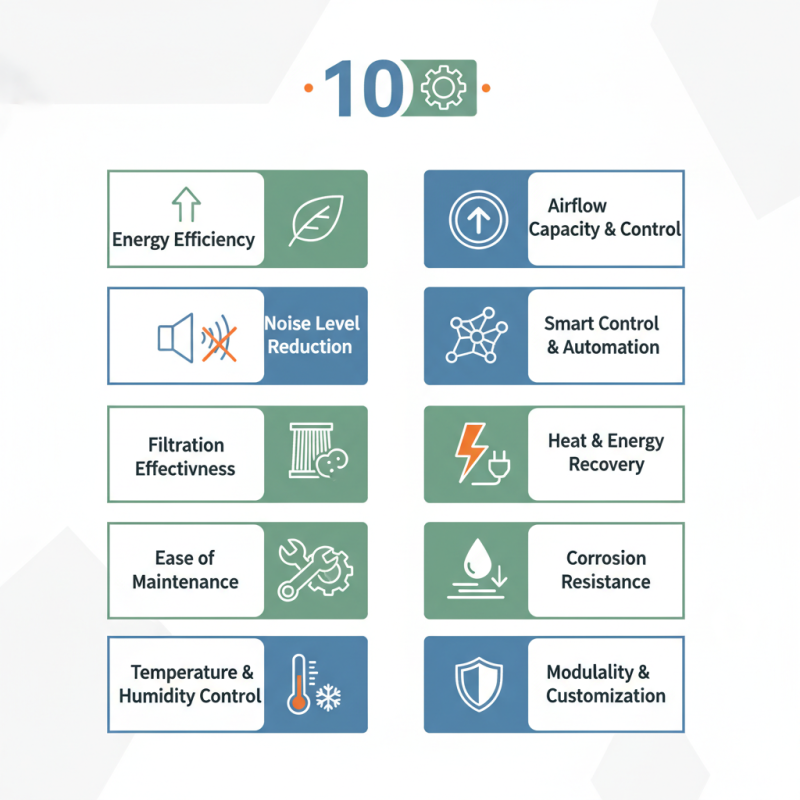
Feature Description Importance
Space Requirements Units should fit the designated installation area without compromising performance. Critical
Design Flexibility Ability to customize dimensions and layout to suit specific building needs. High
Energy Efficiency Units should have high SEER and EER ratings for minimal energy usage. Essential
Noise Levels Low operational noise to meet comfort standards in occupied spaces. Important
Maintenance Accessibility Ease of access for routine checks and servicing without major disassembly. High
Airflow Capacity Must provide sufficient airflow for the space it serves to maintain comfort levels. Critical
Control System Advanced controls for improved efficiency, monitoring and ease of use. Important
Filtration Options Variety of filters available for better air quality and compliance with standards. Essential
Heat Recovery The ability to reclaim energy from exhaust air for heating incoming air. Beneficial
Durability and Build Quality Robust construction materials to withstand environmental conditions. High

Maintenance and Service Accessibility Options

When selecting an air handling unit, maintenance and service accessibility are crucial aspects. A well-designed unit should allow easy access for regular inspection and maintenance tasks. Accessible locations can reduce downtime significantly. Complex units may require specialized tools or techniques. This can lead to longer service times and increased costs.

Consider how the design of the air handling unit influences maintenance. Some units have doors and panels that open easily. This enables quick inspections and faster repairs. However, not all models ensure this convenience. Users often find themselves struggling with limited access points. It can be frustrating when technicians are unable to reach vital components easily.

It’s also essential to evaluate the documentation and support provided. Reliable units often come with clear maintenance guidelines. Availability of service manuals can significantly aid technicians in performing tasks. This transparency can also enhance the unit's overall reliability. Units lacking proper documentation may pose a risk. Buyers should weigh these factors carefully to avoid future complications.

Top 10 Air Handling Unit Features Buyers Should Consider