How to Choose the Best Industrial HVAC Companies?
Choosing among industrial hvac companies is more than comparing equipment prices. A poorly matched system can leave a production floor with uneven temperatures, excess humidity, or costly downtime. Small details matter: a dusty process area, a rooftop unit exposed to summer heat, or a control panel operators struggle to use.
The U.S. Department of Energy reports that HVAC systems account for about 40% of energy use in commercial buildings. That figure is not a factory-specific estimate, but it shows why efficiency deserves careful attention. The Energy Information Administration’s Manufacturing Energy Consumption Survey also tracks energy use across manufacturing industries, reflecting how needs vary by sector. A food-processing plant, warehouse, and metal shop rarely share the same ventilation or temperature requirements.
Look beyond a company’s sales pitch. Ask how it measures heating and cooling loads, handles filtration, documents commissioning, and responds when equipment fails. Request examples from facilities with similar processes, not just similar square footage. Check whether the proposed controls are understandable to the people who will use them every day. And ask for assumptions in writing.
No shortlist is perfect. Even a reputable contractor may miss a process-specific constraint unless your team explains it clearly. Compare technical plans, service coverage, and lifecycle costs alongside credentials. The right partner should explain trade-offs in plain language—and be willing to revise a recommendation when site evidence points elsewhere.
Understanding Industrial HVAC Needs and Project Requirements
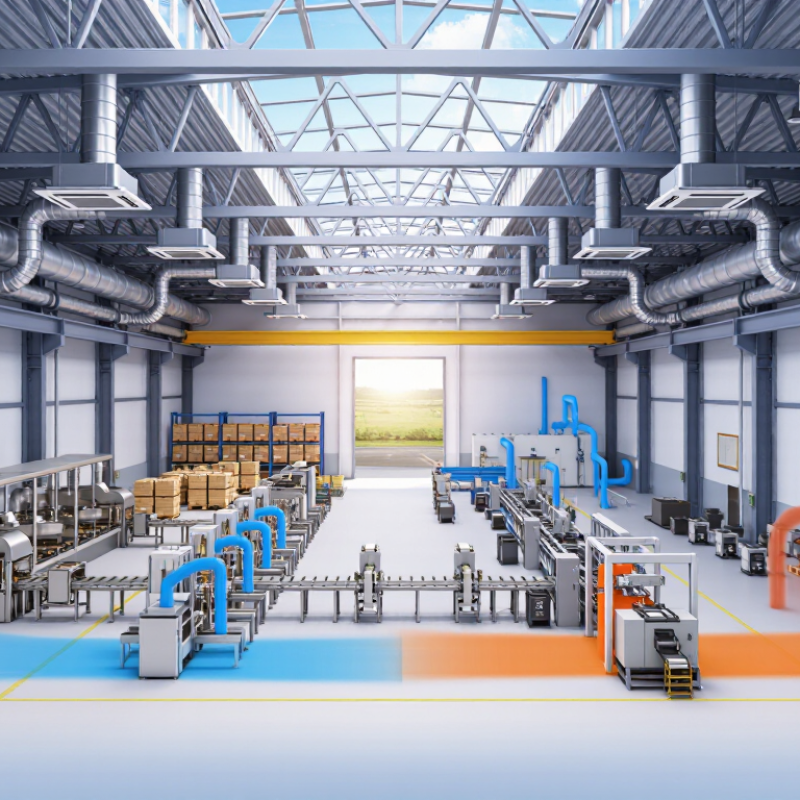
Understanding industrial HVAC requirements starts with the process, not the equipment list. Document indoor and outdoor design temperatures, heat released by machinery, operating shifts, and planned production changes. A welding bay may need contaminant capture, while a packaging room may demand stable humidity and filtered supply air. Measure existing airflow and pressure differences; a walk-through alone can miss heavily loaded zones.
Use published data carefully. The U.S. Energy Information Administration’s 2018 Commercial Buildings Energy Consumption Survey estimated that space heating used 32% of site energy and cooling 10%. These figures describe commercial buildings, not factories, but show why heating and cooling loads deserve separate analysis. Industrial sites also have process-specific loads, so an energy benchmark cannot replace a measured load calculation. The first estimate is rarely perfect.
Before requesting proposals, define capacity, filtration, ventilation, redundancy, controls, and service access. Record peak and typical loads separately, and note when production lines shut down. The U.S. Department of Energy’s Better Buildings guidance recommends assessing energy use and operational performance to identify efficiency opportunities. Ask engineers to state their assumptions, show how loads were calculated, and explain how the design will handle future expansion. A clear scope makes bids comparable and reveals gaps, such as a system sized for average conditions but not a humid summer shift.
How to use this chart: These illustrative capacity conversions use 1 refrigeration ton = 3.517 kW; they are not industry averages or equipment recommendations. When comparing industrial HVAC companies, confirm that each proposal is based on a project-specific load calculation that accounts for process heat, ventilation, building conditions, and operating schedules.
Verifying Company Credentials, Experience, and Industry Expertise
When comparing industrial HVAC companies, verify more than a polished proposal. Ask for current licenses, insurance certificates, and safety records relevant to the work. Confirm that the project manager and technicians have training for the systems they will service. A credential should match the task, whether it involves large chillers, process ventilation, or building controls. Ask for proof.
References offer a clearer view of real performance. Request projects similar in scale, operating hours, and environmental conditions to your facility. A contractor experienced in warehouses may not understand a clean production room’s pressure balance. Call references and ask how the team handled shutdown windows, commissioning, and unexpected equipment faults. Listen for specifics, not broad promises. One reference may be unusually positive, so compare several accounts and ask what could have gone better.
Industry expertise should show up in the questions a company asks during a site visit. Do they inspect access routes, electrical capacity, controls, and maintenance history before pricing the work? Experienced teams document assumptions, explain risks, and identify measurements still needed. Their proposal should name testing steps, acceptance criteria, and service response expectations. Details matter. I would still treat even a strong bid cautiously if the schedule leaves no room for commissioning or staff training. That caveat is easy to miss.
Evaluating HVAC Design, Equipment, and Energy Efficiency
Choosing an industrial HVAC company starts with the assumptions behind its design. Ask how its engineers estimate heat loads from process equipment, lighting, people, and the building envelope. A production floor with welding cells needs different airflow than a temperature-controlled storage area. The design should explain ventilation rates, filtration, humidity control, and how the system handles changing shifts or future equipment.
Look beyond equipment ratings. Request performance data at part load, not only peak capacity, and ask how variable-speed fans, pumps, and heat recovery fit the operating schedule. Energy models are useful, but their results depend on input quality. Real buildings surprise you. A door left open or a process line running overnight can change demand. A credible contractor will discuss those limits rather than promise a fixed percentage of savings.
Check how the company verifies its work after installation. Commissioning records should show measured airflow, supply temperatures, control sequences, and equipment operation under realistic conditions. Ask for comparable project references and clear service plans. Efficient equipment can still waste energy if sensors are poorly placed or controls are never adjusted. Even experienced teams can miss a detail, so look for a practical process for documenting issues and correcting them.
Comparing Proposals, Costs, Timelines, and Warranties
Compare proposals on the same scope: equipment capacity, controls, ductwork, commissioning, and exclusions. The U.S. Department of Energy’s Better Buildings program estimates that HVAC can account for about 40% of commercial-building energy use. Treat that as a screening benchmark, not a promise of savings. Ask each contractor to show assumed operating hours, utility rates, and expected seasonal performance. The EIA’s 2018 Commercial Buildings Energy Consumption Survey represents roughly 5.9 million U.S. commercial buildings, but your site may differ sharply from its averages.
Details matter.
A polished spreadsheet can still conceal a weak assumption.
Separate installed price from life-cycle cost. Request itemized labor, equipment, controls, and contingency figures, plus any allowances that could change after opening the ceiling. Compare schedules by milestones: survey, submittals, equipment delivery, shutdowns, testing, and handover. Ask which delays the contractor controls. Check warranty duration, covered parts, labor, response times, and exclusions in writing; a parts warranty alone may leave you paying for removal and reinstallation. DOE Federal Energy Management Program life-cycle-cost guidance is useful for weighing upfront and future expenses consistently. I would still question unusually low bids: they may be fair, or they may have missed a difficult access route, night work, or balancing time.
Assessing Maintenance Services and Long-Term Support
Choosing an industrial HVAC contractor means assessing the support that continues after installation. Request a preventive-maintenance schedule showing inspection frequency, filter changes, coil cleaning, and control checks. Ask who responds to alarms after hours and how quickly critical failures receive attention. Small details matter. A technician should leave clear service records, not just a brief note that the system was checked.
The U.S. Department of Energy’s 2010 Operations & Maintenance Best Practices guide reports potential energy-cost reductions of 5–20% from effective operations and maintenance programs. That range is not a guarantee; equipment condition, operating hours, and follow-through affect results. For applicable commercial HVAC systems, ASHRAE Standard 180-2018 provides minimum inspection and maintenance requirements. Ask contractors how their plans align with relevant standards and how they track recurring faults, parts, and repair costs over time. A polished dashboard alone proves little.
Tips: Request a sample service report before signing. Check that it records measured temperatures, pressure readings, and unresolved issues. Confirm staff training, parts availability, and escalation procedures. Then compare what each proposal includes. One uncomfortable question is worth asking: what happens when the assigned technician leaves? Long-term support should survive staff changes, not depend on one person’s memory.