Clean indoor air is not created by a filter alone. It depends on airflow, installation, maintenance, and pollutant sources.
The U.S. Environmental Protection Agency reports that indoor pollutant levels can be two to five times higher than outdoor levels. In some buildings, they can reach 100 times higher. Fine particles, pet dander, smoke, and mold spores may circulate quietly through return vents. You may not see them. Your lungs still receive them. The World Health Organization’s 2021 air-quality guidelines set a much lower annual PM2.5 target than many homes regularly achieve. That gap makes hvac air filtration worth closer attention.
“There is no silver bullet for indoor air quality,” cautions indoor-air researcher Dr. Richard Corsi. His point matters. A powerful filter may capture more particles, yet restrict airflow when the HVAC system cannot handle its resistance. A loosely fitted filter may also allow air to bypass the media. Small gaps matter. The U.S. EPA, ASHRAE Standard 241-2023, and ENERGY STAR guidance all support a broader approach, including source control, ventilation, and suitable filtration.
This guide examines 10 best HVAC air filters for clean indoor air. It compares MERV ratings, particle capture, pressure drop, fit, replacement intervals, and practical household costs. It also considers real rooms, not only laboratory claims. A filter can perform brilliantly on paper and disappoint inside a dusty furnace cabinet. That uncomfortable detail deserves attention. No product suits every home. The best choice balances cleaner air, safe airflow, and consistent maintenance.
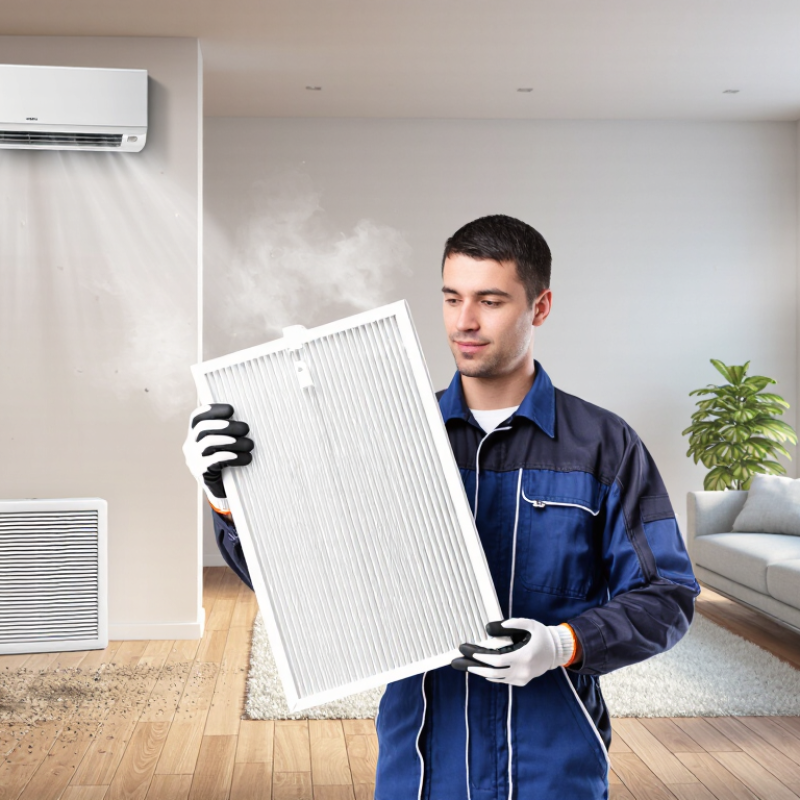
HVAC air filters do more than protect a heating and cooling system. They also influence the air your family breathes every day. As return air passes through the filter, fibers trap dust, pollen, pet dander, and some airborne particles. A clean filter helps the system move air efficiently. A neglected one can become gray, packed, and restrictive.
Filter performance depends on several details. A higher filtration rating may capture smaller particles, but it can also reduce airflow in systems not designed for that resistance. Check the equipment manual before choosing a filter. The filter must fit tightly, with no visible gaps around its frame. Otherwise, dirty air can slip around it. That small gap matters.
Regular inspection is practical. In a dusty home, during renovation, or with pets, a filter may need attention more often than the usual schedule. Many households replace filters by habit, then forget to check them. I have found that visual checks can challenge that routine. A filter can look acceptable while carrying a heavy, uneven dust load. It can also look dirty and still allow reasonable airflow.
HVAC filters have limits. They do not remove every odor, gas, or indoor pollutant, and they cannot replace ventilation or moisture control. Good indoor air quality also depends on cleaning surfaces, controlling leaks, and keeping humidity moderate. A simple filter works best when it matches the system, fits correctly, and receives consistent care.

Choosing an HVAC filter starts with your home, not the highest rating on the shelf.
The U.S. Environmental Protection Agency reports that indoor pollutant levels can be two to five times higher than outdoor levels. Yet stronger filtration may restrict airflow. Before buying, check your system’s manual and measure the existing filter. A filter that fits poorly can let dust bypass the media.
MERV ratings offer a useful comparison. Under ASHRAE Standard 52.2, higher MERV values indicate stronger particle removal under tested conditions. Many residential systems can support MERV 8 to MERV 13, but not every blower can handle the added resistance. Ask a qualified technician to measure airflow if you are unsure. Clean air should not come with weak cooling, noisy vents, or frozen coils.
Look closely at your household needs. Homes with pets, smokers, renovation dust, or seasonal allergies may benefit from better filtration. Replace the filter when it looks gray or loaded, rather than trusting a fixed calendar. The U.S. Department of Energy notes that clogged filters reduce system efficiency and can increase operating costs.
Monthly inspection is sensible, although real replacement timing varies. I have found that “one filter lasts three months” is often too optimistic in dusty homes. Small gaps matter. sealed edges matter. A filter is only useful when the system can breathe through it.
Cleaner indoor air begins with the correct filter, not the most expensive one. The U.S. Environmental Protection Agency reports that indoor pollutant levels can exceed outdoor levels several times.
A well-fitted pleated filter can capture dust, pollen, and some fine particles before they circulate through living spaces. Look for a Minimum Efficiency Reporting Value, or MERV, between 8 and 13. ASHRAE guidance commonly recommends MERV 13 when the HVAC system can handle its airflow resistance.
A filter should sit tightly inside its slot, without visible gaps along the edges. Even a high-efficiency filter performs poorly when air escapes around it.
Check the filter every month Especially during heavy heating or cooling periods. Replace it when the surface looks gray or airflow feels weaker. A dirty filter can increase system strain and reduce comfort.
An older blower may struggle with a dense filter, causing noise, uneven temperatures, or higher energy use. The U.S. Department of Energy emphasizes regular maintenance for efficient HVAC operation. That warning deserves attention.
Many households choose a stronger filter without checking system compatibility. A qualified technician can measure airflow and static pressure, although this step is often skipped. Cleaner air should not create a new mechanical problem.
Choosing among ten HVAC air filters starts with particle removal, not the product label. In home air-quality checks, I look at dust loading, airflow, and fit around the frame. Flat fiberglass filters are inexpensive and protect equipment, but they catch fewer fine particles. Pleated filters provide more surface area and usually perform better at similar thicknesses. Fit matters.
MERV ratings run from 1 to 20. MERV 8 can reduce common household dust and pollen, while MERV 11 or 13 captures more smoke, fine dust, and some respiratory aerosols under tested conditions. HEPA media remove much smaller particles, often near 99.97% at 0.3 microns, but many residential systems cannot handle their airflow resistance. Electrostatic filters can improve capture, yet their performance changes with cleaning and installation. Carbon layers target odors and gases, not dust. This distinction gets missed.
The best choice balances removal efficiency with pressure drop, replacement cost, and furnace capacity. Check the equipment manual, then inspect the filter monthly during dusty seasons. A loaded MERV 13 may clean less air than a fresh MERV 8 because airflow has weakened. I once assumed the highest rating was automatically healthiest; that was too simple. Measure comfort and airflow, not just the number. Seal gaps, install the arrow toward the blower, and replace a damaged filter immediately. Some rooms still need portable filtration, especially during smoke events.
Comparison of MERV-rated filters using minimum particle-removal efficiencies across three particle-size bands. Higher efficiency generally improves air cleaning, but may also increase airflow resistance.
How to read this chart: MERV 7–16 values are based on the minimum efficiency thresholds in ASHRAE 52.2 particle-size ranges. Blank values indicate that the rating does not specify a minimum threshold for that particle-size band. HEPA filters are a separate category and are commonly rated at 99.97% removal at 0.3 micrometers, so they are not assigned a MERV rating.
Clean indoor air depends on more than choosing a highly rated HVAC filter. Installation matters just as much. Turn off the heating or cooling system before opening the filter cabinet. Check the filter size printed on the frame, then match the airflow arrow with the direction of air movement. The arrow usually points toward the furnace or air handler. A loose filter can let dust bypass the media. A filter forced into place can restrict airflow.
Inspect the filter every month, especially during heavy heating or cooling seasons. Hold it near a window and look for a gray, dusty surface. Homes with pets, smokers, renovations, or allergy concerns may need replacement every 30 to 60 days. Other homes may reach 90 days, but the calendar is not a guarantee. A crowded filter increases resistance, which can reduce comfort and strain the blower. I still double-check this point because a filter can look clean while its edges remain poorly sealed.
Wear gloves if the filter is visibly dirty, and place the used one in a sealed bag. Wipe dust from the surrounding cabinet with a dry or slightly damp cloth. Do not wash a disposable filter. Reusable filters require cleaning and complete drying before installation. Record the replacement date on the cabinet door. It is a small habit. If rooms feel unusually dusty, airflow weakens, or the system cycles repeatedly, inspect the filter sooner and ask a qualified HVAC technician to check the system.
| Filter Type | Typical MERV Rating | Primary Filtration Strength | Recommended Use | Typical Replacement Interval | Estimated Airflow Impact | Installation and Maintenance Notes |
|---|---|---|---|---|---|---|
| Fiberglass Panel Filter | MERV 1–4 | Captures larger dust, lint, and household debris. | Basic HVAC protection in low-dust environments. | Every 30 days | Low | Install with the airflow arrow pointing toward the furnace or air handler. Replace when visibly loaded or damaged. |
| Pleated Synthetic Filter | MERV 5–8 | Filters dust, pollen, mold spores, and some larger airborne particles. | General residential use and standard central HVAC systems. | Every 1–3 months | Low to moderate | Confirm the exact frame size before installation. Check monthly, especially during heavy heating or cooling seasons. |
| High-Efficiency Pleated Filter | MERV 9–11 | Improves removal of fine dust, pollen, pet dander, and some smoke particles. | Homes with pets, allergies, or moderate indoor air-quality concerns. | Every 2–3 months | Moderate | Verify that the HVAC system can handle the filter’s resistance. A clogged filter can reduce airflow and increase energy use. |
| High-Efficiency Extended-Surface Filter | MERV 11–13 | Captures smaller particulate matter, including fine dust and many respiratory droplets. | Homes seeking stronger particle filtration without a separate air cleaner. | Every 2–6 months | Moderate to high | Use only when approved for the system. Replace rather than wash unless the product is specifically labeled washable. |
| Electrostatic Filter | MERV 5–8, depending on design | Uses electrically charged filter media to attract airborne particles. | Routine dust and allergen control in compatible HVAC systems. | Disposable: every 1–3 months; washable: monthly cleaning | Low to moderate | For washable models, rinse thoroughly and allow the filter to dry completely before reinstalling. Follow the airflow direction. |
| Washable Permanent Filter | Usually MERV 4–8 | Captures larger particles and can be reused after cleaning. | Users who prefer a reusable filter and can perform regular maintenance. | Clean every 1–3 months | Low to moderate | Turn off the HVAC system, remove the filter, rinse in the direction opposite normal airflow, and dry fully before replacement. |
| Carbon-Enhanced Filter | MERV 8–13 | Provides particle filtration and limited reduction of some household odors. | Homes with cooking odors, pets, or mild odor concerns. | Every 1–3 months | Moderate | Activated carbon capacity is limited and does not replace ventilation. Replace when odor control decreases or the filter becomes dirty. |
| Media Cabinet Filter | MERV 8–13 | Uses a deeper filter surface to capture particles while supporting longer service intervals. | Systems designed for 4–5 inch whole-home filter cabinets. | Every 6–12 months | Moderate | Check the cabinet access panel for a tight fit and air leaks. Use the replacement thickness specified for the cabinet. |
| HEPA-Grade Filter | HEPA is generally equivalent to MERV 17–20 | Very high removal efficiency for fine particles when used in compatible equipment. | Dedicated air cleaners, special filtration systems, or professionally designed installations. | Every 6–24 months, depending on loading | High | Do not install in a standard HVAC slot unless the equipment is designed for it. Excessive resistance can damage the blower or reduce airflow. |
| UV-C and Filter Combination System | Depends on the installed filter, commonly MERV 8–13 | Combines mechanical particle filtration with UV-C treatment designed for microbial control. | Whole-home indoor air-quality systems with adequate space and professional installation. | Filter: every 1–6 months; UV-C lamp: according to manufacturer service life | Moderate to high | UV-C is not a substitute for filtration or ventilation. Disconnect power before service and avoid direct exposure to operating UV-C light. |