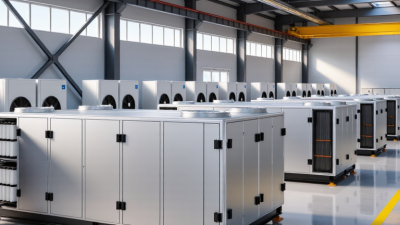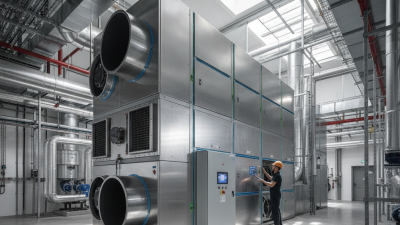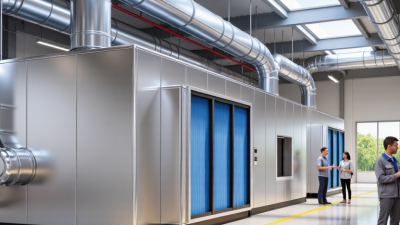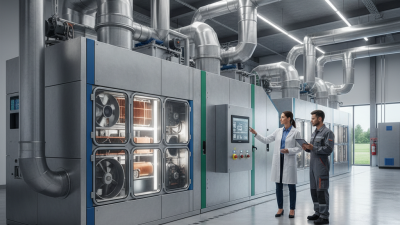
What are the best air handling systems in 2026? The answer depends on the building, climate, occupancy, and operating budget. A compact office may need quiet, demand-controlled ventilation. A hospital requires stricter filtration, pressure control, and dependable redundancy. One specification cannot serve every site.
Modern systems increasingly combine variable-speed fans, heat recovery, smart sensors, and efficient filtration. These features can reduce energy waste while maintaining healthier indoor conditions. However, connected controls are only useful when sensors remain calibrated. A dashboard may look impressive. Poor commissioning can still create cold rooms, noisy diffusers, or excessive energy use.
The strongest evaluations should examine performance beyond the product brochure. Engineers should review seasonal efficiency, humidity control, filter access, maintenance space, and total ownership cost. ASHRAE guidance, local mechanical codes, and documented laboratory testing can support responsible decisions. Real operating data matters too. A system that performs well during a factory test may struggle in a crowded classroom or dusty workshop.
This guide compares leading air handling systems through practical criteria, including reliability, indoor air quality, controls, serviceability, and carbon impact. It also considers installation conditions, because restricted plant rooms can change the best choice. Some recommendations may remain debatable. That is useful. Building performance involves compromises, and even a well-designed system can underperform without trained operators, regular maintenance, and honest post-occupancy review.
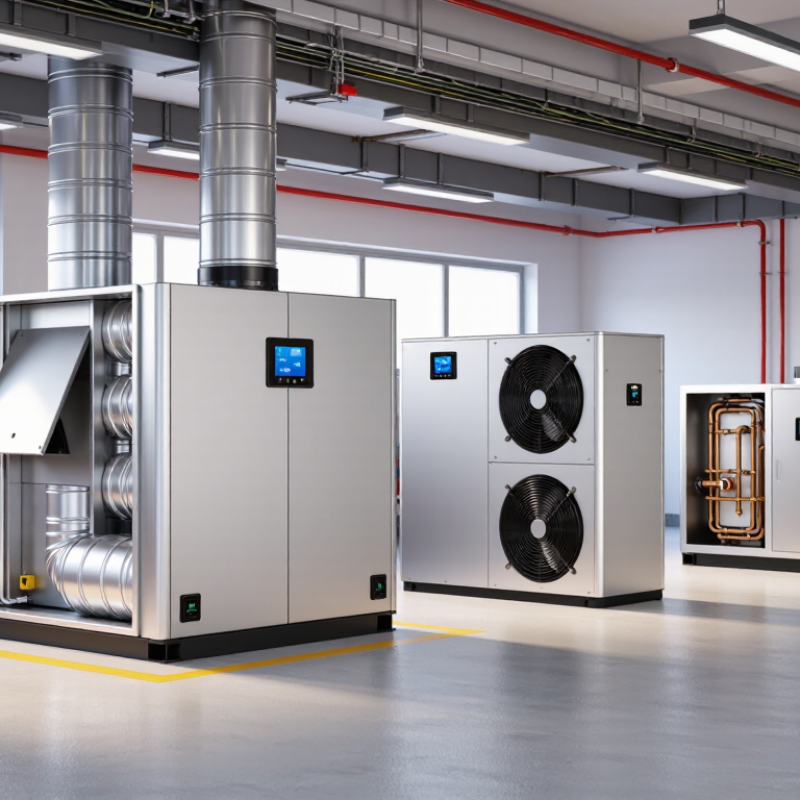
An air handling system is a mechanical unit that moves, filters, heats, cools, and sometimes humidifies indoor air. It connects with ductwork and distributes treated air throughout a building. A typical air handling unit contains filters, coils, fans, dampers, sensors, and drainage components. The casing should limit leakage and prevent unwanted condensation. Outdoor air also enters through controlled intake sections.
During commissioning, technicians measure airflow, temperature, pressure, and carbon dioxide levels. These checks reveal problems that a control screen may hide. Small errors matter. A loose filter can increase fan energy and reduce indoor comfort. In 2026, the best systems will combine efficient components with accurate monitoring. Heat recovery can reduce heating demand, while variable-speed fans adjust output as occupancy changes. Smart controls help, but they are not magic. Poor settings can waste energy.
Selection should begin with the building’s actual conditions. A coastal clinic may need corrosion-resistant components and strict filtration. A dusty workshop needs accessible filters and frequent inspection points. Engineers should calculate airflow, external pressure, noise, and seasonal loads before choosing equipment. Maintenance access matters too. I have seen efficient units underperform because technicians could not reach the coils easily. That design mistake is easy to miss. Reliable systems need clear service panels, readable alarms, and practical replacement schedules. Operators should review performance after installation, because real buildings rarely behave exactly like drawings.
In 2026, the defining air handling technologies are energy recovery, demand-controlled ventilation, and heat-pump integration. Energy recovery ventilators exchange heat and moisture between exhaust and outdoor air, reducing the load on cooling coils. This matters because buildings consume more than 30% of global energy, according to the International Energy Agency’s Energy Efficiency 2024 report. Every unnecessary cubic metre of conditioned air becomes a quiet energy penalty.
Dedicated outdoor air systems are gaining importance in schools, hospitals, and dense offices. They separate ventilation from room temperature control, while carbon dioxide sensors adjust airflow when occupancy changes. High-efficiency filtration also supports healthier indoor environments, but pressure losses can increase fan energy. That trade-off is often ignored. The 2024 Global Status Report for Buildings and Construction, published by UNEP, identifies efficiency and electrification as central pathways for reducing building emissions.
The strongest systems combine these technologies with heat pumps, variable-speed fans, and fault-detection software. ASHRAE Standard 241 provides a framework for managing equivalent clean airflow during changing indoor-air conditions. Digital monitoring can reveal a stuck damper, a dirty filter, or a sensor drifting by several degrees. Yet automation is not magic. Sensors need calibration, controls need commissioning, and occupants may still open windows at the wrong time. Field experience shows that a technically advanced air handler can perform poorly when maintenance schedules remain on paper only. Forecasting helps, but human inspection still matters.
| Technology / System Type | Typical Efficiency or Performance | Primary 2026 Advantage | Best-Fit Applications | Key Design Requirements | Main Limitation |
|---|---|---|---|---|---|
| Dedicated Outdoor Air Systems with Energy Recovery | Typical total or sensible recovery effectiveness: approximately 60%–85%, depending on exchanger type and operating conditions. | Reduces ventilation-related heating and cooling loads while maintaining controlled outdoor-air delivery. | Commercial buildings, schools, healthcare areas, laboratories, and buildings with high ventilation requirements. | Correct outdoor-air sizing, frost control, condensate management, filtration, and protection against unwanted cross-contamination. | Higher first cost and additional maintenance compared with basic outdoor-air units. |
| Heat-Recovery Wheel Air Handlers | Common temperature or enthalpy recovery effectiveness: approximately 70%–85% in suitable applications. | High heat and moisture transfer in a relatively compact footprint. | Office buildings, hotels, campuses, retail facilities, and mixed-humid or cold climates. | Purge-sector or sealing design, wheel-cleaning access, frost protection, and careful separation of exhaust and supply airstreams. | Potential contaminant transfer and moving-part maintenance; not ideal where exhaust air contains hazardous substances. |
| Fixed-Plate Heat and Enthalpy Exchangers | Typical sensible recovery effectiveness: approximately 50%–80%; enthalpy performance varies by membrane and air conditions. | No rotating components and very low risk of direct airstream mixing when properly selected. | Healthcare, laboratories, classrooms, and applications requiring strong separation between supply and exhaust air. | Drainage, frost prevention, pressure-drop control, access for cleaning, and suitable material selection. | Can require more space and may provide less moisture recovery than a well-selected rotary exchanger. |
| Variable-Air-Volume Air Handling Systems | Fan energy generally falls sharply at part load because fan power is approximately proportional to the cube of speed in ideal variable-speed operation. | Matches airflow to occupancy and zone demand instead of operating continuously at design airflow. | Large offices, institutional buildings, shopping facilities, and multi-zone commercial projects. | Stable minimum airflow, accurate static-pressure reset, properly commissioned terminal units, and effective zone controls. | Poor control sequences can cause low-airflow comfort problems, noise, or inadequate ventilation. |
| Fan-Array Air Handling Units | Multiple smaller fans can provide efficient part-load operation, staged capacity, and operational redundancy; actual efficiency depends on fan selection and system pressure. | Improves redundancy, serviceability, turndown, and equipment-room flexibility. | Data centers, hospitals, airports, high-rise buildings, and mission-critical facilities. | Coordinated fan control, acoustic treatment, access panels, motor protection, and balanced airflow across the array. | More controls and components can increase commissioning complexity and maintenance points. |
| EC-Motor and Electronically Commutated Fan Systems | High motor efficiency and integrated speed control; real-world savings depend on airflow profile, static pressure, and control settings. | Efficient modulation, reduced belt maintenance, and straightforward integration with demand-based controls. | Small and medium air handlers, rooftop units, fan arrays, terminal equipment, and retrofit projects. | Correct motor sizing, electrical compatibility, harmonic considerations, and airflow verification during commissioning. | Electronic components may require environmental protection and specialized replacement procedures. |
| Demand-Controlled Ventilation with CO₂ and Occupancy Sensors | Can reduce outdoor-air conditioning energy during low occupancy, provided minimum ventilation and indoor-air-quality requirements remain satisfied. | Delivers ventilation based on actual use rather than fixed schedules or maximum occupancy assumptions. | Meeting rooms, classrooms, offices, theaters, gyms, and intermittently occupied spaces. | Calibrated sensors, appropriate response limits, minimum outdoor-air settings, and integration with the building automation system. | CO₂ is an occupancy indicator, not a complete measure of every indoor pollutant or ventilation concern. |
| High-Efficiency Filtration and HEPA Modules | MERV 13–16 filters provide higher particle removal than basic filters; HEPA filters are rated to remove at least 99.97% of 0.3-micrometer test particles under the applicable test method. | Supports improved control of airborne particles when paired with adequate airflow and proper installation. | Healthcare, clean manufacturing, laboratories, schools, offices, and high-occupancy public buildings. | Filter sealing, pressure-drop monitoring, access for replacement, adequate fan capacity, and correct filtration-stage sequencing. | Higher filtration increases pressure drop, fan energy, replacement cost, and the need for careful maintenance. |
| Low-GWP Heat-Pump-Based Air Handling | Seasonal efficiency varies substantially by climate, refrigerant circuit, leaving-air temperature, and operating load; performance should be evaluated using seasonal rather than peak ratings. | Combines efficient heating and cooling with electrification and refrigerant-impact reduction strategies. | New commercial buildings, electrification retrofits, packaged air handlers, and projects with decarbonization targets. | Cold-climate capacity checks, defrost management, electrical-service analysis, refrigerant safety, and backup heat planning. | Cold-weather performance, peak electrical demand, refrigerant regulations, and retrofit space constraints must be evaluated. |
| Advanced Building Automation and Predictive Controls | Energy savings are project-specific; results depend on sensor quality, control sequences, equipment condition, and continuous commissioning. | Uses real-time data, weather forecasts, occupancy patterns, and fault detection to optimize operation. | Large commercial portfolios, campuses, hospitals, data centers, and buildings with complex HVAC schedules. | Reliable meters and sensors, open communication protocols, cybersecurity controls, trend data, and trained operators. | Poorly tuned algorithms or inaccurate sensors can reduce comfort, increase energy use, or create difficult-to-diagnose faults. |
| Liquid-Desiccant or Desiccant-Assisted Dehumidification | Separates part of the latent cooling load from sensible cooling; performance depends on solution concentration, regeneration temperature, and humidity conditions. | Provides precise humidity control and can reduce reliance on overcooling and reheating. | Museums, hospitals, indoor pools, pharmaceutical areas, food processing, and hot-humid climates. | Corrosion-resistant materials, solution carryover control, regeneration heat, humidity sensors, and specialized maintenance procedures. | Higher system complexity and specialized service requirements compared with conventional cooling-coil dehumidification. |
Note: Performance figures are representative industry ranges rather than guarantees. Final selection should be based on climate, occupancy, indoor-air-quality objectives, pressure drop, operating schedules, lifecycle cost, applicable codes, and commissioning requirements.
Modern air handling systems differ less by appearance than by control quality, filtration, and energy recovery. A 2024 Global Status Report for Buildings and Construction found that buildings consumed about 32% of global energy and produced roughly 34% of energy-related carbon emissions in 2023. This makes efficiency a practical concern, not a decorative feature.
Heat-recovery ventilation can reduce heating and cooling losses while maintaining outdoor-air supply. Dedicated outdoor-air systems separate ventilation from room temperature control, improving humidity management in dense offices. Variable-air-volume systems respond to changing occupancy, but poor sensor calibration can waste energy. Demand-controlled ventilation is useful in meeting rooms, although excessive carbon-dioxide reduction targets may create uncomfortable airflow.
Filtration matters too. Higher-efficiency filters can capture smaller particles, yet they also increase fan pressure and electricity use. The U.S. Department of Energy notes that heating, ventilation, and air-conditioning systems may represent about 40% of commercial building energy use. That figure makes fan selection and maintenance important. The International Energy Agency’s Energy Efficiency 2023 report also identifies buildings as responsible for around 30% of global final energy demand.
No single system wins everywhere. A humid coastal school needs different controls from a dry warehouse. Field commissioning often reveals overlooked problems, including blocked filters, unbalanced airflow, and inaccurate occupancy sensors. Digital monitoring helps, but it is not flawless. Data can be incomplete, and operators still need practical judgment.
In practice, the best air handling system depends less on equipment size than on building behavior. A tight office with glass walls needs different airflow than an older school with leaky corridors. Local climate matters too. Humid regions demand careful moisture control, while cold climates require freeze protection and reliable heat recovery.
Occupancy patterns shape the decision. Meeting rooms may fill suddenly, while storage areas remain empty for hours. Demand-controlled ventilation can respond to these changes, but only when sensors are positioned and calibrated correctly. Filtration should match outdoor pollution, indoor activities, and pressure requirements. Higher-efficiency filters can improve air quality, yet they may increase fan energy if the system was not designed for resistance. Small details matter.
Maintenance access often decides whether a promising design performs well. Technicians need safe routes, readable controls, replacement filters, and enough room around coils. Noise levels deserve attention near classrooms, bedrooms, and workstations. Energy models are useful, but they are not perfect. Real schedules, neglected dampers, and changing occupancy can undermine their predictions. Commissioning measurements can reveal problems that drawings miss. A practical selection also weighs installation space, utility costs, local codes, and the owner’s maintenance capacity. Sometimes the less complex option performs better because people can actually operate it.
Selecting an air handling system in 2026 should begin with the building, not a catalogue. Estimate occupancy, outdoor-air demand, humidity, filtration, noise, and peak loads. A qualified engineer should verify calculations against local codes and recognized ventilation standards. Oversizing is common. It can cause short cycling, wasted energy, and unstable humidity.
Inspect the installation area before approval. Leave clear access for filters, coils, fans, dampers, drains, and sensors. Ask whether technicians can remove a fan motor without dismantling nearby equipment. That practical question often matters more than a small efficiency difference. Choose controls that show airflow, pressure, temperature, and alarms clearly. Energy recovery may help in high-ventilation buildings, but suitability depends on climate and contamination risks.
Maintenance should follow operating conditions, not a generic calendar. Check filters for loading, inspect belts and bearings, clean coils, test drain pans, and calibrate sensors. Review trends monthly; a slow rise in fan pressure can reveal blocked filters early. Keep service records with dates, readings, and corrective actions. I have seen teams replace parts too quickly because the control sensor was wrong. That mistake is expensive. Maintenance plans are never perfect. Dust, renovations, and changing occupancy can defeat a neat schedule. Reassess after unusual events, and request an independent performance review when comfort or indoor-air quality repeatedly declines.