
A reliable Pastry Maker can help a bakery, café, or hotel produce consistent pastries during busy service. When dough needs shaping, mixing, or portioning in steady batches, suitable equipment can reduce repetitive handwork and keep preparation moving. That matters at 7 a.m., when trays must be filled before the first customers arrive. Small gains add up.
The right choice depends on what your team actually makes. A shop focused on croissants may need different functions from one preparing tart shells, cookies, or filled pastries. Compare capacity, speed settings, cleaning requirements, available workspace, and how easily staff can operate the machine. Ask suppliers about materials, maintenance, warranty coverage, and access to replacement parts. If possible, test the equipment with your usual dough. A machine that performs well in a showroom may behave differently with a cold, sticky batch.
Consistency is useful, but it is not automatic. Staff still need clear recipes, safe handling practices, and time to learn the equipment. A Pastry Maker may also require more cleaning than expected, especially after sugary fillings or butter-rich dough. Consider labor savings alongside purchase and operating costs, rather than focusing only on the price tag. And leave room for doubt: a larger machine is not always a better fit. The best choice supports your menu, production volume, and team without making everyday work harder.
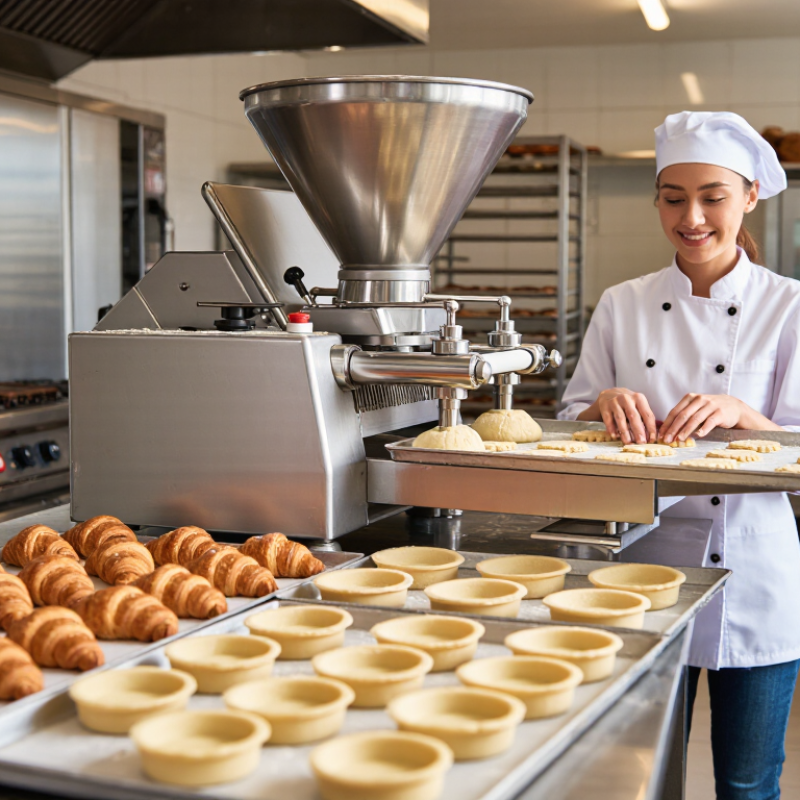
A pastry maker in a commercial kitchen turns recipes into reliable daily production. The work may begin before sunrise, weighing flour, checking butter temperature, and preparing doughs for the day’s orders. They mix batters, shape pastries, fill tarts, monitor proofing, and adjust oven timing as batches move through the kitchen. Timing matters. A few minutes can change a croissant’s layers or leave a custard tart under-set.
The role also involves planning. A pastry maker estimates quantities, labels prepared components, rotates stock, and keeps work surfaces and tools clean. They coordinate with cooks and service staff so desserts are ready when needed, not hours too early. Small details count. A consistent tart shell, clear allergen notes, and careful storage help reduce waste and avoid rushed substitutions. These habits support quality as well as a smoother service.
For a business, a skilled pastry maker can make production more dependable and give a menu a clear point of difference. They may adapt recipes to available equipment, seasonal ingredients, or the pace of service. Still, adding elaborate desserts is not always the best choice. A menu can outgrow the kitchen’s oven space or staffing, and some recipes take longer than expected to scale. Reviewing preparation time, batch size, and sales patterns helps keep the offer practical. There is always room to improve a recipe after a busy shift.
A pastry maker prepares and bakes pastries, manages fillings and finishing, and helps maintain consistent quality and safe handling in a commercial kitchen.
These FDA Food Code benchmarks illustrate temperature controls relevant to pastry ingredients and prepared foods. They are holding limits, not baking temperatures; check local requirements for your kitchen.
A pastry maker can help a business offer more than one signature treat. Depending on its settings and capacity, it may produce laminated dough for croissants and Danish pastries, or shape dough for tart shells and cookies. A café might bake flaky morning pastries, while a small hotel could prepare dessert bases in consistent sizes. Small batches help. They make it easier to adjust output when weekday demand differs from weekend demand.
The product range can also include savory items. Think spinach-and-cheese turnovers, mini quiches, or filled pastry rolls for lunch counters. For variety, bakeries can rotate fruit tarts with the seasons, using firm apples in cooler months and berries when they are plentiful. A machine does not decide which fillings hold their shape, though. Trial batches reveal whether a filling leaks, scorches, or makes the pastry soggy.
Consistency matters, but it takes careful setup. Dough temperature, portion weight, and baking time can all affect texture, so staff should record settings that work and check results regularly. Keep it simple. A broad menu may sound appealing, yet slow-selling items can leave ingredients unused. Start with a few products, compare waste and customer demand, then expand where the numbers support it. Clear ingredient information also helps customers make informed choices.
A pastry maker can speed up repetitive work, from rolling dough to shaping uniform shells. Instead of judging thickness by eye, staff can set a repeatable gauge and move trays through production with fewer pauses. That matters during the morning rush, when chilled dough softens beside a warm oven. Faster output helps, but only when the recipe, settings, and maintenance stay consistent.
Consistency also supports portion control. UNEP’s Food Waste Index Report 2024 estimates that 1.05 billion tonnes of food were wasted across households, food service, and retail in 2022. A pastry machine cannot solve food waste alone, but evenly sized pieces make batch planning and yield checks easier. The U.S. Bureau of Labor Statistics projects baker employment will grow 5% from 2023 to 2033, adding pressure to make skilled labor more productive. Still, a machine cannot rescue a poor formula or careless setup. That deserves attention.
Tips: Weigh dough before testing settings. Record thickness, speed, and yield for each batch. Check the first tray by hand; small differences can become a full day’s problem. Don’t chase speed at the cost of texture.
A pastry maker can give a business a reason to stand out beyond price. Warm croissants in the morning, a seasonal fruit tart, or a small celebration cake make the offer tangible. In the National Restaurant Association’s 2024 State of the Restaurant Industry report, U.S. restaurant sales were projected to reach $1.1 trillion. That figure covers restaurants broadly, not pastry sales alone, but it signals a large food-service market where distinctive products can matter.
A skilled maker can also support menu flexibility. A shared dough or filling may serve several products, helping a kitchen manage ingredients and respond to changing demand. The U.S. Bureau of Labor Statistics projected 5% employment growth for bakers from 2022 to 2032, with about 28,800 openings each year. Those figures describe the occupation, not guaranteed business growth. Still, they point to continuing demand for baking skills. There are trade-offs. Fresh pastry needs careful timing, and unsold trays can become waste. Start with a few products, track daily sales, and adjust batch sizes. Small details matter: a crisp edge, a clear allergen note, and consistent portions. One imperfect batch can teach more than a glossy menu.
Why Choose a Pastry Maker for Your Business?
How to Choose a Pastry Maker for Your Business
Choose for repeatable skill, not just a beautiful portfolio. Ask candidates to produce a signature item and a simple bestseller, such as croissants and fruit tarts. Check even browning, clean layers, accurate portioning, and how well products hold after display. A polished tart is not enough; consistency during a busy morning matters more. The U.S. Bureau of Labor Statistics projects 5% employment growth for bakers from 2024 to 2034, with about 39,900 openings each year. Its category includes bakers, not pastry specialists alone, but it signals continuing demand for skilled production.
Tips: Use a paid skills test with clear criteria. Ask how the candidate plans batches, controls waste, and adjusts recipes when ingredients vary. Watch the process, not only the final plate.
Compare candidates against your actual kitchen. Can they meet your daily volume, work with your ovens, and keep recipes documented for handoffs? Ask for references and confirm experience with food safety, allergen communication, and production schedules. The National Restaurant Association’s 2025 State of the Restaurant Industry projected $1.5 trillion in U.S. restaurant sales, a broad market figure rather than a guarantee for any bakery. Don’t hire on speed alone. A slower maker who records yields and catches errors may protect quality better, though every business has different needs.
| Equipment Type | Best Suited To | Why It Can Help a Business | What to Check Before Buying | Key Limitation |
|---|---|---|---|---|
| Planetary mixer | Cake batter, pastry cream, meringue, buttercream, and some lighter doughs. | A versatile choice for businesses making several types of products. Interchangeable attachments can support mixing, whipping, and beating. | Confirm bowl capacity, available attachments, speed settings, batch size, cleaning access, and whether the machine can handle your heaviest mixtures. | It is not the best choice for frequent, high-volume mixing of stiff dough; check the manufacturer’s stated duty and batch limits. |
| Spiral mixer | Yeast-raised doughs, including dough used for some pastries and baked goods. | Designed specifically for dough mixing and can be useful when dough production is a regular part of the menu. | Compare dough capacity with your typical batch, and check minimum batch size, mixing controls, bowl access, and cleaning requirements. | Less versatile than a planetary mixer for whipping, beating, and preparing creams or batters. |
| Dough sheeter | Laminated dough, tart bases, and other doughs that need an even, repeatable thickness. | Can reduce repetitive rolling work and help produce more consistent sheets for croissants, puff pastry, and similar items. | Measure the available floor or bench space; check roller width, thickness adjustment, operating controls, safety features, and cleaning access. | Requires suitable operator training and is most useful when the menu includes regular production of sheeted dough. |
| Convection oven | Cookies, choux pastry, small cakes, and products that benefit from circulating hot air. | Forced-air circulation can help distribute heat around the oven cavity and support multi-tray baking, depending on the model and load. | Check tray dimensions and capacity, temperature controls, ventilation needs, power or fuel supply, and whether the oven suits your product mix. | Fan airflow may affect delicate items; test recipes and tray loading because baking results vary by product and oven. |
| Deck oven | Bread, tarts, and products that benefit from heat delivered from a baking surface as well as the oven chamber. | Offers separate baking decks on some models, which can help organize different products or batches. | Review deck size, number of chambers, temperature controls, loading method, installation requirements, and available space. | Capacity and workflow depend on deck dimensions and loading speed; it may be less convenient than a rack oven for large quantities of tray-baked items. |
| Proofer | Yeast-raised dough that needs controlled warmth and humidity during proofing. | Provides a more controlled proofing environment than an uncontrolled room, supporting a repeatable production routine. | Check tray or rack capacity, temperature and humidity controls, water supply or filling method, and compatibility with your production schedule. | It is intended for proofing yeast-based products; it is not a substitute for refrigeration or dough chilling. |
| Refrigerated pastry worktop | Preparation and short-term holding of temperature-sensitive ingredients and pastry components. | Combines a chilled storage area with a nearby work surface, which can make a compact preparation area more practical. | Check usable storage volume, worktop dimensions, temperature range, airflow around the unit, cleaning access, and local installation requirements. | It does not replace a dedicated refrigerator or freezer when larger storage capacity or different temperature conditions are needed. |
| Business-wide selection criteria | Any pastry equipment purchase. | Matching equipment to the menu, batch sizes, staff workflow, and available utilities can help avoid buying capacity or features the business will not use. | Estimate peak production needs; measure the installation area; verify electrical, gas, water, and ventilation requirements; review cleaning, maintenance, warranty, and service access. | Do not choose by capacity alone: throughput also depends on preparation time, oven or machine cycles, staffing, and the number of production stages. |