
Skip to content

Top Smoke Alarm Manufacturers for Global Buyers?

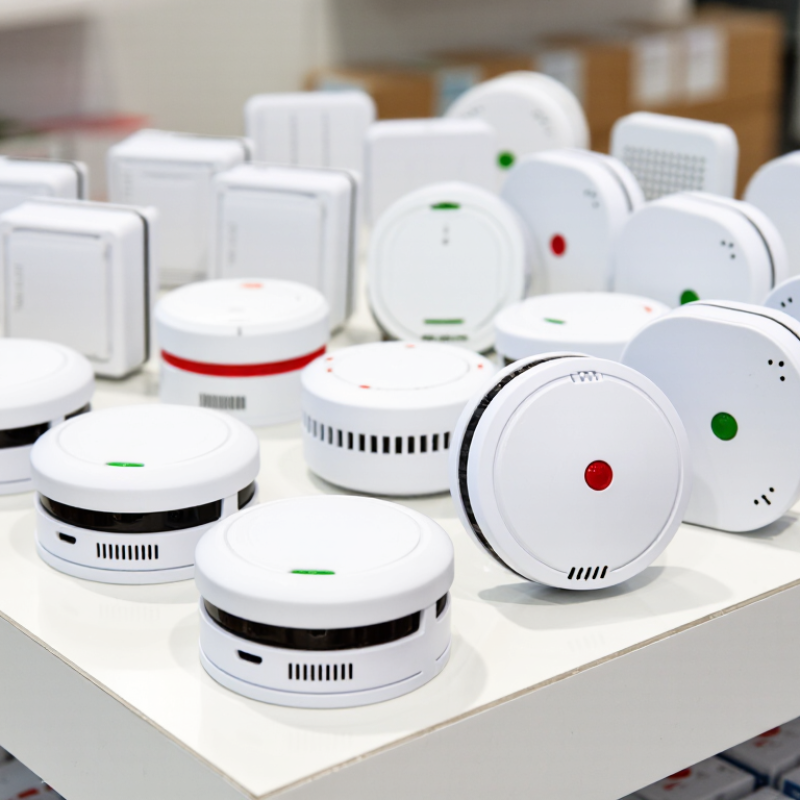
Choosing the right Smoke Alarm manufacturer can feel like comparing identical white devices on a crowded shelf. However, their sensing technology, quality controls, certifications, and support services may differ greatly. Global buyers need more than attractive pricing. They need dependable alarms that respond quickly to real hazards, including cooking smoke, electrical faults, and overnight battery failure. This guide introduces leading manufacturers and explains the practical factors behind their reputations.

The discussion will examine product design, manufacturing experience, international certifications, warranty policies, and distribution capability. It will also consider photoelectric and dual-sensor models, sealed lithium batteries, wireless connectivity, and low-battery alerts. A reliable manufacturer should provide clear technical documents, traceable production information, and consistent testing records. Details matter. A firm test button, readable alarm indicators, and secure packaging can influence performance after long-distance shipping.

There is no universal “best” supplier for every market. Local building rules, climate, housing types, and purchasing volumes can change the decision. Even respected brands may have limitations, such as restricted customization or slower after-sales support in certain regions. Buyers should request samples and inspect them in realistic settings, such as bedrooms, hallways, and kitchens. One product may perform well in a laboratory but feel confusing during installation. That possibility deserves attention. This overview aims to support careful comparison, not replace independent compliance checks or field evaluation.
Top Smoke Alarm Manufacturers for Global Buyers?

Smoke Alarm Types and Their Core Detection Technologies

Smoke alarm selection begins with understanding detection technology, not appearance. Photoelectric alarms use a light beam and sensor to identify smoke particles. They generally respond well to slow, smoldering fires, such as burning furniture or bedding. Ionization alarms detect changes in electrically charged air. They can react quickly to fast-flaming fires, although they may produce more nuisance alarms near kitchens. Local requirements differ, so global buyers should verify certification, test methods, and installation rules before ordering.

Dual-sensor models combine photoelectric and ionization detection. Multi-criteria alarms may also monitor heat, carbon monoxide, or changing smoke patterns. These systems can improve decision-making in hotels, warehouses, and residential buildings with varied fire risks. In practical inspections, sensor placement often matters as much as the sensor itself. A sophisticated alarm performs poorly when dust blocks its chamber or a ceiling fan disrupts airflow. That detail is easy to miss.

Tips: Match technology to the room. Use photoelectric detection near bedrooms, but avoid installing alarms directly beside cooking appliances. Test every unit monthly, clean vents gently, and replace batteries promptly. Wireless models simplify expansion, yet signal interference remains a real concern. Do not assume one technology fits every building. A small pilot installation can reveal false alarms, weak connectivity, and maintenance problems before a large purchase.

Key Criteria for Comparing Global Smoke Alarm Manufacturers

Top Smoke Alarm Manufacturers for Global Buyers?

Comparing global smoke alarm manufacturers requires more than checking unit price. Start with certification coverage. Buyers should verify whether products meet the standards required in each destination, such as EN 14604 or UL 217. Factory quality systems also matter. ISO 9001 certification, documented inspection records, and traceable batch numbers provide useful evidence. Still, paperwork is not performance.

NFPA’s Smoke Alarms in U.S. Home Fires report found that 59% of reported home fire deaths occurred where smoke alarms were missing or not working during 2014–2018. This figure makes reliability and maintenance central purchasing criteria. Test alarm sensitivity, nuisance-alarm resistance, battery life, and low-battery warnings under realistic conditions. Ask manufacturers for laboratory reports, failure rates, and aging-test results. Short demonstrations are not enough.

Supply consistency deserves equal attention. Review production capacity, component sourcing, lead times, spare parts, and warranty response. A manufacturer may offer an attractive quotation, yet struggle with replacement units six months later. That risk is easy to overlook. Global buyers should also examine multilingual manuals, installation guidance, packaging durability, and technical support across time zones. I would request independent test evidence rather than relying only on factory claims. Even a respected certificate can become outdated. Recheck its scope, issuing body, and expiry date before approving a supplier.

Leading Manufacturers and Their Product Strengths

Top Smoke Alarm Manufacturers for Global Buyers?

Leading manufacturers distinguish themselves through dependable detection, disciplined testing, and clear technical documentation. Strong producers typically offer photoelectric, ionization, heat, and combination alarms for different environments. Photoelectric models often suit bedrooms and living areas because they respond well to slow, smoldering fires. Combination models add broader detection, but they can increase cost and maintenance needs.

Manufacturing strength appears in small details. Reliable factories calibrate sensors during production, test alarm volume, inspect battery contacts, and record batch information. Some use sealed lithium batteries with long service life. Others provide replaceable batteries, wired power options, and interconnected alarms for larger buildings. Wireless models may include mobile alerts, but buyers should examine network stability, data handling, and backup behavior. Attractive features mean little if the alarm fails during a power interruption.

Global buyers should request test reports, quality-control records, warranty terms, and multilingual installation guides. They should also confirm compatibility with local voltage, mounting methods, and safety requirements. Experienced suppliers explain these limits instead of promising universal performance. That matters. A manufacturer may offer excellent sensors but weaker packaging or inconsistent delivery. Another may provide fast customization while lacking long-term field data. Independent sampling and factory audits can reveal these gaps. No production system is flawless, and even a trusted supplier needs regular review.

Top Smoke Alarm Manufacturers for Global Buyers? - Leading Manufacturers and Their Product Strengths
Anonymous Manufacturer Type Primary Product Strength Typical Product Portfolio Relevant International Standards Power Options Connectivity Capability Best-Fit Buyer Profile Key Sourcing Considerations
Large-scale OEM/ODM Manufacturer High-volume production, private labeling, and customized housing or packaging Photoelectric alarms Combination smoke/CO alarms Heat alarms UL 217 for smoke alarms in the United States; EN 14604 for residential smoke alarms in the European market; applicable national marking and conformity requirements Replaceable alkaline batteries, sealed lithium batteries, and mains-powered models with battery backup Usually offers basic interconnection options; wireless features depend on the selected platform and regional requirements National distributors, home-improvement retailers, property developers, and private-label importers Confirm minimum order quantity, tooling ownership, firmware control, production capacity, inspection procedures, and after-sales spare-part support
Safety-Compliance-Focused Manufacturer Strong documentation, traceability, laboratory testing, and regulatory support Residential smoke alarms Commercial detection devices CO alarms EN 14604, UL 217, UL 2034 for carbon-monoxide alarms, and ISO 9001 quality-management practices where certified Sealed 10-year lithium battery models and replaceable-battery models, subject to product configuration Wired interconnection, wireless interconnection, or standalone operation depending on model architecture Buyers serving regulated markets, public housing, social housing, and institutional projects Request current certificates, test reports, declaration documents, production-batch traceability, and evidence that the tested model matches the offered SKU
Smart-Home Integration Manufacturer Connected alarms, remote notifications, device status monitoring, and app-based management Wi-Fi smoke alarms Zigbee devices Interconnected alarm systems Product safety requirements remain essential; wireless products may also require radio-equipment approval in each target market Replaceable or sealed batteries, with power-consumption performance influenced by wireless communication frequency Wi-Fi, Zigbee, proprietary radio, mobile alerts, and smart-home platform integration depending on model Smart-home distributors, technology retailers, connected-property operators, and premium residential projects Evaluate data security, cloud-service location, API availability, subscription policy, firmware-update support, app ownership, and offline alarm operation
Cost-Competitive Export Manufacturer Competitive unit pricing, straightforward construction, and flexible order quantities Basic photoelectric alarms Compact travel alarms Entry-level CO alarms Compliance must be verified for the destination market, including EN 14604, UL requirements, AS 3786, or other applicable national standards Commonly uses replaceable alkaline batteries; sealed-battery versions may be available for specific programs Primarily standalone operation, with selected models offering wired or wireless interconnection Importers, discount retailers, regional wholesalers, and promotional-product buyers Compare total landed cost rather than factory price alone, including certification, packaging, battery transport, inspection, warranty, and product liability exposure
Commercial and Project-Specification Manufacturer System compatibility, multi-device networking, and support for larger building projects Addressable detectors Conventional detectors Commercial smoke systems Requirements vary by installation type and country; project specifications may reference EN 54 series standards, UL 268, or local fire-code provisions Typically powered through a dedicated fire-alarm control system with standby power provisions Addressable loops, conventional zones, control panels, remote annunciation, and building-management-system interfaces Fire-system integrators, engineering contractors, commercial developers, warehouses, schools, and healthcare facilities Check system interoperability, loop capacity, panel compatibility, maintenance software, installer training, commissioning support, and replacement-device availability
Special-Environment Detection Manufacturer Solutions for locations exposed to dust, humidity, temperature variation, or nuisance-alarm risks Heat alarms Multi-sensor detectors Industrial smoke detection Applicable product standards depend on the device type and market; ingress-protection claims should be supported by relevant test evidence Battery-powered, low-voltage wired, or control-panel-powered configurations depending on application Wired systems, addressable networks, relay outputs, and selected industrial communication interfaces Garages, kitchens, workshops, warehouses, utility rooms, and industrial facilities where standard smoke alarms may be unsuitable Verify operating-temperature range, humidity tolerance, ingress-protection rating, alarm sensitivity, false-alarm resistance, and installation limitations

Note: Certification requirements, radio approvals, installation rules, and fire-code obligations vary by destination market. Buyers should verify current certificates and test reports for the exact model and production version before placing an order.

International Certifications, Standards, and Market Access

Top Smoke Alarm Manufacturers for Global Buyers?

International Certifications, Standards, and Market Access

Global buyers should treat certification as a market-entry requirement, not a decorative logo. In the United States, residential smoke alarms commonly follow UL 217. European sales usually require compliance with EN 14604 and applicable CE requirements. Other markets may apply different rules, such as AS 3786 in Australia or CAN/ULC-S531 in Canada. The correct standard depends on the product type, installation location, and local authority.

Ask manufacturers for current certificates, test reports, factory details, and model numbers. These documents should match the exact alarm being purchased. A certificate for an older revision may not support a new design. Check the certification body, validity period, test scope, and production site. Small details matter. Battery type matters too.

Market access also involves packaging, language, radio approvals, recycling labels, and importer responsibilities. Wireless alarms may require additional national approvals because radio frequencies differ. A reliable manufacturer should explain these requirements before shipment, not after customs delays. However, supplier documents are not always complete. Buyers should verify certificates directly with the relevant database or testing organization. This step can feel slow, especially during urgent sourcing.

Factory audits add practical evidence. Review calibration records, alarm sensitivity tests, battery checks, and traceability labels. Request samples from normal production, not specially prepared units. That is where weaknesses often appear. Even experienced buyers can overlook regional packaging rules or replacement-battery limits. A careful compliance review reduces that risk and supports smoother market entry.

Purchasing, Installation, and After-Sales Considerations

Choosing a smoke alarm manufacturer requires more than comparing unit prices. Buyers should verify factory experience, production capacity, and quality-control records. Request test reports, material specifications, and samples from the same production line. A low-cost sample means little if bulk units change later.

Check whether the alarm suits the destination market’s voltage, mounting method, and safety requirements. Ask about sensor type, battery life, warning volume, and performance in kitchens or humid rooms. Clear manuals matter. Poor translations can cause installation errors. I have seen projects delayed because a ceiling bracket did not match local installers’ tools. Small details become expensive quickly.

Installation should include a practical site plan, not only a product diagram. Keep alarms away from vents, cooking fumes, and dead-air corners. Test every unit after mounting, then record its location and test date. After-sales support should cover replacement procedures, fault analysis, spare parts, and response times. A reliable supplier provides traceable batch information and helps identify recurring failures. Some buyers overlook warranty exclusions, especially for batteries and environmental damage. That deserves careful review. Periodic testing is still necessary, even when the manufacturer promises long service life. No device should be treated as maintenance-free.

Global Smoke Alarm Buying, Installation & After-Sales Considerations

Recommended service intervals for buyers planning residential smoke-alarm programs. The guidance reflects common fire-safety practice: monthly functional testing, annual replacement of replaceable batteries, and replacement of the complete alarm after approximately 10 years. Sealed 10-year battery models do not require routine battery changes.

Installation planning should also verify applicable local requirements, product certification, alarm interconnection, accessibility, warranty coverage, replacement availability, and after-sales support. Placement guidance commonly includes alarms inside bedrooms, outside sleeping areas, and on every level of a home.