
How to Find the Best Inverter Outlet Supplier in China?
Choosing the right Inverter Outlet supplier in China requires more than comparing catalog prices. It requires evidence, technical judgment, and careful factory communication. IRENA’s Renewable Capacity Statistics 2024 reported 345.5 gigawatts of new solar capacity worldwide in 2023. This rapid expansion increases demand for dependable power-conversion components and qualified manufacturing partners.
The supplier’s factory matters.
A serious evaluation should examine production equipment, quality controls, product materials, and testing records. Request samples before placing a large order. Inspect terminal strength, insulation quality, heat resistance, and enclosure finishing. Confirm whether products match applicable IEC, CE, or other market-specific requirements. Certificates alone are not enough. Verify their scope, issuing laboratory, and product model.
Industry reports provide useful context. The International Energy Agency expects solar power to remain a major source of global electricity growth through 2026. That growth makes long-term reliability increasingly important. A low-priced outlet can become expensive when failures create installation delays, returns, or safety concerns. Ask about warranty terms, replacement procedures, spare parts, and technical response times. Also review minimum order quantities, lead times, packaging, and export experience.
No supplier is perfect.
Reports are useful, but incomplete. A polished website cannot prove consistent production. A video inspection may miss process problems. Consider an independent factory audit and third-party pre-shipment inspection. Compare at least three Chinese suppliers using the same checklist. The strongest choice balances verified quality, transparent communication, stable capacity, and realistic commercial terms. This approach helps buyers build a safer and more dependable sourcing decision.
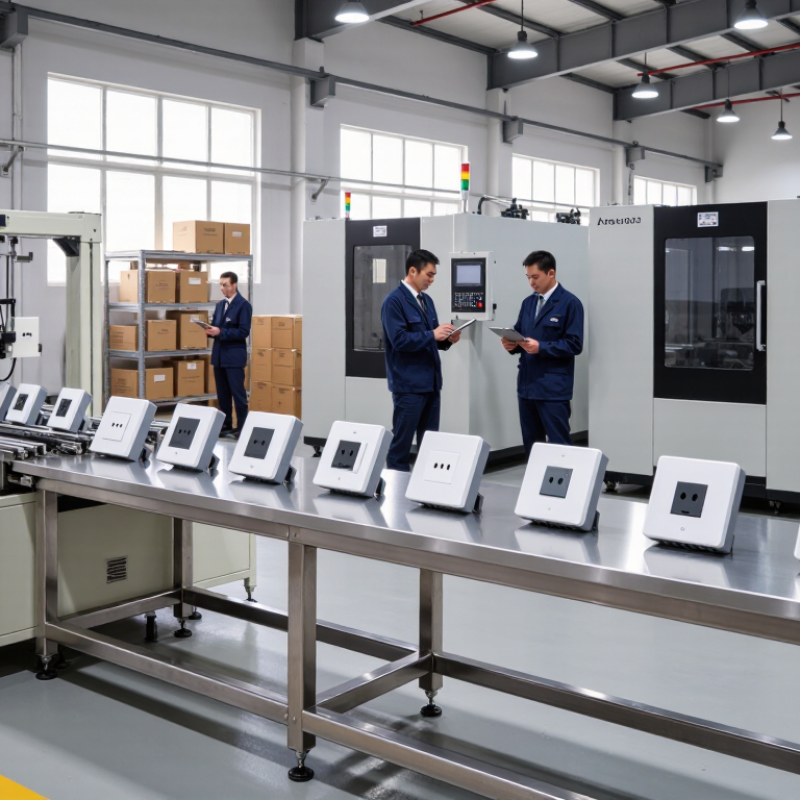
What Is an Inverter Outlet Supplier?
How to Find the Best Inverter Outlet Supplier in China?
An inverter outlet supplier is a manufacturer or distributor that provides outlets, sockets, and related components for inverter-powered systems. Some suppliers also offer complete inverter units, cables, protection devices, and installation accessories. Their work goes beyond shipping products. A reliable supplier should explain voltage ratings, current limits, materials, and compatibility clearly. Ask for product datasheets, sample units, factory photographs, and batch information. Technical answers matter more than attractive prices.
During supplier evaluation, check how products are tested. Look for insulation checks, load testing, heat resistance tests, and stable packaging. A professional supplier should provide consistent specifications across samples and bulk orders. Certifications should be relevant to the target market, not simply displayed without verification. Communication is another practical signal. If replies avoid direct questions, future quality problems may become harder to solve. No supplier is perfect. Even a careful checklist can miss weak after-sales support.
Tips: Request two or three samples before placing a large order. Compare terminal strength, surface finish, labeling, and installation fit. Confirm minimum order quantities, lead times, warranty terms, and replacement procedures in writing. Ask whether the supplier can trace production batches. A very low quotation may hide thinner materials or limited testing. It is tempting to choose quickly, but that decision can become expensive later. Recheck every technical detail.
How to Find the Best Inverter Outlet Supplier in China? - What Is an Inverter Outlet Supplier?
| Evaluation Category | What an Inverter Outlet Supplier Provides | Recommended Technical Benchmark | Verification Evidence | Suggested Weight |
|---|---|---|---|---|
| Product Definition | A manufacturer or trading supplier of AC outlets, sockets, plugs, connectors, or distribution accessories used with inverter systems. | The product should clearly state whether it is designed for AC output from an inverter, DC input, or both. | Product datasheet, wiring diagram, installation instructions, and application photos. | 5% |
| Rated Voltage | The maximum operating voltage supported by the outlet assembly. | For mainland China AC applications, commonly specify 220 V AC and 50 Hz; confirm compatibility with the inverter output specification. | Nameplate marking, electrical test report, and inverter compatibility statement. | 10% |
| Rated Current | The continuous current capacity of the outlet, plug, terminals, and internal conductors. | Select 10 A or 16 A for common household and light-commercial applications; higher ratings require suitable connector systems and wiring. | Rated-current marking, temperature-rise test, terminal specification, and load test report. | 12% |
| Applicable Standards | Compliance documentation for plugs, fixed outlets, connectors, and low-voltage electrical accessories. | For household outlets, review GB/T 2099.1 and GB/T 1002; for industrial connectors, review the relevant IEC 60309 requirements. | Current test reports issued by an accredited laboratory and standard references matching the exact model. | 15% |
| Ingress Protection | Protection against solid objects, dust, and water in indoor or outdoor inverter installations. | Use IP20 for dry indoor locations; consider IP44 or higher where splash or outdoor exposure is expected. IP ratings should be selected according to the installation environment. | IP test report, enclosure design drawing, gasket specification, and installation limitations. | 10% |
| Material and Safety | Insulating housings, live-part barriers, conductive terminals, shutters, and heat-resistant components. | Use flame-retardant insulating materials, secure grounding where required, finger-safe live parts, and corrosion-resistant terminals. | Material declarations, flammability information, insulation-resistance test, and grounding-continuity test. | 12% |
| Inverter Compatibility | A product configuration matched to the inverter's output waveform, voltage, frequency, current, and protection system. | Confirm compatibility with pure sine-wave or modified-sine-wave output, maximum continuous load, peak load, neutral arrangement, and grounding method. | Electrical interface specification, wiring diagram, load test, and application approval record. | 12% |
| Quality Management | A controlled process for incoming materials, assembly, testing, traceability, and corrective action. | Prefer a documented quality-management system, incoming inspection, 100% visual inspection, and routine electrical safety testing. | Quality manual, process flow, inspection plan, calibration records, and corrective-action reports. | 10% |
| Customization Capability | Adaptation of color, markings, housing shape, cable length, terminal arrangement, packaging, and documentation. | Require a documented drawing-approval process and a production sample before mass production. | Approved drawings, prototype sample, bill of materials, and change-control procedure. | 6% |
| Supply and Delivery | Production capacity, minimum order quantity, packaging, export documentation, and delivery coordination. | The supplier should provide a written lead-time range, confirmed production capacity, carton details, and inspection-release procedure. | Production schedule, capacity statement, packing list, commercial invoice, and pre-shipment inspection record. | 5% |
| After-Sales Support | Technical assistance for installation, troubleshooting, warranty handling, and replacement parts. | Require written warranty terms, response-time commitments, spare-parts availability, and a process for handling defective units. | Warranty policy, service contact procedure, failure-analysis report template, and replacement-parts list. | 3% |