
In the world of construction, efficiency is paramount. Compact Wheel Loaders play a crucial role in enhancing productivity on job sites. Industry expert John Smith once said, “A well-operated Compact Wheel Loader can save hours of work and reduce costs significantly.” His insight highlights the significance of mastering these powerful machines.
Many operators underestimate the potential of Compact Wheel Loaders. They often fail to consider maintenance, leading to performance drops. Simple adjustments, such as checking tire pressure and ensuring proper attachments, can make a substantial difference. Observing and learning from skilled operators can help newcomers avoid common mistakes.
Efficiency is not just about speed; it’s about doing the job right. Understanding the machine's capabilities is key. By embracing continuous learning, operators can unlock the full potential of their Compact Wheel Loader. Reflecting on daily performance can aid in this journey. Every small improvement contributes to greater overall success on site.
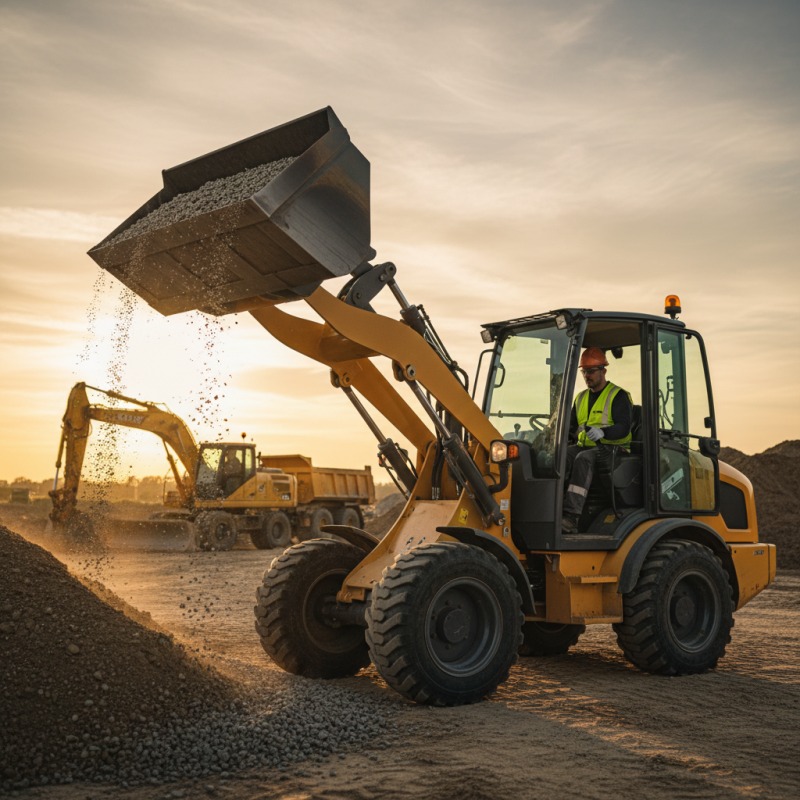
Compact wheel loaders are versatile machines essential for various construction tasks. Understanding their basics helps operators enhance performance and efficiency. These machines are built to tackle narrow spaces and heavy loads with ease. Their ability to pivot and maneuver tight corners allows for increased productivity on job sites.
Here are a few tips to boost your compact wheel loader’s efficiency. Maintain the tires properly. Well-inflated tires improve traction and fuel efficiency. Also, keep the machine clean. Dirt and debris can affect the loader's performance. Regular cleaning helps maintain optimal functionality. Operators should also be aware of the machine's load capacity. Overloading can lead to equipment strain and potential damage.
Furthermore, operator training is vital. Skilled operators can identify issues early and adapt to changing site conditions. Investing time in training can reduce costly mistakes. Compact wheel loaders can perform exceptionally well, but improper handling can lead to inefficiencies. Always reflect on your operation methods. Small adjustments can lead to significant improvements.
Compact wheel loaders are essential for various construction tasks. Their performance greatly depends on key features designed for efficiency. One such feature is the powerful engine. A robust engine provides the necessary torque for heavy lifting and pushing. This power allows operators to complete tasks quickly, but too much reliance on power can lead to fuel inefficiency. Therefore, balancing power with fuel management is crucial.
Another significant aspect is the hydraulic system. Advanced hydraulic systems enable precise control during operation. This control helps in tasks like lifting and moving materials effectively. However, complex systems can sometimes lead to maintenance issues. Regular checks and updates are necessary to keep them functioning optimally.
Moreover, compact wheel loaders often come with customizable attachments. These can range from forks to buckets, enhancing versatility on the job site. The wrong attachment can impede productivity. Choosing the right tool for specific tasks requires careful consideration. So, reflecting on the operations is necessary to optimize performance.
| Key Feature | Benefit | Impact on Performance |
|---|---|---|
| High-Torque Engine | Enhanced lifting and loading power | Increased productivity in heavy-duty tasks |
| Compact Design | Better maneuverability in tight spaces | Improved efficiency in urban environments |
| Advanced Hydraulic System | Faster cycle times for loading and unloading | Reduced operational time |
| Ergonomic Operator Controls | Increased operator comfort and control | Enhanced focus and productivity |
| Versatile Attachment Options | Ability to perform multiple tasks | Cost savings and increased utility |
Operating compact wheel loaders efficiently requires a blend of skill and best practices. Proper training is crucial. According to industry reports, well-trained operators can boost productivity by up to 30%. This underscores the importance of investing time in training sessions. Understanding the machine's features allows operators to leverage its full potential, enhancing overall performance.
One effective tip is to maintain a clear work area. A cluttered site slows progress and increases the risk of accidents. Implementing a daily checklist can help in assessing the site before work begins. This proactive approach will ensure smooth operations and reduced downtime.
Another important practice is regular maintenance. Neglecting maintenance can lead to unexpected breakdowns. In fact, studies show that regular servicing can extend equipment life by 20%. Operators should perform routine checks on fluids, tires, and hydraulic systems. This diligence can prevent costly repairs and keep projects on schedule.
Routine maintenance is crucial for optimal compact wheel loader performance. Regularly check the oil levels and fluid quality. This keeps components lubricated and reduces wear. Dirty oil can lead to engine overheating. If the oil looks dark or gritty, it’s time for a change.
Inspect the tires frequently. Low tire pressure can affect load capacity and fuel efficiency. Maintain proper inflation according to guidelines. Worn tires can cause slipping or reduce traction. It's easy to overlook this detail but can significantly impact performance.
Don't forget about the air filters. A clean air filter allows for better airflow and engine efficiency. If the filter is clogged, it hinders performance. Replace it, especially in dusty environments. Neglecting this aspect can result in costly repairs down the line. Little mistakes in maintenance can lead to bigger problems. Make a checklist and stick to it. It might feel tedious, but it pays off in efficiency.
When it comes to compact wheel loaders, the right attachments can significantly enhance productivity. Industry reports indicate that using attachments can boost efficiency by up to 30%. Bucket types, forks, and grapples are popular choices, each serving a unique purpose. Selecting the wrong attachment can lead to delays. This results in increased downtime and decreased overall performance.
Using the right forks can improve handling efficiency, even in tight spaces. A study from the construction sector revealed that operators experienced a 25% increase in speed when using specialized forks. However, careful consideration of the load capacity is crucial. Overloading can impact safety and machine integrity, leading to costly repairs.
Grapples provide versatility but require skill to operate effectively. Misjudging the load or attempting complex maneuvers can result in issues. Operators should be adequately trained to maximize the benefits of these tools. In the quest for efficiency, striking a balance between attachment capability and operator skill is essential. Investing time in training can ultimately lead to a more productive worksite.