Skip to content

How to Choose the Right HVAC System for Your Home?

Choosing the right HVAC system for home is crucial for comfort and energy efficiency. An efficient system can save money on energy bills and improve air quality. However, many homeowners face challenges in making this decision.

Consider the size of your home. A system that is too small may struggle to keep you comfortable. One that is too large can waste energy and increase costs. Factor in climate too. Homes in warmer areas might need a stronger cooling system, while colder climates need effective heating.

It's also essential to evaluate budget and maintenance needs. High-end systems can be expensive upfront. But, they may offer better long-term savings. Yet, remember, some cheaper options may lead to higher repair costs. Reflecting on these aspects can help you make a more informed choice about your HVAC system for home.

How to Choose the Right HVAC System for Your Home?

Determine Your Home's Heating and Cooling Needs

Determining your home’s heating and cooling needs is crucial. This step ensures you select an HVAC system that fits well. A 2021 report by the U.S. Department of Energy shows that a correctly sized HVAC unit can reduce energy bills by 20% to 30%. It’s important to consider your home's square footage, insulation quality, and climate.

Start by calculating the home’s square footage. Then, assess the number of windows and their orientation. Each window can impact heat gain or loss. Additionally, consider how many rooms you use regularly. An improperly sized system can lead to uneven cooling. You might feel too hot in one room and cold in another.

Don’t forget the importance of insulation. Many homes lack proper insulation. According to the Environmental Protection Agency, adequate insulation can save you up to 20% on cooling and heating costs. Look around your attic and walls. Areas that seem drafty might require more insulation. Evaluating these details helps ensure you get a suitable system.

How to Choose the Right HVAC System for Your Home? - Determine Your Home's Heating and Cooling Needs

Criteria Description Recommended HVAC System
Home Size Calculate square footage to determine capacity needs. Central Air Conditioning or Heat Pump
Climate Zone Consider whether the area experiences extreme temperatures. High-Efficiency HVAC with Variable Speed
Insulation Quality Good insulation reduces heating and cooling needs. Ductless Mini-Split System
Number of Occupants More occupants can increase demand for heating and cooling. Multi-Zone System
Existing Ductwork Good condition ductwork allows for central unit installation. Central HVAC System
Energy Efficiency Look for systems with high SEER and HSPF ratings. Energy Star Rated System

Evaluate Different Types of HVAC Systems

Choosing the right HVAC system requires understanding the different types available. Central air systems are common. They provide consistent cooling and heating across all rooms. These systems can be energy efficient. According to the U.S. Department of Energy, a well-maintained central system can reduce energy costs by 20-50%.

Ductless mini-split systems are another option. They work without ductwork. Installation can be easier, especially in older homes. A study by the Energy Research Institute indicates that these systems can save up to 30% on energy use compared to traditional models. However, upfront costs may be higher. It's important to weigh immediate expenses against long-term savings.

Window units are a third choice. They are less expensive but limited to specific rooms. This might lead to uneven temperatures throughout a home. For larger spaces, multiple units may be necessary. Acknowledging the inefficiency in such setups can guide better decisions. Each type of HVAC system has its pros and cons. Understanding these differences can lead to a more comfortable living environment.

Consider Energy Efficiency Ratings and Costs

Choosing the right HVAC system for your home can feel overwhelming. One critical factor to consider is energy efficiency. Various systems come with different energy efficiency ratings. Higher ratings often mean lower energy bills. However, these systems may initially cost more. It's essential to weigh long-term savings against the upfront investment.

Costs extend beyond the price tag. Installation fees can vary significantly based on system complexity. Regular maintenance should also be factored in. Neglecting this can lead to costly repairs down the line. People often overlook maintenance costs until it's too late. Evaluating potential repair expenses is crucial for informed decision-making.

While energy efficiency seems like a straightforward criterion, the numbers can be confusing. Sometimes, lower-rated systems perform better in certain home sizes or climates. Being overly focused on ratings might blind you to other important factors. It's worth taking the time to research further. Comparing real-life efficiency against theoretical ratings can reveal surprises.

Assess System Size and Installation Requirements

How to Choose the Right HVAC System for Your Home?

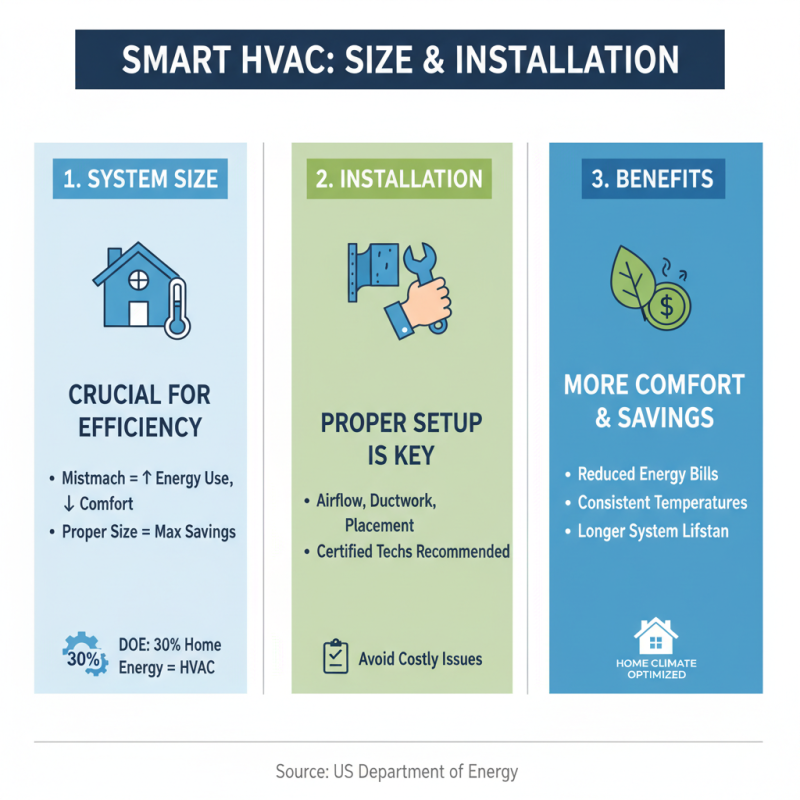
Choosing the right HVAC system for your home involves thoroughly assessing system size and installation requirements. An improperly sized system can lead to inefficiency. According to the U.S. Department of Energy, about 30% of energy usage results from heating and cooling. A mismatch in system size can cause excessive energy use and discomfort.

When determining the appropriate size, consider the square footage of your home, insulation levels, and climate. A Manual J load calculation can help you find precise heating and cooling needs. Overly large systems cycle on and off frequently, leading to wear and tear. Conversely, undersized systems will struggle to maintain comfortable temperatures.

**Tip:** Always consult with a qualified HVAC professional to evaluate your home. They can guide you in selecting the right system size based on the unique characteristics of your space.

Installation requirements should also be part of your consideration. Ensure that the chosen system fits within your existing space. Some models may require ductwork upgrades or modifications. These changes can substantially increase installation costs. Proper placement of vents and registers is crucial to optimize airflow.

**Tip:** Consider future needs when installing. Forecasting growth or changes in your household can save money down the line. A bit of foresight goes a long way in ensuring comfort and efficiency.

Plan for Maintenance and Future Upgrades

When selecting an HVAC system, planning for maintenance is crucial. Regular upkeep can extend the life of your system by up to 25%. A study from the Indoor Air Quality Association reveals that inadequate maintenance can lead to a 30% increase in energy costs. Simple tasks like changing filters regularly can significantly enhance efficiency.


Future upgrades should also be considered. Technology evolves quickly in HVAC systems. For instance, smart thermostats can reduce energy consumption by 10-20%. However, integrating these technologies might require additional infrastructure. Many homeowners overlook this aspect, leading to unexpected costs.


It's essential to assess your current system's compatibility with future advancements. Consultation with professionals can provide insights into potential upgrades. Ignoring this could limit your system's effectiveness in the long run. Remember, a well-maintained HVAC system can lead to considerable savings and improved comfort.