
Skip to content

China Best Mobile POS Systems for Small Businesses?

Choosing among the best mobile pos systems in China is not just a matter of comparing card readers. A neighborhood café may need quick QR-code payments, while a market stall may value long battery life and a compact device. Local payment support, stable connectivity, clear transaction records, and practical inventory tools can make a bigger difference than a long feature list. Small details matter. A terminal that drops its connection during the lunch rush is not much help.

This guide looks at mobile POS options through the daily needs of small businesses, including setup, usability, payment methods, reporting, and ongoing costs. It also considers whether each system can work with existing accounting or sales tools. Availability and fees can change, so business owners should confirm current terms with providers before buying. No system is perfect. A low-cost plan may lack useful integrations, while a feature-rich setup can take longer to learn. The right choice depends on where you sell, how your customers pay, and what you need to track. Those needs are easy to underestimate at first. We’ll highlight the trade-offs, not just the selling points, so you can shortlist options with clearer expectations.
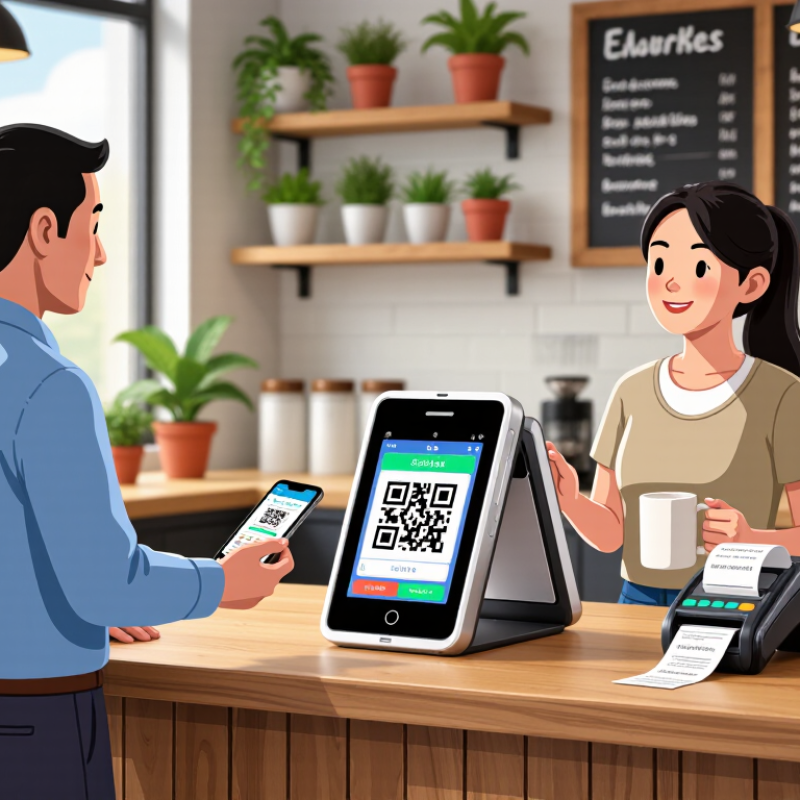
China Best Mobile POS Systems for Small Businesses?

What Mobile POS Systems Are and How They Work

A mobile POS system lets a small business take payments away from a fixed checkout counter. It usually combines a phone or tablet, an app, and a compact card reader. A market vendor might tap in a few items, check the total, and turn the screen toward a customer beside a stall. Small setup. Less counter space.

The app records products, prices, and sales. When a customer pays, the reader captures the payment details and sends a request through a secure payment service for approval. The system then shows whether the transaction succeeded and can create a digital receipt. Depending on the setup, staff may also review stock levels or daily sales from the same screen. These features vary, so businesses should check what is included before choosing a system.

Mobile checkout still depends on practical details. A weak signal can delay a payment, and a drained battery can stop sales at an awkward moment. Some systems offer limited offline functions, but those may not support every payment type. Test the device in the actual shop, van, or market setting. It sounds obvious, yet this step is easy to skip. Keep the device charged, protect access with a passcode, and confirm how transaction records can be reviewed.

Key Features Small Businesses Need in China

For a small business in China, a POS system should handle the ways customers actually pay. Look for support for widely used QR-code payments, bank cards, and cash recording. Payment options should be easy to switch between at a busy counter. Speed matters. Clear prompts help staff avoid entering the wrong amount, especially when a queue is forming.

Useful sales tools should fit daily work, not add extra steps. A compact screen can show item names, prices, discounts, and stock levels at a glance. The system should record refunds and print or send receipts in Chinese. Simple reports can show which items sold during a lunch rush and which stayed on the shelf. Offline operation is valuable when a shop’s internet connection drops, but owners should check what data syncs later. This detail is easy to overlook.

Security and dependable support matter as much as payment acceptance. Choose role-based staff access, protected customer data, and clear records of transactions. Battery life and stable connectivity count for shops that move between a counter and a market stall. Ask how quickly support responds and whether reports can be exported for bookkeeping. No system is perfect. A feature-rich device can still feel clumsy, so test common tasks with real staff before committing.

Leading Mobile POS Options for Small Businesses in China

For small businesses in China, a mobile POS system should fit the way customers already pay. The China Internet Network Information Center reported 974 million mobile-payment users by June 2024. Worldpay’s Global Payments Report 2024 estimated digital wallets handled 82% of Chinese in-store payment value in 2023. Those figures make QR acceptance essential, but they do not make every setup equally practical.

A phone-based POS app can suit a market stall or delivery counter: staff carry one device, scan payment codes, and record sales. A handheld terminal with a built-in printer may work better in a busy café, where paper receipts and quick order entry matter. For shops with stock to track, choose a system that links checkout, inventory, and daily sales reports. Check that it supports the payment methods local customers use and can recover from brief network interruptions.

Keep it simple. Test the checkout during a real rush, not just at a quiet desk. Confirm settlement timing, transaction fees, device costs, and support hours before signing. A QR-only setup may save money, yet it can slow staff when they switch between orders and payment screens. That trade-off is easy to underestimate. Smaller merchants should also ask how sales data can be exported; changing systems later may be more awkward than expected.

China Best Mobile POS Systems for Small Businesses? — Leading Mobile POS Options for Small Businesses in China
Mobile POS Option Typical Setup Payment Methods Connectivity Best Fit Costs and Practical Considerations
Smartphone-Based Merchant QR Collection A merchant app displays a QR code on the owner’s or staff member’s smartphone. The customer scans it to pay. QR payments supported by the merchant’s payment provider. Internet access is generally needed to confirm transactions and view payment records. Market stalls, independent retailers, small cafés, and service businesses seeking a minimal-hardware setup. Usually avoids the cost of a dedicated payment terminal. Merchant onboarding, transaction fees, settlement timing, and account requirements depend on the provider.
Dynamic QR Payment App The merchant enters the transaction amount in an app, which creates a QR code for that specific payment. QR payments supported by the merchant’s payment provider. Typically requires a working internet connection for payment requests and confirmation. Businesses that want the amount to be specified before the customer pays, such as takeaway counters and small shops. Can reduce manual amount-entry errors compared with a static code. The merchant should verify each payment in the app rather than rely only on a customer’s screen.
Smartphone with Bluetooth Receipt Printer A POS app runs on a phone and connects wirelessly to a compatible receipt printer. Usually QR payment; other methods depend on the app, provider, and connected hardware. Bluetooth connects the phone to the printer; internet access may be needed for payment processing and cloud functions. Small food businesses and retailers that need itemized receipts without purchasing a full-size checkout system. Requires compatible devices, paper, and occasional printer maintenance. Check whether the app supports product records, refunds, and receipt printing in the business’s workflow.
Portable Smart POS Terminal A handheld terminal combines a payment interface with POS software; some models include a built-in printer. May support QR payments and, where enabled by the provider and terminal, bank-card payments. Often uses Wi-Fi or a mobile-data connection; available connection options vary by device. Restaurants, mobile vendors, and shops that need staff to take payments away from a fixed counter. Hardware, service, and transaction charges vary. Confirm supported payment methods, network coverage, battery life, settlement terms, and repair arrangements before purchasing.
Mobile POS with Inventory and Sales Management A phone or tablet runs a POS app connected to a product catalogue and sales-management tools. Payment methods depend on the payment provider and any connected terminal or merchant account. Cloud synchronization commonly requires internet access; offline functions, if available, vary by system. Small retailers that need stock tracking, sales reports, staff access, or multiple checkout devices. May involve subscription or service fees in addition to payment-processing costs. Check data export, user permissions, offline behavior, and compatibility with existing business processes.
Integrated POS with Acquirer-Provided Terminal A POS app or checkout system is paired with a payment terminal arranged through a payment acquirer or service provider. Methods depend on the acquiring arrangement, terminal configuration, and merchant approval. Uses the terminal’s supported network connection; the POS app may also need internet access for synchronization. Businesses that need a more formal checkout workflow, payment reconciliation, or card acceptance where approved. Payment services in China are subject to provider and merchant eligibility requirements. Verify that the payment service is properly authorized, and review fees, settlement, contracts, and support directly with the provider.
Selection note: Payment-method availability, merchant eligibility, hardware compatibility, fees, and settlement schedules vary by provider and merchant arrangement. Confirm these details before adopting a system; there is no single fee or feature set that applies to every small business in China.

Comparing Costs, Payment Methods, and Hardware

For a small shop in China, compare the full cost of a mobile POS system, not just the advertised device price. Ask for the hardware cost, monthly software fee, transaction charges, and any fees for refunds or settlement. A low upfront price can become expensive during busy months. Check whether the system accepts QR-code wallet payments, bank cards, and contactless payments. Payment preferences vary by customer and location, so ask nearby businesses what they see at the counter.

Hardware should suit the way you work. A phone-based setup may be enough for a market stall, while a handheld terminal with a built-in printer can help a café issue receipts quickly. Check battery life, network options, screen readability, and repair support. Test the device during a real shift if possible. A neat feature list is not proof that it will hold up in a crowded shop.

Tips: Request a written fee schedule and confirm settlement times before signing. Test your usual payment types, print a sample receipt, and check what happens when the network drops. Keep a simple backup process. It is easy to overlook this until the lunch rush. A short trial can reveal awkward menus or slow checkout steps, though one test day may not represent every trading day.

How to Choose a Mobile POS System for Your Business

Choosing a mobile POS system in China starts with how customers actually pay. Check whether it accepts common QR-wallet payments and bank cards, then confirm how quickly funds reach your account. Fees can vary by transaction type, so ask for a clear written breakdown. That matters.

Consider the places where you sell. A café may need table-side ordering and split bills, while a market stall may need quick scanning and printed or digital receipts. Test the system on your own phone or terminal, using the busiest checkout steps. Test it live. Watch for delays when the Wi-Fi weakens, and ask whether sales can be recorded offline and synced later.

Inventory and staff controls should fit your daily routine, not just look impressive in a demo. Check whether you can update stock after a sale, set staff permissions, and review shift totals without exporting several files. Ask how customer and payment data are protected, and what support is available during local business hours. I would not choose on price alone; still, complex reports can be overkill for a small shop. A short trial may reveal awkward steps you missed while comparing feature lists.