
Skip to content

What Are the Best Generator Sets to Buy in 2026?

Choosing the best Generator Sets in 2026 means matching real operating needs, not simply comparing advertised kilowatts. The International Energy Agency’s Electricity 2025 report projects global electricity demand will grow by close to 4% annually through 2027. That rising demand makes dependable backup power increasingly important for data centers, hospitals, factories, and homes. IEA Executive Director Fatih Birol captured the wider shift with the words, “The Age of Electricity is here.” For buyers, that means resilience deserves careful attention.

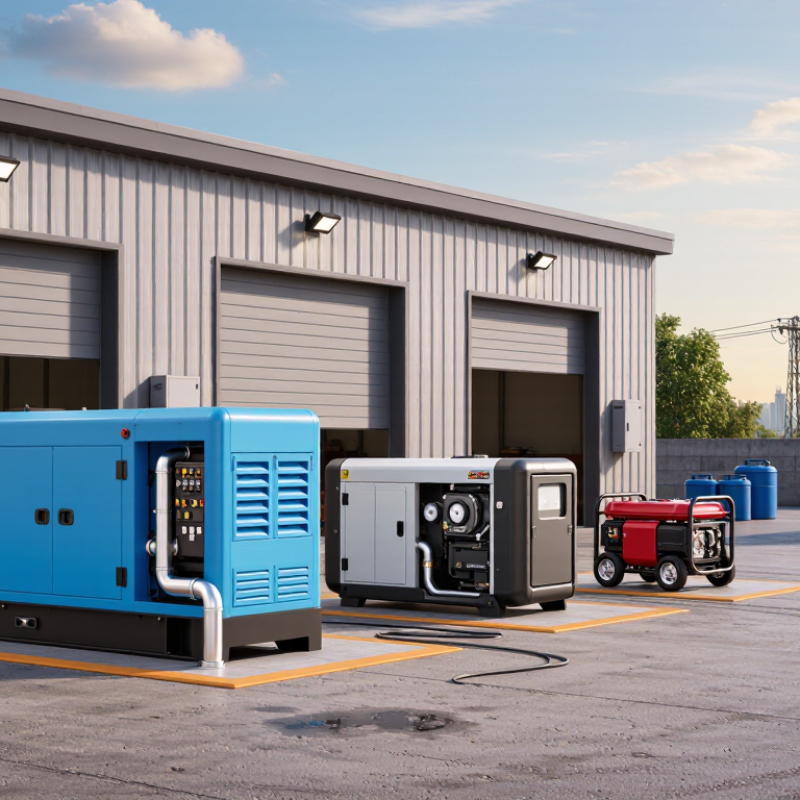
Market forecasts offer context, not a buying verdict. Grand View Research estimated the global diesel generator market at about $17.2 billion in 2023, with continued growth forecast through 2030. Estimates vary by scope and method. No shortlist is perfect. A practical comparison should weigh continuous and standby ratings, fuel use under expected loads, noise, emissions controls, service access, and automatic transfer compatibility. Picture a unit beside a workshop: a few extra kilowatts matter less than reliable starting, available fuel, and nearby technicians. Small details count.

This guide will compare diesel, natural-gas, and portable models, then examine leading options for different budgets and duty cycles. It will also distinguish headline power from usable power, since motor starts and sensitive electronics can change sizing needs. Buyers should verify local installation requirements and manufacturer specifications before purchase. A lower price can be tempting. It may still prove costly if parts, maintenance, or fuel are difficult to obtain. Expect trade-offs, not a universal winner.
What Are the Best Generator Sets to Buy in 2026?

Define Generator-Set Ratings Using ISO 8528-1: ESP, PRP, and COP

What Are the Best Generator Sets to Buy in 2026?

ISO 8528-1 ratings describe how a generator set may be used, not just how large it is. ESP, PRP, and COP indicate different duty conditions. Easy to miss. A set with a higher number may still be the wrong choice for a site’s workload.

ESP means Emergency Standby Power. It is intended for supplying power during utility interruptions, rather than routine operation.

PRP, or Prime Power, supports variable loads for extended operating periods. Its permitted average load and any overload allowance depend on the applicable rating conditions and manufacturer’s specifications.

COP, or Continuous Operating Power, is designed to supply a steady load for unlimited hours. It generally does not provide an overload allowance. Check the documentation, not just the rating label.

Match the rating to actual use. A hospital backup system may need ESP, while a remote worksite operating each day may call for PRP. A constant industrial load could suit COP. Then account for motor-starting surges, changing loads, altitude, and temperature, which can affect available output. A tidy spreadsheet can still miss a brief but demanding start-up. It is worth checking the load profile with a qualified supplier, and revisiting assumptions when the site changes. The rating alone cannot make that decision.

Compare kW and kVA at the Common 0.8 Power Factor

Generator listings often show kVA and kW side by side, but they describe different limits. kVA measures apparent power; kW measures real power. Many generator ratings use a 0.8 power factor for comparison. The quick conversion is kW = kVA × 0.8. Reverse it: kVA = kW ÷ 0.8. A 100 kVA set therefore corresponds to 80 kW at that factor. Simple enough.

Suppose a workshop expects a 75 kW demand. At 0.8, that equals 93.75 kVA, before allowing for motor starting or added equipment. A 100 kVA unit may look adequate, yet its kW rating and duty rating still need checking. Pumps, compressors, and fans can draw a sharp surge when they start; not every load behaves like a steady light bulb. Check the nameplate, continuous or standby rating, and site conditions such as heat and elevation. These can reduce available output. Also, 0.8 is not a universal description of every load. Measured power factor may differ, especially with mixed electronic equipment. The tidy calculation can create false confidence. Record demand during the busiest operating period; estimates often miss awkward peaks.

Match Frequency and Speed: 50 Hz at 1,500 rpm or 60 Hz at 1,800 rpm

When comparing generator sets, match frequency to the equipment they will power. A conventional four-pole set typically runs at 1,500 rpm for 50 Hz output or 1,800 rpm for 60 Hz. The relationship matters because motor speed often follows supply frequency. A pump designed for 50 Hz may run faster on 60 Hz power, changing flow, heat, and wear.

Check the nameplates on your appliances, not just the generator listing. Look for voltage, frequency, and permitted operating ranges. A workshop with 60 Hz tools needs a different match from a site using 50 Hz pumps. Frequency stability also matters under changing loads; ask for test data or operating specifications, especially if sensitive controls are involved. I check twice.

The lower speed of a 50 Hz set can affect engine selection and maintenance intervals, but rpm alone does not determine service life or fuel use. Compare the complete rated output and the load profile you expect, including motor-starting surges. Some equipment accepts both frequencies; many devices do not. I once treated a small frequency mismatch as harmless. That was careless. Verify compatibility with the equipment manufacturer before buying, and consider where the set will operate throughout its working life.

Size for Running Loads, Motor Starting, and Site Conditions

Choosing a generator starts with the loads you need to run, not the largest number on a sales label. Add the running watts of essential equipment, such as lights, a refrigerator, a pump, and communications gear. Leave out appliances you can switch off. Keep a written list. It helps.

Motors need extra power when they start. A well pump or air conditioner may briefly draw several times its running load, though the exact surge depends on the equipment. Check each motor’s starting requirements and the generator’s starting-watt rating. If two motors could start together, size for that overlap or manage their startup sequence. I would not rely on a rough multiplier alone; real nameplate data is better, and sometimes it is incomplete.

Site conditions change capacity and usability. High elevation and hot weather can reduce engine output, so check the unit’s derating guidance for your location. Allow clear space for exhaust and cooling airflow, and consider rain protection, noise near neighbors, and safe fuel storage. For a work site, think about distance to the loads and heavy-duty extension-cord limits; long, undersized cords can cause voltage drop. A transfer switch should be installed and checked by a qualified electrician. Leave some capacity in reserve, but avoid buying far beyond likely demand. Oversizing can cost more and run lightly loaded for long stretches. That part is easy to overlook.

What Are the Best Generator Sets to Buy in 2026? — Size for Running Loads, Motor Starting, and Site Conditions

Generator Set Type Typical Rated Output Example Running Load Motor-Starting Considerations Best-Fit Site Conditions Key Buying Checks
Portable inverter set 3–4 kW continuous; approximately 3.5–4.5 kW maximum, depending on the model Lights, electronics, refrigerator, and selected small appliances totaling about 2–3 kW Check the specified starting watts. A refrigerator or small pump can briefly draw several times its running power; avoid starting multiple motors together. Camping, small homes, and noise-sensitive areas where portability and cleaner power are priorities Continuous output, outlet and voltage options, measured noise rating, runtime at a stated load, and approved outdoor operation
Portable open-frame set 6–8 kW continuous; approximately 7–10 kW maximum Essential household circuits or a small work site, typically about 4–6 kW of simultaneous load Suitable for modest motor loads when the surge rating is adequate. Large compressors, pumps, or air conditioners may need staggered starts. Outdoor use where portability matters and higher noise is acceptable Rated versus maximum output, 120/240 V capability where needed, receptacle ratings, fuel consumption, and overload protection
Home standby set 10–14 kW continuous output is common in this class; confirm the exact rating and fuel Selected household circuits, or a managed whole-home load of roughly 7–11 kW Starting central air conditioning, well pumps, and other motors can determine the required size. Load management or a soft starter may reduce peak demand. Permanent outdoor installation with an automatic transfer switch and suitable clearances Natural-gas or propane output, transfer-switch rating, permitted location, exhaust clearances, service access, and local installation requirements
Small commercial diesel set 20–30 kW continuous; three-phase versions are common Small business, workshop, or site loads around 15–24 kW, subject to phase balance Assess motor starting in kVA as well as kW. Starting method, power factor, alternator design, and voltage dip all affect performance. Construction sites, farms, and small facilities needing extended-duty operation Standby versus prime rating, voltage and phase, fuel storage, sound enclosure, emissions compliance, and maintenance intervals
Mid-size commercial or industrial diesel set 50–75 kW continuous; often supplied as a three-phase set Facility or job-site loads around 38–60 kW when demand and phase balance are managed Large motors may require a higher alternator capacity or reduced-voltage starting. Confirm the largest motor’s starting current and acceptable voltage dip. Commercial buildings, larger workshops, and remote sites with a prepared installation area Prime or standby duty, load-step capability, altitude and temperature derating, fuel autonomy, grounding, and applicable emissions rules
Large industrial generator set 100 kW and above; output and configuration are project-specific Multiple building systems, production equipment, or critical loads sized through a documented load study Model simultaneous starts and large inrush loads. Starting sequence, motor controls, alternator selection, and transient response are critical. Facilities requiring engineered backup or prime power and dedicated space, fuel, and electrical infrastructure Load-study results, kW and kVA ratings, standby/prime/continuous duty, transfer equipment, ventilation, emissions permits, and commissioning support

Sizing note: These are indicative selection ranges, not guarantees for a particular installation. Add the running watts of loads expected to operate together, then check the largest simultaneous motor-starting demand against the generator’s published surge and transient ratings. Allow for altitude, high ambient temperature, fuel type, power factor, phase balance, and manufacturer derating. Generator sets must be operated outdoors with exhaust directed away from occupied spaces; permanent installations and electrical connections should comply with local codes and be handled by qualified professionals.

Compare Diesel, Gas, and Hybrid Sets by Fuel Use and Emissions

A generator’s fuel use depends more on its load than its headline capacity. Diesel sets often use fuel efficiently during long, steady runs, such as powering a worksite through a full shift. Their exhaust can contain nitrogen oxides and particulate matter, so ventilation and maintenance deserve close attention. They may also run poorly when consistently oversized and lightly loaded.

Gasoline sets can suit shorter outages and lighter, changing demands. They are often easier to move, but fuel consumption can climb when a unit works near its limit. Exhaust still contains carbon monoxide and other pollutants. Never run one indoors or in an enclosed garage. That detail is easy to underestimate.

Hybrid sets pair an engine with battery storage, allowing stored power to handle brief peaks or quiet periods. In suitable use, the engine may run less often, reducing fuel consumption and local exhaust emissions. The trade-off is added system complexity, and batteries have their own replacement and material impacts. Compare fuel rates at the same load, not just maximum output, and check emissions data for the exact model. Real-world demand rarely stays constant. I would measure a week of expected loads before choosing; estimates can be wrong.