
Skip to content

2026 Best Black Flexible PVC Irrigation Pipe Solutions?

The demand for efficient irrigation solutions is rapidly increasing. Research indicates that the global irrigation market is projected to reach $35.4 billion by 2026, emphasizing the need for innovative products. One such product is the Black Flexible Pvc Irrigation Pipe. This pipe type is gaining attention for its durability and adaptability in diverse agricultural settings.

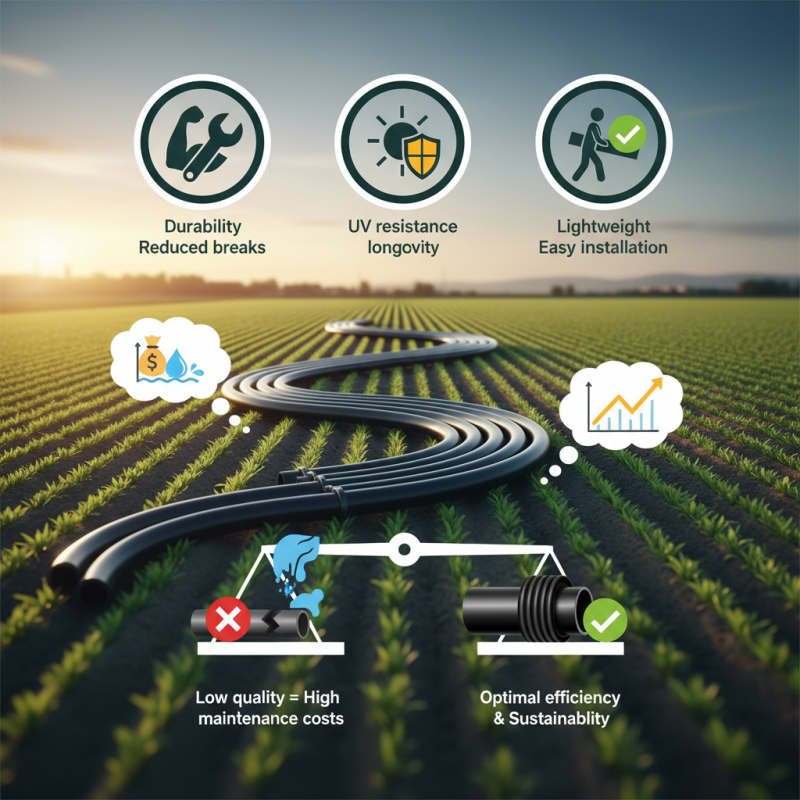
Black Flexible PVC Irrigation Pipes offer several advantages. They are lightweight, making installation simpler and less labor-intensive. Moreover, their resistance to UV rays ensures longevity and less frequent replacement. According to industry experts, the flexibility of these pipes helps reduce the likelihood of breaks, thus minimizing downtime.

Despite these benefits, not all products on the market meet the necessary standards. It’s crucial for farmers to evaluate the quality of the pipes chosen. Some low-cost options may compromise performance, leading to higher maintenance costs in the long run. Choosing the right Black Flexible PVC Irrigation Pipe is essential for optimal irrigation efficiency and sustainability.
2026 Best Black Flexible PVC Irrigation Pipe Solutions?

2026 Trends in Black Flexible PVC Irrigation Pipe Technologies

In 2026, black flexible PVC irrigation pipes will showcase significant advancements in technology. These innovations focus on durability, flexibility, and efficiency. Engineers are using enhanced formulations to improve resistance to cracking and UV damage. This is essential for agricultural settings exposed to harsh sunlight and varying temperatures.

Another trend involves improving water flow rates. Recent designs aim to minimize friction loss within the pipe's interior. This could lead to better water distribution across large fields. Additionally, companies are experimenting with different joins and fittings to reduce leaks. However, the integration of new materials remains a challenge for some manufacturers.

Reflecting on these trends, it’s noteworthy that not all solutions may be effective in every environment. For instance, areas with extreme weather might face unique challenges. Flexibility that works under normal conditions could falter during severe storms. This uncertainty calls for continuous testing and adaptation by engineers in the field.

2026 Trends in Black Flexible PVC Irrigation Pipe Technologies

This chart represents the projected market share of different technologies in black flexible PVC irrigation pipes in 2026. The data illustrates the growing trends towards innovative solutions in irrigation systems over time.

Key Advantages of Black Flexible PVC Over Other Irrigation Materials

Black flexible PVC irrigation pipes are gaining traction due to their unique advantages. These pipes offer excellent resistance to UV rays, protecting them from degradation. This durability is critical, especially for long-term agricultural projects. A study by the Irrigation Association emphasized that proper material selection can reduce maintenance costs by 30%.

In addition to their resilience, black flexible PVC pipes are lightweight and flexible. This ease of installation saves time and labor costs. Reports indicate that farmers can install these systems 20% faster compared to traditional materials. Their adaptability also allows them to navigate uneven terrain, making them suitable for varied landscapes.

However, it is essential to consider environmental impact. PVC production does have ecological footprints, which should not be ignored. Balancing durability with sustainability becomes a necessity in modern irrigation practices. While black flexible PVC pipes are beneficial, the industry must explore improvements. A focus on sustainable alternatives could enhance performance without compromising eco-friendliness.

2026 Best Black Flexible PVC Irrigation Pipe Solutions

Feature Black Flexible PVC Other Materials
Durability High resistance to UV rays and chemicals Variable, often lower resistance to UV
Flexibility Easily adapts to different layouts Less flexible, can crack under pressure
Cost-Effectiveness Lower installation and maintenance costs Higher long-term maintenance costs
Installation Simple and quick installation process Often requires more complex installations
Temperature Resistance Can withstand a wide range of temperatures May not perform well in extreme temperatures

Market Analysis: Demand for PVC Irrigation Pipes by 2026

The demand for PVC irrigation pipes has been steadily increasing, driven by the need for efficient water management in agriculture. By 2026, the global market for PVC irrigation pipes is expected to grow at a compound annual growth rate (CAGR) of around 5.5%. This growth is largely influenced by advancements in farming techniques and increasing awareness of sustainable practices. According to a recent industry report, PVC pipes provide versatility and flexibility, making them a preferred choice for many agricultural applications.

Notably, the Asia-Pacific region is projected to hold a significant share of the market. Countries like India and China are expanding agricultural production, increasing the need for durable irrigation systems. The report highlights that while PVC pipes are favored for their cost-effectiveness, concerns about environmental impact necessitate ongoing discussion. There's a growing demand for alternatives that could offer reduced ecological footprints.

Industry experts suggest that incorporating recycled materials into PVC production could enhance sustainability. However, not all manufacturers have adopted this practice yet. It's crucial to balance cost with environmental considerations. The need for innovation in pipe manufacturing remains. Looking towards 2026, stakeholders should evaluate both the benefits and challenges of PVC irrigation pipes to meet evolving agricultural needs effectively.

Innovative Applications of Black Flexible PVC in Modern Irrigation Systems

Black flexible PVC irrigation pipes are transforming modern agricultural practices. Their durability and flexibility make them ideal for various irrigation applications. These pipes resist corrosion and UV damage, ensuring longevity in diverse climates. Farmers appreciate their lightweight design, making installation easier and less labor-intensive.

Investing in quality PVC pipes can significantly improve water distribution efficiency. They help minimize pressure loss, even over long distances. This can result in healthier crops and reduced water waste. Consider using these pipes for drip irrigation systems or sprinkler setups.

Tips: Always check for the right diameter and thickness for your specific needs. Regular maintenance is essential. Inspect for leaks or wear regularly. Adjust your system as needed to optimize performance. Exploring innovative layouts can lead to increased productivity.

Environmental Impact and Sustainability of PVC Irrigation Solutions

The use of PVC in irrigation systems raises important sustainability questions. Flexible PVC pipes are widely favored for their durability and cost-effectiveness. However, their environmental impact cannot be overlooked. A 2020 report from the International Society of Plastics Engineers highlighted that PVC production emits significant greenhouse gases. The extraction of raw materials also contributes to environmental degradation.

Recycling is one avenue being explored to mitigate these effects. According to a 2021 study by the Waste Management Institute, only 9% of PVC materials are currently recycled. This statistic reveals a pressing need for better waste management practices in agriculture. Transitioning to recycled materials can help reduce the carbon footprint associated with new PVC production. However, the process of recycling PVC is complex and not yet widely implemented.

Furthermore, the leaching of chemicals from PVC can pose risks to soil and water quality. Research conducted by the EPA has shown that some additives in PVC can disrupt aquatic ecosystems. The long-term effects of PVC use in irrigation are not entirely understood. There is a critical need for further research into safe alternatives that balance agricultural efficiency with environmental stewardship.