
In the realm of industrial machinery, the "Banner Compressor" stands out as a crucial component for various applications. John Smith, an industry expert with over 20 years of experience, emphasizes the importance of these compressors: "A reliable banner compressor ensures efficiency and longevity in operations." This statement reflects the critical role these compressors play in maintaining productivity.
A Banner Compressor operates by compressing air to create high pressure. This process enables better performance in pneumatic systems, from manufacturing to construction. Many industries rely on this technology to improve their workflows and reduce costs. However, understanding how it works can be a challenge for some.
The intricacies of a Banner Compressor are not always straightforward. Users may face challenges in maintenance or optimization. Ensuring reliability requires knowledge and experience. Potential issues often arise, prompting reflection on best practices. Emphasizing the need for training or expert consultation can help demystify the technology.
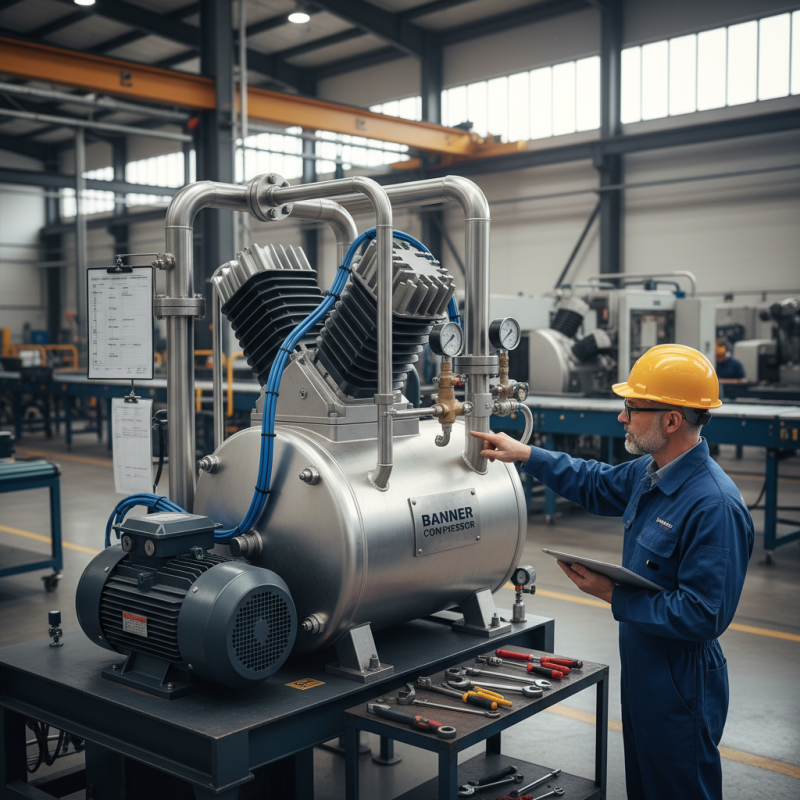
A banner compressor is a crucial tool in various industries, designed to efficiently compress and manage airflow. Its main purpose is to reduce the volume of air while increasing pressure. This involves using mechanical energy to move air into a smaller space. Understanding how this works can significantly benefit users, particularly in settings like pneumatic tools and industrial applications.
The process begins when air enters the compressor. It passes through a series of mechanisms that compress it. Generally, a piston or rotor pushes the air into a reduced volume, raising its pressure. Users often find it fascinating to observe how this simple yet effective design enhances performance. Energy efficiency is a key factor here, as compressed air is a vital resource.
However, users must be aware of potential issues. Improper maintenance can lead to inefficiencies and breakdowns. It's crucial to regularly check components and ensure proper lubrication. Understanding the limitations of the machine is equally important. While banner compressors are powerful, they are not without flaws. Frequent usage at maximum capacity can lead to overheating. This highlights the need for operators to be vigilant in monitoring performance. Overall, knowing these aspects can improve the reliability of the compressor significantly.
A banner compressor is a specialized device designed to manage airflow in various applications. Understanding its key components can help maximize efficiency and reliability. One of the core parts is the motor. A powerful, energy-efficient motor enhances performance and longevity. According to industry reports, motors account for around 70% of the total energy consumption in compressors.
Another essential component is the storage tank. This tank holds compressed air and helps manage pressure fluctuations. Using a correctly sized tank can improve system efficiency. Studies show that an optimal tank size can reduce energy costs by up to 30%. Additionally, filtration systems are crucial. They remove moisture and particles from the compressed air, thus protecting downstream equipment. A good filtration system can extend the lifespan of compressors significantly.
Regular maintenance is vital due to the wear and tear on these components. Neglecting routine checks can lead to reduced performance and increased downtime. For instance, compressed air leaks can account for 20-30% of energy waste in these systems. Addressing leaks promptly through comprehensive inspections is critical for operational effectiveness. Understanding these components’ roles provides a clearer perspective on how to enhance the reliability of banner compressors.
A banner compressor is a valuable tool used in various industries, particularly in advertising. It works by compressing air to inflate large banners efficiently. This process begins when the compressor draws in air from the environment. The compressor then uses a motor to force this air into a storage tank, raising its pressure.
The compressed air flows through a hose to the banner, filling it and allowing it to stand out. Often, the pressure must be monitored to avoid overinflation. An over-inflated banner can be damaged easily and may not serve its intended purpose. Adjusting the compressor settings can help maintain optimal pressure.
Despite its functionality, users sometimes face challenges. For instance, compressors can be noisy and require regular maintenance to operate effectively. Neglecting this can lead to breakdowns, which disrupt timelines in projects. Understanding how a banner compressor functions, along with its limitations, allows operators to maximize its benefits while minimizing risks.
Banner compressors find extensive applications across various industrial sectors. These systems effectively compress and manage gases, serving crucial functions in manufacturing, energy, and waste management. According to a recent report by the International Journal of Industrial Engineering, the global market for industrial compressors is projected to reach $35 billion by 2026. This growth is driven by the increasing need for efficient energy solutions and heightened production demands.
In the manufacturing sector, banner compressors are vital for processes requiring consistent gas supply. They support applications in metal fabrication and food processing. Their reliability ensures minimal downtime, leading to increased productivity. A study by the American Society of Mechanical Engineers highlighted that industries implementing efficient compressors experience up to a 20% increase in operational efficiency.
Additionally, the energy sector employs banner compressors for natural gas processing and transportation. They help maintain pressure levels, crucial for safe and efficient operations. Similarly, in waste management, these compressors assist in reducing emissions by controlling gas emissions during treatment processes. Despite their advantages, some facilities struggle with maintenance issues, leading to efficiency losses. Regular checks and upgrades are essential for optimal performance in these applications.
Maintaining a banner compressor is essential for optimal performance. Regular checks can prevent unexpected failures. Start with the air filter. A clean filter ensures efficient airflow. Replace it if it shows dust accumulation or significant wear. This simple step can enhance the compressor's longevity.
Monitor oil levels regularly. Low oil can lead to increased friction and overheating. Change the oil as per the manufacturer’s guidelines, but consider doing it more frequently in heavy-use situations. Additionally, keep an eye on the hoses. Cracks or wear can lead to leaks, reducing efficiency.
Troubleshooting issues is about recognizing patterns. Unusual sounds often indicate mechanical problems. A compressor that cycles on and off frequently may need attention. Listen and observe. Not all symptoms are obvious. Sometimes, the solution is just a tune-up or a hose replacement.
Identifying these signs early can save time and costs later.
Regular maintenance can feel tedious, but the investment in care pays off significantly.