
Skip to content

Top Automated Injection Robots for Efficient Manufacturing Solutions?

In the ever-evolving landscape of manufacturing, "Automated Injection Robots" have emerged as a game-changer. These advanced machines streamline production processes, enhance efficiency, and reduce costs. Renowned expert Dr. Emily Carter states, "Automated Injection Robots not only optimize production but also ensure precision in every injection cycle." With their ability to perform repetitive tasks with unmatched accuracy, these robots significantly improve the reliability of manufacturing operations.

Yet, the integration of Automated Injection Robots comes with challenges. Companies must invest in proper training and maintenance to avoid errors. Data on robot performance is crucial. Manufacturers must ensure that the robots are not only programmable but also adaptable to changing demands. This need for flexibility can sometimes create limitations in their deployment.

Some industries are reaping the benefits, while others struggle to adapt. As the market for Automated Injection Robots continues to grow, the potential for innovation seems limitless. However, organizations must remain vigilant and continuously evaluate their approaches to maximize the advantages these technologies offer. The journey toward full automation may be fraught with obstacles, yet the rewards can be transformative.
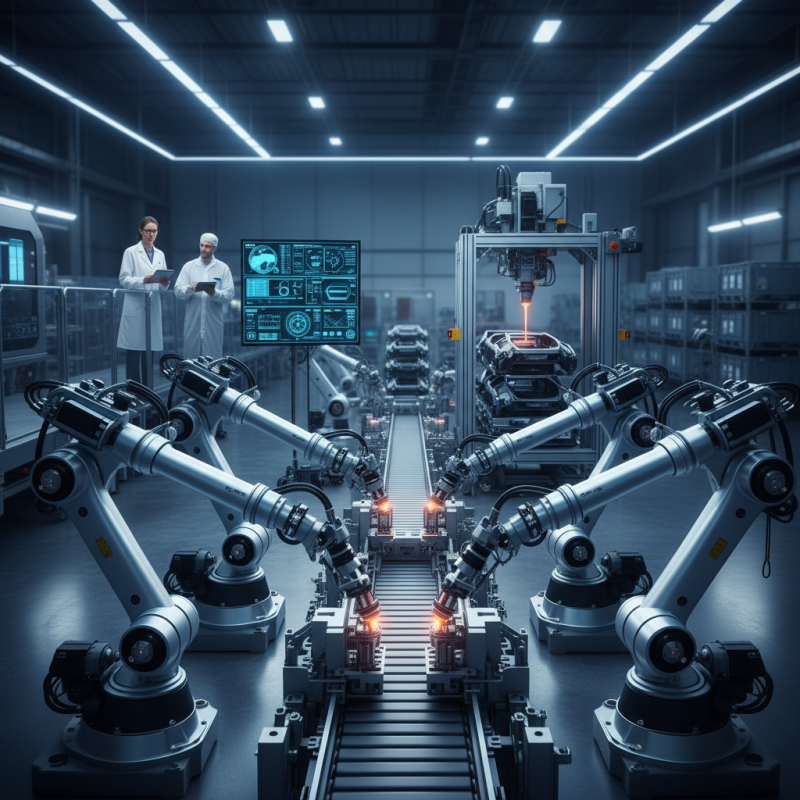
Top Automated Injection Robots for Efficient Manufacturing Solutions?

Overview of Automated Injection Robots in Manufacturing

Automated injection robots are revolutionizing manufacturing by enhancing efficiency and precision. These robots, designed for high-speed production, can significantly reduce cycle times. According to a market report by ResearchAndMarkets, the global injection molding market is projected to reach $331 billion by 2026. This growth highlights the increasing reliance on automated solutions within the industry.

The implementation of these robots can minimize human error and improve product quality. They typically operate with remarkable accuracy, ensuring that complex parts are molded consistently. However, companies must consider the upfront investment and integration challenges that automation presents. In fact, 60% of manufacturers cited initial costs as a barrier to adopting these technologies, according to a survey by the National Association of Manufacturers.

While automated injection robots offer numerous advantages, they are not a one-size-fits-all solution. Some processes may be too specialized for current automation capabilities. Moreover, workers may require retraining to adapt to new systems. This transition raises questions about workforce adaptability and the future of manufacturing jobs. Embracing this technology necessitates a thoughtful approach to balance man and machine.

Key Features of Modern Injection Robots

Modern injection robots have transformed manufacturing processes by enhancing efficiency and precision. Today's advanced models boast high-speed operation, multi-axis designs, and smart technology integration. A recent industry report indicates that the global injection molding market is projected to grow from $15 billion in 2022 to over $22 billion by 2027, driven by automation. This surge reflects the increasing necessity for rapid production capabilities.

Key features of contemporary injection robots encompass improved cycle time and payload capacity. Many systems can handle up to 50% faster cycle times compared to older models. Additionally, newer robots integrate machine learning algorithms, allowing for predictive maintenance. These technologies reduce downtime and maintenance costs significantly. However, the complexity of such integrations can pose challenges, particularly for small and mid-sized manufacturers. Many facilities struggle with the transition from traditional methods to automated systems.

Precision is another cornerstone of modern injection robots. With tolerances as low as 0.01 mm, these robots ensure products meet stringent quality standards. However, this level of precision requires ongoing operator training and maintenance. Many companies find that despite the initial investment, the long-term benefits outweigh the challenges as they adapt to new workflows and technologies. The rise of automated injection robots is not without its hurdles, but their impact on manufacturing efficiency cannot be overstated.

Top Automated Injection Robots for Efficient Manufacturing Solutions

Robot Model Payload Capacity (kg) Injection Speed (cycles/min) Precision (mm) Control System Energy Efficiency (%)
Model A 5 20 0.05 Digital 90
Model B 10 15 0.03 Analog 85
Model C 8 22 0.04 Digital 92
Model D 7 18 0.06 Hybrid 88

Benefits of Implementing Automated Injection Solutions

Automated injection solutions significantly enhance manufacturing processes. These advanced systems streamline production, reduce human error, and improve precision. When machinery takes over repetitive tasks, workers can focus on more complex challenges. This shift not only boosts morale but also enables skill growth.

The benefits extend beyond efficiency. Automated injection robots offer consistency and reliability in production. Each product crafted is uniform in quality. However, initial setup and integration can be daunting. Companies must tackle a learning curve and invest in training. These challenges can lead to temporary disruptions. Reflection on these aspects is crucial for long-term success.

Moreover, the data these systems generate provide valuable insights. Manufacturers can analyze trends, optimize processes, and innovate more effectively. While these solutions are powerful, businesses must continuously assess their effectiveness. Ensuring that automation aligns with specific production goals is essential for maximizing benefits. Embracing automation is not just about adopting trendy technology but about sustainable growth and adaptability in a competitive market.

Top Automated Injection Robots for Efficient Manufacturing Solutions

Leading Brands in Automated Injection Robotics

The landscape of automated injection robotics is continually evolving, with several key players leading the charge. Recent industry reports indicate that the global automated systems market is projected to reach $150 billion by 2025, showcasing the increasing adoption of these technologies in various manufacturing sectors. Injection molding, in particular, benefits significantly from automation. Studies suggest that automated systems can improve production efficiency by as much as 30%, while also reducing waste and operational errors.

Several leading brands are innovating in this space. Their robotics platforms integrate advanced AI and machine learning to enhance precision and speed. For instance, automation can reduce cycle times to under 15 seconds in some applications. Greater efficiency, however, comes with challenges. Manufacturers must invest in training their workforce to adapt to these advanced systems. This transition can lead to initial productivity setbacks, requiring dedicated strategies for implementation.

However, the push towards full automation isn't without its flaws. Data shows that 20% of companies face integration issues when adopting new robotic technologies. These challenges often stem from outdated infrastructure or lack of compatibility with existing equipment. Continuous reflection and adjustment are crucial for overcoming these hurdles and maximizing the benefits of automated injection solutions.

Future Trends in Injection Robot Technologies

The manufacturing industry is witnessing a rapid transformation driven by advanced injection robot technologies. As automation solutions evolve, these robots become integral to enhancing production efficiency. They are now equipped with intelligent algorithms, enabling real-time decision-making. This adaptability fosters a more streamlined manufacturing process, reducing waste and production costs.

**Tip:** Embrace a modular approach when integrating robots. This allows for easy upgrades and adjustments as technology evolves. Modular systems can adapt to different production lines and needs, minimizing downtime.

Looking ahead, we can expect further advancements in artificial intelligence and machine learning within injection robots. These technologies will enhance predictive maintenance capabilities. However, there is also a need to consider the balance between automation and human roles. Over-reliance on automation could lead to skills gaps within the workforce.

**Tip:** Regularly train your employees on new technologies. Ensuring they understand how to work alongside robots can lead to better productivity and morale. Employee engagement is crucial in adapting to future changes.