2026 Top Oil Rubber Hose Types for Global Buyers
In 2026, global buyers need more than a familiar hose name. They need clear evidence of performance, compatibility, and service life. An Oil Rubber Hose may transport fuel, lubricants, crude oil, or refined products. Each application creates different demands.
Dr. John S. Dick, a respected rubber technology author, offers a useful principle: “Performance starts with the compound, not the label.” His view remains practical. The tube material must resist the specific oil. The reinforcement must handle working pressure and movement. The cover must tolerate sunlight, abrasion, heat, and changing weather.
This guide examines the main Oil Rubber Hose types available to international buyers. It compares fuel hoses, suction and discharge hoses, hydraulic oil hoses, tank-truck hoses, and offshore transfer designs. It also considers inner diameter, pressure rating, temperature range, flexibility, and connection methods.
Details matter.
A hose can look strong and still fail early. A thick cover cannot correct chemical incompatibility. A high-pressure rating cannot replace proper installation. These points are often overlooked during purchasing.
Reliable sourcing requires more than comparing prices. Buyers should request technical datasheets, test reports, traceability records, and sample inspections. They should also verify whether stated performance reflects actual working conditions. Laboratory results are useful, but field experience may reveal weaknesses.
No single hose type suits every market. Regional climate, transport practices, maintenance quality, and storage conditions can change the outcome. This article provides a practical framework, not a perfect ranking. Some recommendations may need revision as materials and standards develop. That uncertainty deserves attention.
What Defines an Oil Rubber Hose in 2026
What Defines an Oil Rubber Hose in 2026
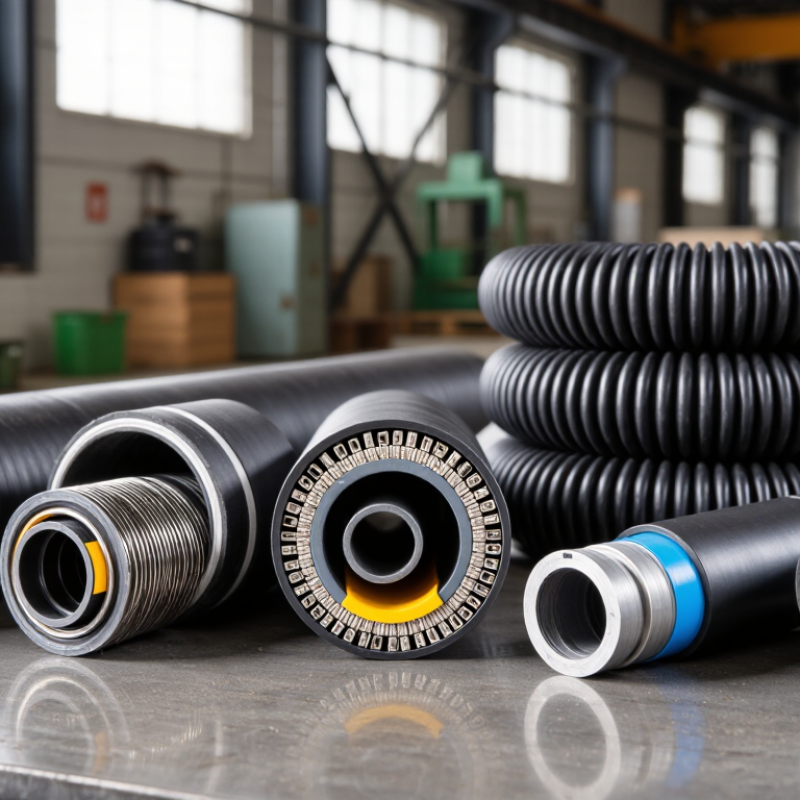
An oil rubber hose is more than a black flexible tube. Its inner layer must resist petroleum oils, fuels, and selected hydraulic fluids without swelling, cracking, or losing strength. Reinforcement, usually textile or wire, controls pressure and bending. The outer cover protects against abrasion, ozone, heat, and weather. These details matter during daily loading, transfer, and maintenance work.
The 2024 Grand View Research industrial hose assessment values the global market at approximately USD 13 billion. It also expects steady growth through 2030, driven by energy, mining, construction, and manufacturing demand. Yet market growth does not define quality. Buyers should check working pressure, burst pressure, temperature range, bend radius, and fluid compatibility. ISO 18752 provides useful performance classifications for hydraulic hose construction and testing. EN 853 remains relevant for several wire-reinforced hydraulic hose applications.
A reliable oil rubber hose should carry batch identification and traceable test records. Inspect the coupling area carefully. That is where many failures begin. A hose rated for oil may still fail with aromatic fuels, excessive heat, or poor storage. Some catalog claims also sound broader than the test evidence. This is an uncomfortable but important point. Product selection should follow the actual medium, pressure cycle, installation angle, and service environment, not only a familiar size or attractive specification.
2026 Top Oil Rubber Hose Types for Global Buyers
What Defines an Oil Rubber Hose in 2026
Oil rubber hoses are selected by their reinforcement structure, pressure category, flexibility, temperature capability, and compatibility with petroleum-based fluids. The chart compares common SAE 100R hose families by their typical reinforcement construction. Actual working pressure and service temperature depend on hose size, fluid, fittings, and the manufacturer’s technical specification.
Key Oil Rubber Hose Types and Their Applications
2026 Top Oil Rubber Hose Types for Global Buyers
Oil rubber hoses serve different duties, and choosing by appearance alone creates avoidable failures. Hydraulic oil hoses use braided or spiral reinforcement for pumps, excavators, presses, and mobile equipment. They handle high pressure and repeated movement. Fuel and oil delivery hoses suit engines, generators, storage systems, and service vehicles. Their inner tubes resist swelling, while protective covers reduce damage from heat, abrasion, and sunlight.
Suction and discharge hoses have thicker walls for transferring oil between tanks and processing equipment. They must resist collapse under vacuum. High-temperature oil hoses are useful near engines, compressors, and industrial heating areas. Application details matter more than a general product name. Check working pressure, temperature range, fluid compatibility, bend radius, and connection size. A hose may fit perfectly yet fail early. That is an easy mistake to miss.
Tips: Confirm the oil type with the supplier’s technical sheet. Inspect the hose after installation, especially near clamps and sharp bends. Keep it away from exhaust heat and moving parts. Replace cracked covers immediately. Do not rely on color alone; labeling can be incomplete or wrong. A pressure test is sensible before full operation. Record the installation date, because memory becomes unreliable in busy workshops.
How to Compare Pressure, Temperature, and Chemical Resistance
2026 Top Oil Rubber Hose Types for Global Buyers
Global oil demand is still expanding. The International Energy Agency’s Oil 2024 report forecasts a 3.2 million barrel-per-day increase from 2023 to 2030. That growth raises the need for transfer, suction, discharge, and hydraulic hoses with verified performance.
Pressure is not everything. Compare working pressure, surge pressure, and impulse resistance separately. ISO 18752 classifies hydraulic hose performance by pressure capability and application conditions. A hose rated at 20 MPa may still fail under repeated pressure spikes. I check the assembly rating, coupling design, bend radius, and safety factor together. Field inspection matters. Small cover cuts near a coupling often reveal installation stress, not poor rubber.
Temperature changes chemical behavior. A hose rated for 100°C may tolerate oil differently at 40°C and 90°C. ASTM D471 testing measures rubber volume, hardness, and tensile changes after fluid exposure. Ask for test-fluid details, exposure time, and concentration. Petroleum oils commonly suit nitrile-based compounds, while oxygenated fuels may require different formulations. Ethylene-propylene rubber can resist some polar fluids, but it is generally unsuitable for petroleum oil service. Fluorinated compounds offer broader resistance, though cost and flexibility can become concerns. I would not trust a generic “oil resistant” claim alone. It sounds useful, but it is incomplete. Test it.
Global Standards and Certification Requirements for Buyers
2026 Top Oil Rubber Hose Types for Global Buyers
Global buyers should match each oil rubber hose to its service conditions, not only its diameter. Common options include fuel hoses, oil suction and discharge hoses, hydraulic oil hoses, and high-pressure drilling hoses. Each type needs different pressure, temperature, flexibility, and chemical-resistance data.
Relevant standards Relevant standards may include SAE J30 for selected fuel and oil hose applications, EN 1761 for petroleum suction and discharge hoses, and ISO 18752 for industrial hose performance. Oilfield buyers may also require API specifications for specialized drilling and well-servicing equipment. The correct standard depends on the hose structure and destination market. A supplier should provide the exact clause or test basis, not only a general certificate.
Paperwork matters. Reliable purchasing files should include batch traceability, rubber compound details, pressure test results, impulse or burst data, dimensional checks, and coupling compatibility records. In field inspections, small differences in inner diameter can cause leakage or difficult assembly. Fit is critical. Buyers should also verify temperature ratings, minimum bend radius, and resistance to the intended oil type. CE marking is not automatically required for every hose; it depends on applicable European legislation and the complete assembly. Regional chemical rules may also affect material declarations. A certificate alone is not proof of performance. Test conditions, sample identification, and report dates deserve careful review. One overlooked detail can weaken an otherwise well-managed purchase.
How to Select the Right Oil Rubber Hose for Each Use Case
Selecting the right oil rubber hose starts with the fluid, not the outside appearance. Check whether the hose will carry mineral oil, fuel, lubricating oil, or a blended product. Different compounds resist swelling differently. Nitrile rubber often suits petroleum-based fluids, but the supplier’s compatibility chart should guide the final decision. Do not rely on color alone.
Then match the hose to operating pressure, temperature, and movement. Include pressure surges, not only the normal gauge reading. A hose working near an engine may face hot surfaces, vibration, and repeated bending. Choose suitable reinforcement, such as textile or wire layers, when pressure demand increases. Measure the minimum bend radius carefully. A tight loop behind a pump can damage reinforcement before leakage becomes visible.
Think about the installation details. Couplings must match the hose construction and service pressure. The assembly should be tested before regular operation, especially after crimping or fitting changes. Inspect for cuts, soft spots, exposed reinforcement, and oil weeping around connections. Replace damaged hoses promptly.
Small details matter.
In field maintenance, a hose can look strong while suffering internal swelling. I have also seen specifications copied from an older system without checking the actual oil temperature. That shortcut creates uncertainty. Record the fluid type, pressure, temperature, length, bend radius, and inspection date. For critical transfer lines, request documented test results and applicable safety standards from a qualified supplier. Even careful selection needs review when the application changes.