
Skip to content

Top 10 Sintered Stone Slab Manufacturers Worldwide?

Sintered Stone Slabs are made from mineral-based materials compacted and processed under high heat and pressure. The result can be a dense surface with crisp edges, subtle veining, or a finish that resembles natural stone. These details matter when a slab is viewed under kitchen lighting or cut around a sink. Small differences become visible.

This guide to the top 10 sintered stone slab manufacturers worldwide offers a practical starting point for comparing established suppliers. It considers product range, surface finishes, technical information, production capabilities, and evidence of completed projects. A manufacturer’s published specifications can help, but they do not replace checking samples, tolerances, and local service options. Ask how slabs are packaged and supported during fabrication, too. Breakage can turn a promising order into a costly delay.

A showroom sample is not the whole story. Large-format slabs may look different from a small display, and availability can vary by market. Rankings also depend on what buyers value; a strong design portfolio does not automatically mean the best fit for every project. No shortlist is perfect. Use the comparisons as a guide, then confirm current details directly with each manufacturer before specifying or purchasing.
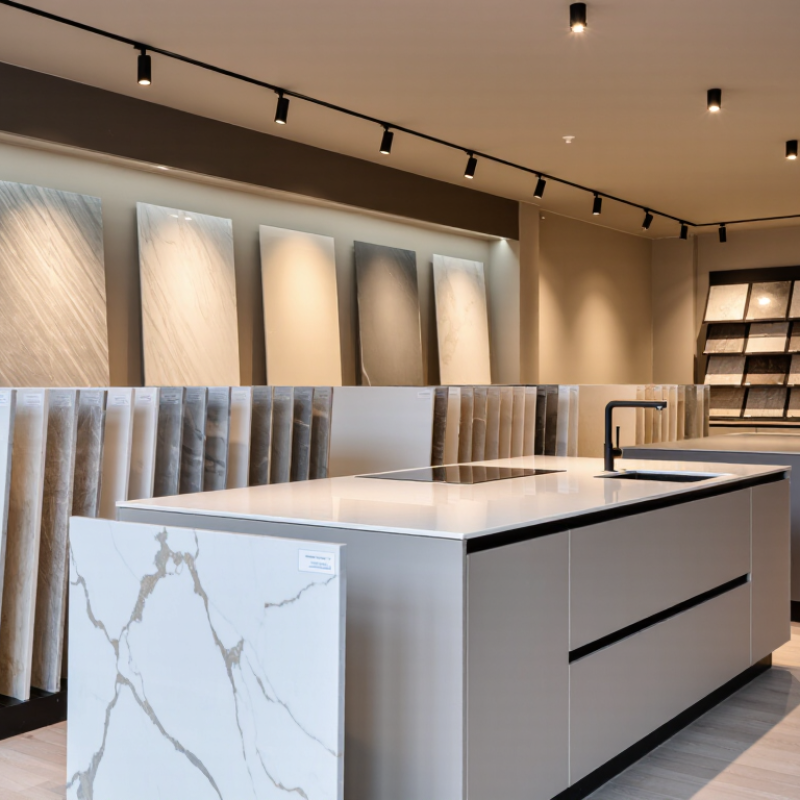
Top 10 Sintered Stone Slab Manufacturers Worldwide?

What Sintered Stone Slabs Are and How They Are Made

Sintered stone slabs are engineered mineral surfaces, not quarried stone. Manufacturers blend minerals such as quartz, feldspar, and clay, then grind them into a fine powder.

The USGS Mineral Commodity Summaries 2024 estimated world feldspar production at 26 million metric tons in 2023. That figure measures mined supply, not slab output, but it shows the scale of one important raw material.

It is not magic. Consistent mineral grading and moisture control matter.

The powder is compacted under high pressure, sometimes decorated, then fired in a kiln at high temperatures. Heat fuses the particles into a dense slab; cooling, cutting, and edge finishing follow.

Small flaws can appear. They are worth checking. ISO 10545-3 describes methods for measuring water absorption and related properties in ceramic tiles. It offers a useful testing reference, though it does not set one universal acceptance limit for every sintered slab.

In practice, buyers should compare documented test results, slab thickness, surface finish, and intended use—not rely on appearance alone. A polished sample can look perfect under showroom lights, while a large installed surface may reveal different details.

How to Evaluate Sintered Stone Slab Manufacturers

Evaluating a sintered stone slab manufacturer starts with evidence, not polished showroom images. Ask for recent test reports tied to the actual product range, including water absorption, flexural strength, and resistance to heat or staining. Confirm who performed the tests and whether each report identifies the slab’s thickness and finish. Details matter. A result for one surface may not describe another.

Request full-size samples when possible, then inspect them under daylight and warm indoor lighting. Check color consistency, surface texture, edge quality, and thickness across several pieces. Ask how production batches are tracked and how defects are handled before shipment. A factory visit can clarify kiln control, calibration, and inspection steps, but a tidy tour alone proves little. Records and repeatable checks matter more.

Review packaging, pallet loading, delivery timelines, and technical support for cutting and installation. Ask for written tolerances, care guidance, and warranty terms, then compare answers across suppliers. Speak with customers who have completed similar projects, not only recent references. Small inconsistencies happen. Still, vague replies about test methods or batch variation deserve follow-up. No checklist removes all risk; even careful buyers may discover a mismatch after installation.

Top 10 Sintered Stone Slab Manufacturers Worldwide? – How to Evaluate Sintered Stone Slab Manufacturers

This is a practical supplier-evaluation framework, not a ranked list of companies. The weights are suggested procurement criteria; verify product-specific claims, test reports, certificates, and references before comparing manufacturers.

No. Evaluation Dimension Suggested Weight What to Assess Evidence to Request How to Score
1 Product Quality and Consistency 18% Consistency of thickness, flatness, surface finish, color, and appearance between production batches. Current product specifications, batch inspection records, defect-handling procedure, and samples from more than one production batch. Score higher when tolerances and acceptance criteria are documented and repeatable across batches.
2 Independent Testing and Standards 14% Whether relevant properties are tested using recognized methods, with results tied to the specific product and thickness being purchased. Recent third-party test reports. For ceramic-based slab products, ask which applicable product standards and test methods were used, such as relevant parts of EN 14411 or ISO 10545 where appropriate. Score higher when reports are current, traceable, product-specific, and issued by a competent laboratory. Check that the cited standard applies to the product.
3 Technical Performance 12% Performance relevant to the intended use, including water absorption, flexural strength, abrasion or surface resistance, and resistance to staining or chemicals where applicable. Test results, declared values, recommended-use guidance, and written limitations for indoor, outdoor, countertop, or façade applications. Score against the project specification and applicable test criteria, rather than relying on general claims such as “stain-proof” or “scratch-proof.”
4 Product Range and Specifications 10% Availability of required slab dimensions, thicknesses, finishes, colors, and surface designs, plus clear technical documentation. Current product catalog, dimensional and thickness data, finish descriptions, care instructions, and declared product-use guidance. Score higher when specifications are complete, consistent, and available for the exact items in the quotation.
5 Production Capacity and Lead Time 10% Ability to supply the required quantity, maintain agreed production schedules, and manage repeat orders. Written production and delivery schedule, capacity statement, order-status process, and records of comparable completed orders where available. Score higher when capacity and lead times are supported by a clear plan and realistic order milestones.
6 Quality Management and Traceability 10% Controls for incoming materials, production checks, final inspection, corrective actions, and identification of supplied batches. Quality-management documentation, inspection checklist, batch or lot identification method, and details of any relevant certified management systems. Score higher when quality controls are documented and each shipment can be traced to its production batch.
7 Packaging, Handling, and Logistics 8% Protection against breakage during storage and transport, loading procedures, export documentation, and coordination of delivery. Packaging specifications, loading photographs or procedures, shipping terms, export documents, and written responsibility for transit damage. Score higher when packaging and damage-claim procedures are clearly defined before the order is placed.
8 Warranty and After-Sales Support 7% Clarity of warranty coverage, exclusions, claim timelines, replacement policy, and technical support for installation or maintenance questions. Written warranty terms, claim procedure, care guidance, and named support contacts or response targets. Score higher when terms are specific, understandable, and applicable to the destination market and intended use.
9 Environmental and Compliance Documentation 6% Availability of substantiated environmental information and compliance documents relevant to the product and target market. Applicable environmental declarations or certification documents, safety information where relevant, and documentation identifying the covered product or facility. Score higher when claims are supported by current, independently verifiable documents; confirm scope and validity dates.
10 Commercial Transparency and References 5% Clarity of pricing, payment terms, minimum order quantities, product substitutions, and communication during the quotation process. Itemized quotation, written sales terms, sample approval process, and verifiable project or customer references where available. Score higher when commercial terms are complete, consistent, and confirmed in writing before order commitment.
Total Suggested Weight 100% Apply the same criteria and evidence requirements to every supplier being considered.

Top 10 Sintered Stone Slab Manufacturers Worldwide

A worldwide comparison of the top 10 sintered stone slab manufacturers should begin with production consistency, not marketing claims. Sintered slabs are made from mineral materials compacted and fired under intense heat. A reliable supplier should provide clear technical data on thickness, water absorption, surface durability, and dimensional tolerance. Ask for test reports and inspect full-size samples when possible. Small samples can hide variation.

Manufacturing capacity matters, but so do quality checks between batches. Look closely at veining, color shifts, edge finish, and the flatness of large panels. Details matter. A slab may look convincing in a showroom yet differ under cooler lighting or beside another production run. For real projects, request samples from current stock and confirm whether matching replacement pieces can be supplied later.

The strongest global manufacturers usually combine stable production with practical export support. Check crate design, corner protection, labeling, and documented handling guidance; a chipped edge can disrupt an installation schedule. Compare lead times and available formats against the needs of the project, rather than choosing by scale alone. Not every line. Some manufacturers excel at bold patterns, while others offer tighter color control or a wider range of finishes. Rankings can shift as capacity, product quality, and service change, so buyers should verify current specifications before committing.

Comparing Manufacturers by Products, Technology, and Market Reach

A useful comparison of the world’s leading sintered stone slab manufacturers starts with what they actually make. Some focus on large-format panels for kitchen islands and wall cladding. Others offer thinner slabs suited to cabinetry or renovation work. Check the published thicknesses, surface finishes, and available sizes. A polished sample can look different under warm kitchen lighting than it does in a showroom. Details matter.

Technology shapes consistency. Manufacturers may use digital printing, high-pressure forming, and controlled firing, but the finished slab is what counts. Look for clear technical data on water absorption, stain resistance, bending strength, and heat tolerance. Ask how shade variation is managed between production batches. A small mismatch can become obvious across a long countertop. It happens. Market reach also affects practical choices: regional warehouses and established distribution networks can reduce lead times and simplify replacement orders. Yet broad availability does not guarantee local installation support. Compare delivery options, sample access, warranty terms, and technical assistance in the market where the project will be built. Public specifications are useful, though they may not capture every on-site challenge.

How to Choose a Sintered Stone Slab Manufacturer

Choosing a sintered stone slab manufacturer starts with evidence, not showroom lighting. Ask for technical data covering flexural strength, water absorption, stain resistance, and thermal performance. Request test reports from an independent laboratory, with methods and sample identification clearly stated. A glossy display piece is not enough. Check whether the delivered slab matches the approved sample in thickness, shade, and surface finish.

Production consistency matters as much as a strong specification sheet. Ask how the manufacturer controls batch variation, inspects edges, and protects slabs during packing and transport. Review large-format samples under your project’s actual lighting; subtle veining can look very different across a full kitchen island. Also confirm lead times, replacement procedures, and whether installation guidance is available. One detail is easy to miss: a capable factory may still be a poor fit if its crate sizes or delivery schedule do not suit your site.

For market context, Grand View Research estimated the global ceramic tiles market at USD 359.4 billion in 2023, with projected growth from 2024 to 2030. This broader category is not a sintered-slab market estimate, but it signals a crowded, expanding surface sector. Compare manufacturers on verifiable quality controls and relevant project references, not market size alone. I would still ask for a recent production-lot sample. Small differences matter.